
Fertilization
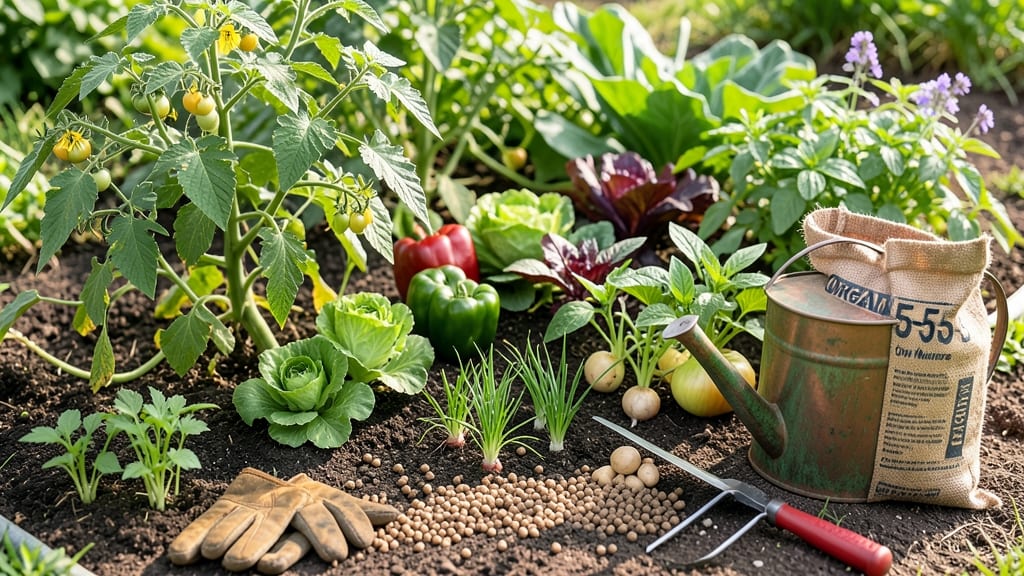
To fertilize your veg garden at the right time means feeding plants when they need it most—starting just before planting and continuing through peak growth.
Timing your vegetable garden fertilization wrong can mean wasted nutrients—or worse, stunted growth. But get it right, and you’ll unlock stronger roots, bigger yields, and healthier plants all season long.
Most gardeners focus on spring, but fall fertilization is just as critical for next year’s soil health. I’ll break down the best times to feed your 🥕 garden, whether you’re using organic or synthetic fertilizers, and how to adjust for your local climate.
By the end, you’ll know exactly when to fertilize for leafy greens, fruiting crops, and everything in between—plus how to avoid common mistakes that rob your plants of their potential.

Spring fertilization schedule for fast vegetable growth
Spring is the perfect time to give your vegetable garden a growth boost, but timing matters more than you might think. I’ve learned that fertilizing too early can burn tender roots, while waiting too long means missed opportunities for explosive early-season growth.
The key is a 4-step schedule that prepares your soil before planting and supports plants through their fastest growth phases.
First, focus on soil preparation in early spring (March-April) when soil temperatures rise above 45°F. This is when I add compost or well-rotted manure to improve soil structure and microbial activity.
For faster results, I mix in a balanced organic fertilizer (like 5-5-5) to kickstart nutrient availability before seeds even go in the ground.
Next comes the pre-planting fertilization window, which opens 2-4 weeks before transplanting. This is where I apply a slow-release fertilizer or side-dress with compost.
For leafy greens like spinach and kale, I use a nitrogen-rich blend (like 10-5-5) to encourage lush foliage, while root crops get a phosphorus boost (5-10-5) for stronger root development.
| Fertilization Stage | Best Time | Fertilizer Type | Plant Focus | Notes |
|---|---|---|---|---|
| Soil Prep | Early Spring (March-April) | Compost + 5-5-5 | All Veggies | Work 2-3 inches deep |
| Pre-Planting | 2-4 Weeks Before Transplant | Slow-Release Granules | Leafy Greens | Use 10-5-5 for foliage |
| Planting Time | At Transplant | Balanced 10-10-10 | Root Crops | Side-dress with compost |
| Early Growth | 4-6 Weeks After Planting | Liquid Fish Emulsion | Fruiting Veggies | High nitrogen for flowers |
| Mid-Season Boost | 6-8 Weeks After Planting | Potassium-Rich (5-10-10) | Tomatoes/Peppers | Encourages fruiting |
The planting-time fertilization happens right when you set out seedlings or sow seeds. I use a balanced fertilizer (like 10-10-10) mixed into the planting hole or broadcasted lightly over the soil surface.
For heavy feeders like tomatoes and peppers, I add a time-release pellet to the bottom of the planting hole for steady nutrition.
After plants establish (about 4-6 weeks post-transplant), I switch to liquid fertilizers for faster nutrient uptake. My go-to is fish emulsion or seaweed extract, which provides quick nitrogen for leafy growth.
I apply this every 2-3 weeks until plants start flowering, then reduce to every 4 weeks to avoid overstimulating foliage at the expense of fruit.
For organic gardeners, I recommend sticking to compost teas, worm castings, and fish-based fertilizers in spring. These break down gently and improve soil health long-term. Synthetic fertilizers can be used for faster results, but I find they require more frequent applications and can disrupt soil microbes if overused.
One mistake I see often is over-fertilizing nitrogen in spring, which leads to weak stems and disease susceptibility. Instead, I balance nitrogen with phosphorus and potassium.
For example, I use a 3-1-2 ratio (like 3-1-2 organic fertilizer) for early growth, then shift to 1-2-2 when plants start flowering to support fruit development.
Don’t forget about regional adjustments! In cooler climates (USDA Zones 3-5), I delay fertilization until soil warms to 50°F, while in warmer zones (6-10), I start earlier. Always water thoroughly after fertilizing to prevent
Fall fertilization secrets for next year’s soil health
Autumn is the perfect time to give your vegetable garden a head start for next season by focusing on soil health rather than plant growth. When you fertilize in fall, you’re not feeding hungry plants—you’re nurturing the microbes and organic matter that will create rich, crumbly soil by spring.
Think of it as a slow-release investment for your garden’s foundation.
Most gardeners make the mistake of stopping fertilizers too early, leaving their soil depleted. But the right fall fertilization strategy ensures your soil stays nutrient-dense and well-structured through winter. This means healthier roots, faster germination, and stronger plants when spring arrives.
⚠️ callout warning
Stop fertilizing 6-8 weeks before your first frost. Applying high-nitrogen fertilizers late can stimulate new growth that won’t survive winter, leaving plants vulnerable to freeze damage. Focus on slow-release organic matter like compost or aged manure instead.
🌱 Key Tip: Use a low-nitrogen fertilizer (like 5-5-5) in early fall, then switch to compost or cover crops 4-6 weeks before frost.
Start your fall fertilization plan by testing your soil pH and nutrient levels. Ideal soil for vegetables should have a pH between 6.0 and 7.0. If your soil is acidic, add lime in early fall to raise the pH gradually.
For nutrient-poor soil, incorporate compost or well-rotted manure—these release nutrients slowly and improve soil structure over time.
For organic fertilization, choose materials that break down slowly, like leaf mold, worm castings, or alfalfa meal. These add organic matter and feed beneficial microbes, which are the backbone of healthy soil.
Spread a 2-3 inch layer of compost over your garden beds and lightly till it into the top 6 inches of soil.
If you’re using synthetic fertilizers, opt for a balanced formula like 5-5-5 or 3-4-6 in early fall. This provides a gentle boost of nitrogen, phosphorus, and potassium without encouraging late-season growth.
Apply it 4-6 weeks before frost and water it in thoroughly to help it penetrate the soil.
Don’t forget about cover crops like clover or winter rye—they protect your soil from erosion, suppress weeds, and add nitrogen when tilled in. Plant them in late summer or early fall, then till them under in spring. This dual-purpose strategy saves time and boosts soil fertility naturally.
By the time spring rolls around, your garden will be ready for planting with looser soil, more microbes, and better water retention. The key is patience—fall fertilization is about preparing the soil, not the plants.
With the right approach, you’ll see stronger seedlings, healthier roots, and bigger yields all season long. 🌱