
Container Gardens
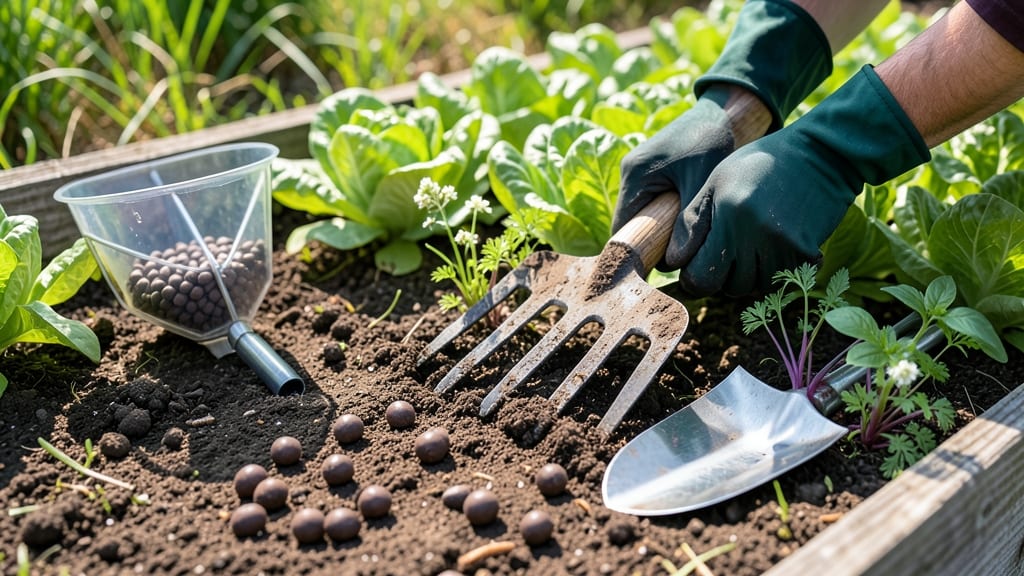
To fertilize garden beds at the best times, aim for early spring before planting or right after harvest, then apply light doses every 4-6 weeks during active growing seasons. Cool-season plants like lettuce need feeding in early spring, while warm-season tomatoes respond best to summer applications.
Timing matters because plants absorb nutrients most efficiently when they're actively growing—not when soil temperatures are too cold or too hot. 🌱 Early spring fertilization gives cool-season crops a nutrient boost before they bolt, while summer applications support fruiting plants like peppers and cucumbers.
I've learned that a simple soil test before fertilizing can save you money and prevent overfeeding, which harms plants just as much as underfeeding.
What's interesting is how plant types dictate schedules: leafy greens need frequent light feedings, while perennials often do better with one heavy dose in spring. For container gardens, I recommend using slow-release fertilizers—they match the plant's growth cycle better than quick-release options, which can burn roots if overapplied.
💡 In This Article
- Seasonal Soil and Plant Needs for Fertilization Timing
- Plant-Specific Fertilizer Schedules for Vegetables, Flowers, and Lawns
Seasonal soil and plant needs for fertilization timing
Plants absorb nutrients most efficiently when soil temperatures stay between 55-85°F—this is why spring and early fall are ideal windows.
When soil warms to 55°F in spring, microbial activity revs up, breaking down organic matter into plant-available forms. 🌱 This is why early spring feeding (March-April in most climates) gives cool-season crops like lettuce and spinach the jumpstart they need before their rapid growth phase.
Conversely, summer heat can stress roots, making plants less receptive to fertilizer unless you're using slow-release options.
The key factor is root growth cycles—roots expand fastest when soil temps are moderate. For example, tomato roots grow 2-3 times faster at 75°F than at 60°F, which is why summer fertilization (June-July) supports fruiting plants. Ever notice how tomatoes planted in cold soil often struggle to set fruit?
That's because their roots can't access nutrients efficiently until the soil warms. A soil thermometer ($15 at garden centers) helps track these critical temperature thresholds.
Seasonal timing also accounts for plant life stages. Cool-season crops like broccoli enter dormancy when soil temps exceed 75°F, so their fertilization window closes by late spring. Warm-season plants, however, peak in summer when they're actively flowering and fruiting.
This is why a two-phase approach works best: early spring for cool-season crops, summer for warm-season plants. The exception? Perennials like asparagus and rhubarb need heavy feeding in spring to fuel their first year of growth.
What most gardeners overlook is how soil moisture affects nutrient uptake. Dry soil locks nutrients in place, while saturated soil leaches them away. That's why I always fertilize after a light rain or irrigation—this gives roots time to establish before nutrient uptake begins.
In containers, this means watering first, then applying fertilizer to the soil surface where roots will encounter it. The 1-2-3 rule helps: apply fertilizer when soil is 1 inch moist, 2 weeks after planting, and 3 weeks between subsequent applications.
Organic fertilizers like compost or fish emulsion release nutrients gradually, making them ideal for spring applications when you want sustained feeding. Synthetic fertilizers, however, provide an immediate boost—perfect for mid-season when plants need quick phosphorus for flowering. The NPK ratio matters too: 10-10-10 for general growth, 5-10-10 for blooming plants.
I've seen firsthand how using the wrong ratio can lead to lush foliage but no fruit—like my zucchini plants last summer that grew 6-foot vines but produced only tiny flowers.
Fall fertilization deserves special attention. While most plants slow growth before winter, evergreens and lawns benefit from a late-summer/early-fall feeding to build root strength for next year. This is why I recommend a low-nitrogen fertilizer (like 5-10-10) in September—it encourages root development without promoting tender new growth that might freeze.
The root zone (top 6 inches of soil) is where 80% of nutrient uptake happens, so focus applications there rather than broadcasting across the entire bed.