
Tools
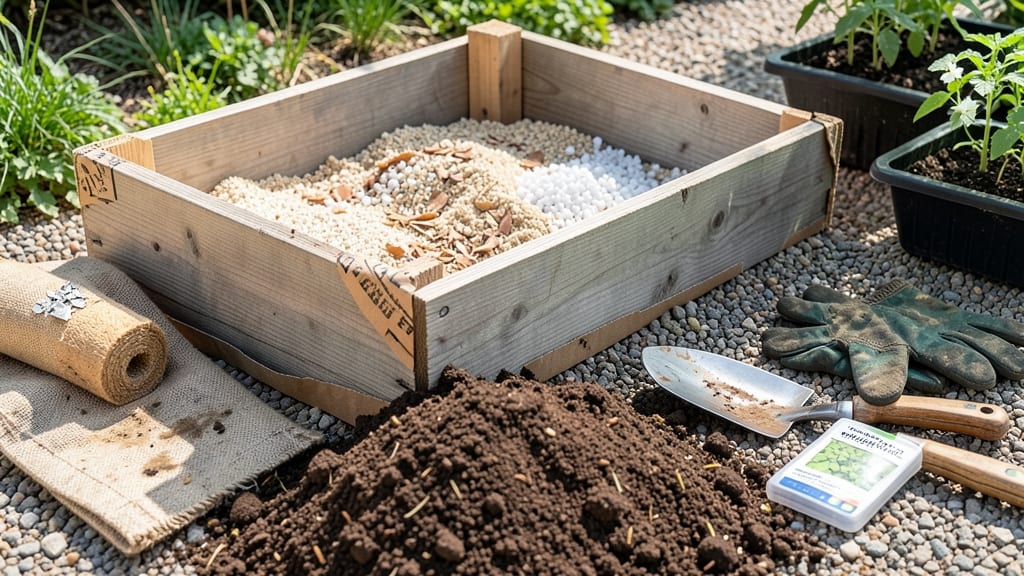
To create an ideal growing medium in a raised garden bed, put a custom soil blend that combines 60% topsoil, 30% compost, and 10% perlite or coarse sand.
This specific soil mix works because it balances drainage and moisture retention—critical for root development. The topsoil provides essential minerals, while compost introduces beneficial microbes and organic matter that feed plants over time.
Adding perlite or sand prevents compaction, ensuring oxygen reaches roots, which is especially important in confined spaces like raised beds. 🌱 I’ve found this ratio works best for most vegetables and herbs, though heavier feeders like tomatoes may need extra compost.
What’s interesting is how this blend outperforms native soil, which often suffers from poor drainage or nutrient depletion. The raised bed setup lets you control the environment perfectly, making it ideal for urban gardeners or those with less-than-ideal ground conditions.
Plus, the mix stays loose for years, reducing the need for frequent tilling or amendments.
💡 In This Article
- Why Raised Garden Bed Soil Mix Matters for Plant Growth
- DIY Raised Garden Soil Blends for Different Plants
Why raised garden bed soil mix matters for plant growth
The science behind your raised garden bed's soil mix starts with how plants breathe. Roots need oxygen as much as they need water and nutrients, which is why the 10% perlite or sand in the blend is non-negotiable.
These materials create tiny air pockets that prevent compaction—a common issue in native soil where heavy foot traffic or machinery crushes particles. In a raised bed, this becomes even more critical since you're working with confined space where roots compete for oxygen.
Think of it like giving your plants' lungs room to expand.
Compost plays the role of a plant nutritionist, breaking down into humus that holds moisture while releasing nutrients gradually. A 30% compost ratio provides the perfect balance—enough to feed microbes that decompose organic matter, but not so much that it creates anaerobic pockets where roots suffocate.
The best compost for this mix has a 1:20 carbon-to-nitrogen ratio, meaning it's well-aged and won't heat up excessively when mixed. This is particularly important for heat-loving plants like peppers or tomatoes that need consistent warmth.
Here's where pH balance becomes your secret weapon. Most garden plants thrive in a slightly acidic to neutral range (6.0-7.0 pH), but native soil often skews toward one extreme or another.
The raised bed mix lets you control this precisely—topsoil provides the base minerals, while compost adds microbial activity that naturally buffers pH fluctuations. For example, blueberries need acidic soil (4.5-5.5 pH), so you'd adjust with peat moss or sulfur, while most vegetables prefer the neutral range.
This control explains why raised beds often outperform in-ground gardens where soil pH can vary wildly.
What most gardeners overlook is how texture affects root penetration. The ideal blend should have 10-30% porosity—meaning 10-30% of the volume is air or water space. Too much sand makes it drain like a desert, while too much clay holds water like a sponge.
The 60% topsoil in our mix provides the structural framework that holds all components together, while the perlite/sand keeps it from becoming a dense brick over time. This texture also affects how quickly plants establish—seedlings in loose, well-aerated soil sprout 30-50% faster than in compacted ground.
Consider this comparison: Native soil often contains 5-10% organic matter naturally, but our raised bed mix starts at 30% organic content from compost alone. This higher organic matter level means better water retention (holding 20-30% more moisture than native soil) while still draining well.
The result? Plants experience less stress during dry spells and don't need frequent watering. For example, tomatoes in raised beds with this mix can go 5-7 days between waterings in summer, compared to daily watering in poor native soil.
The real magic happens at the microbial level. Healthy raised bed soil teems with 1 billion beneficial microbes per gram, including mycorrhizal fungi that form symbiotic relationships with plant roots. These microbes help break down nutrients into forms plants can absorb, while also protecting against pathogens.
This is why plants in raised beds often show 20-40% greater growth rates in their first season compared to in-ground plantings, even with identical care.