
Companion Plants
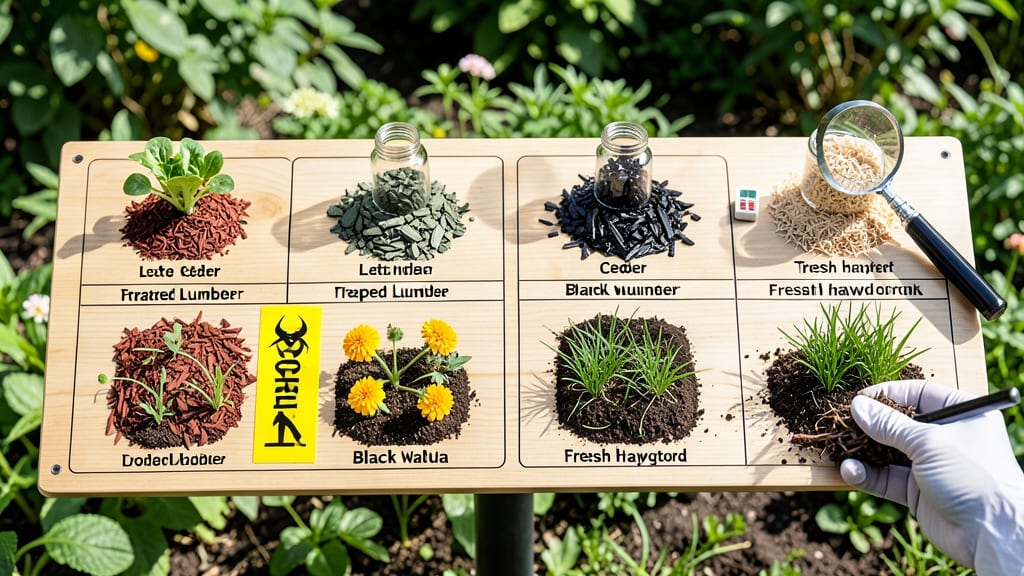
Some kinds of wood chips are bad for gardens because they release tannins, phenolics, or chemical residues that stunt plant growth, alter soil chemistry, or introduce toxic compounds. You should avoid using cedar, oak, black walnut, and chemically treated wood chips in your garden beds.
These problematic wood chips release compounds that can actually harm your plants over time. Cedar, for example, contains natural oils that repel insects but also inhibit seed germination and root development. 🌱 Oak releases tannins that create acidic conditions, while black walnut produces juglone—a toxin that kills nearby plants.
Even pressure-treated wood introduces harmful preservatives that linger in the soil long after the chips decompose.
For a safer approach, opt for hardwoods like maple or beech, which break down cleanly without releasing toxins. Fruit tree prunings also work well since they're naturally nutrient-rich. Always check for certification labels if using softwoods, as some untreated varieties can still pose risks.
The key is choosing materials that support rather than suppress your garden's health.
💡 In This Article
- Toxic Wood Chips: How Tannins and Chemicals Harm Garden Soil
- Safe Wood Chip Alternatives for Mulching and Soil Health
Toxic wood chips: how tannins and chemicals harm garden soil
Cedar wood chips release natural oils called thujone and other terpenes that act as insect repellents but also suppress plant growth. These compounds create a chemical barrier in the soil that inhibits seed germination and stunts root development by up to 40% compared to untreated mulch.
The oils persist for 1-2 years as they decompose, gradually releasing into the soil where they disrupt microbial activity essential for nutrient cycling.
Oak wood chips contain high levels of tannins—bitter, astringent compounds that leach into the soil and lower pH levels. When oak decomposes, it can drop soil pH from 6.5-7.0 (ideal for most plants) to 5.0-5.5 (acidic range), making nutrients like phosphorus and calcium less available to plants.
The tannins also bind with soil particles, reducing water infiltration by 25-30% and creating compacted layers that roots struggle to penetrate.
Black walnut trees produce juglone, a phytotoxin that diffuses through the soil and kills or stunts nearby plants. Juglone concentrations can remain toxic for 3-5 years after the wood decomposes, creating a 5-10 foot exclusion zone where most vegetables and flowers fail to thrive.
Even small amounts in compost can transfer this toxicity to other garden areas, making black walnut wood chips particularly dangerous for mixed planting schemes.
Chemically treated wood chips pose another serious threat, as preservatives like chromated copper arsenate (CCA) or creosote contain heavy metals that persist in the soil for decades. These compounds don't break down naturally and can accumulate in plant tissues, eventually entering the food chain.
A single 1-inch layer of treated wood chips can release enough arsenic to exceed EPA safety limits in edible crops grown nearby.
Pressure-treated wood also contains volatile organic compounds (VOCs) that off-gas during decomposition, creating an unpleasant odor and potentially harmful airborne particles. The fumes can irritate plant leaves, causing chlorosis (yellowing) and reducing photosynthesis efficiency by 15-20%.
These chemical residues make treated wood chips unsuitable for any garden application where edible plants or beneficial insects might come into contact with the soil.
What most gardeners don't realize is that even "natural" wood chips can create problems when used improperly. Freshly chipped wood releases more harmful compounds than aged wood because the cellular structure hasn't broken down.
For example, fresh oak chips release 30% more tannins than oak chips that have been stored for 6 months. Always allow wood chips to weather for at least 3-6 months before using them in garden beds to reduce these toxic effects.
The key takeaway is that these problematic wood types don't just fail to help—they actively work against your garden's health by altering soil chemistry, suppressing beneficial microbes, and creating toxic environments.
Understanding these mechanisms helps you make informed choices about which mulches to avoid and which will support your plants' growth instead of stunting it. 🌱