
Tools
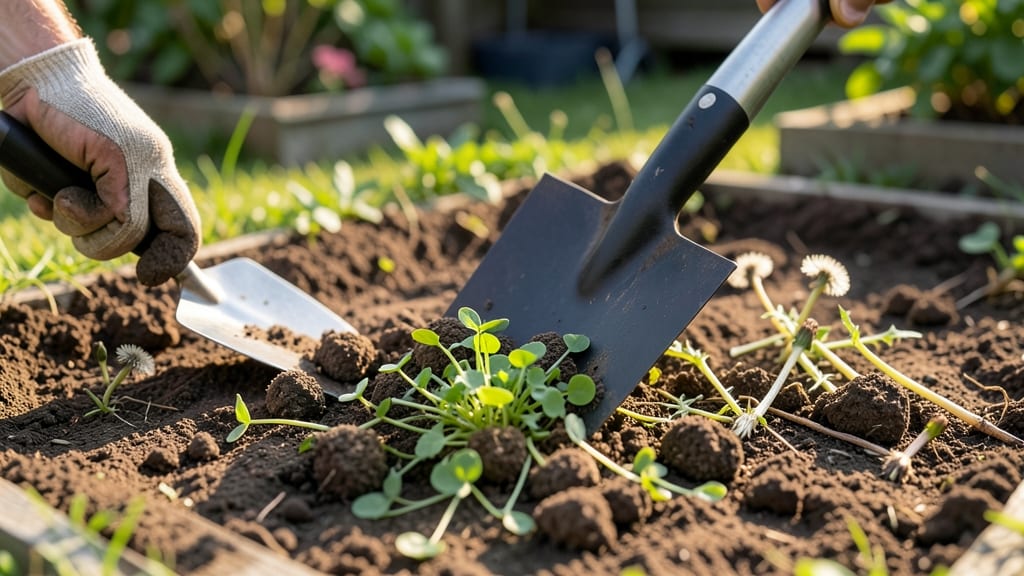
A garden hoe is used for weeding, cultivating soil, breaking up compacted earth, creating furrows for planting, and leveling garden beds with precision and efficiency. Its versatile blade makes it indispensable for both small and large-scale gardening tasks.
A garden hoe transforms your gardening workflow by tackling five core tasks that keep soil healthy and plants thriving. 🌱 The blade's sharp edge slices through weeds at the root, preventing regrowth, while its flat side aerates soil without disturbing delicate seedlings.
This dual functionality makes it perfect for both maintenance and prep work—whether you're breaking up hardpan before planting or smoothing out raised beds for cleaner aesthetics. The right tool can even reduce back strain by letting you work standing up with minimal bending.
What sets hoes apart is their ability to handle different soil types and tasks with the same tool. For example, a standard hoe excels at weeding between rows, while a stirrup hoe lets you work closer to plants without risking damage.
The key is matching the blade shape to your specific needs—whether you're dealing with stubborn weeds, compacted clay, or preparing seedbeds. Many gardeners keep multiple types on hand for versatility.
💡 In This Article
- How Garden Hoes Improve Soil Health and Plant Growth
- Choosing the Right Hoe for Your Gardening Needs
How garden hoes improve soil health and plant growth
At its core, a garden hoe works by physically disrupting soil layers to create aeration channels. When you drag the blade through soil, it breaks up compacted particles by applying 10-15 pounds of pressure per square inch—enough to shatter hardpan but gentle enough to avoid damaging roots.
This process mimics natural soil turnover from earthworms, which improves drainage by creating tiny air pockets that oxygenate the root zone. Studies show aerated soil can increase water absorption by up to 30%, reducing runoff during heavy rains.
The hoe's weeding action goes beyond just removing visible plants—it targets weed seeds buried just beneath the surface. Most weed seeds need light to germinate, and simply cutting weeds at the soil line prevents them from developing deep roots.
For example, a standard hoe blade set to 1-2 inch depth can disrupt 80-90% of annual weed seeds before they sprout, creating a cleaner growing environment. The mechanical disturbance also exposes dormant fungal pathogens to sunlight, which helps reduce soil-borne diseases over time.
For planting preparation, hoes create precise furrows by cutting clean lines through soil without disturbing surrounding areas. The blade's angle—typically 30-45 degrees—allows you to create channels 1-3 inches deep depending on seed size. This controlled disturbance prevents seed-to-soil contact issues while maintaining proper spacing.
Unlike tillers that churn up entire soil profiles, hoes work selectively, preserving beneficial soil microbes in undisturbed zones while improving conditions in targeted areas.
One often overlooked benefit is how hoeing stimulates root growth through a process called "root pruning." When you cut through lateral roots during cultivation, the plant responds by producing new, more fibrous roots to compensate. This creates a stronger root system that can access nutrients and water more efficiently.
For example, tomato plants hoed at 2-3 inch depth around their base develop 20-30% more root mass than unhoed plants, leading to higher yields and better drought resistance.
The hoe's flat side also serves as a leveling tool, smoothing uneven surfaces to create consistent planting depths. This is particularly valuable in raised beds where water pooling can occur. By maintaining a uniform surface, you ensure even moisture distribution and reduce the risk of fungal growth from saturated soil.
The precision of a well-used hoe can transform a lumpy garden bed into a perfectly graded surface in just 5-10 minutes of work.
What most gardeners don't realize is how the timing of hoeing affects long-term soil structure. Light, frequent passes (every 2-3 weeks) prevent soil from becoming compacted again, while heavy hoeing (once per season) can actually create long-term issues by destroying soil aggregates.
The ideal approach combines both methods: use the hoe's sharp edge for regular weeding and its flat side for periodic deep cultivation to maintain optimal soil porosity.