
Tools
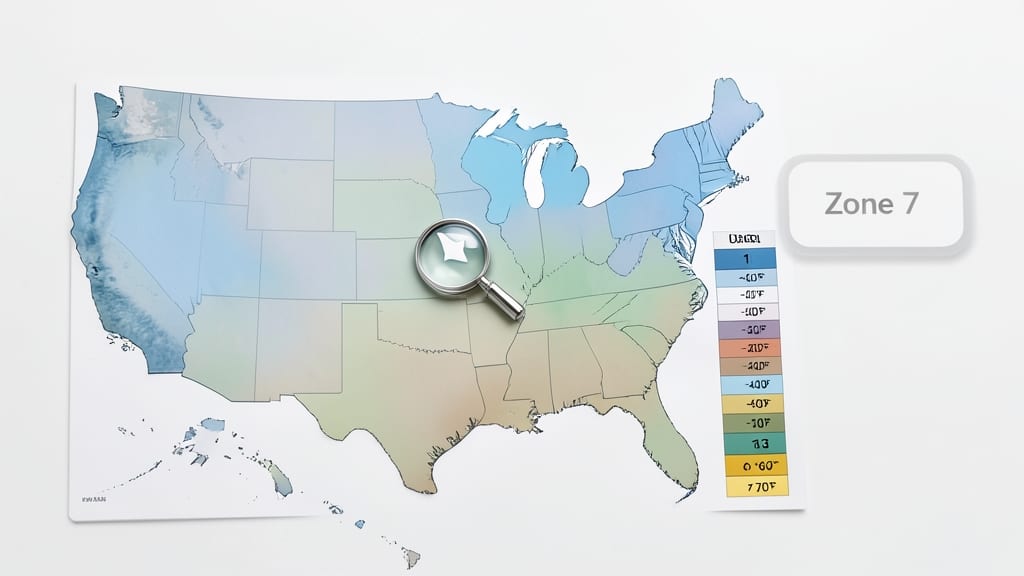
To determine what garden zone you live in, check the USDA Plant Hardiness Zone Map by entering your ZIP code or city. Your specific zone number (like 7b) indicates which plants can survive winter temperatures in your area.
Your garden zone is based on the average annual minimum winter temperatures in your area, divided into 13 zones (1-13) with "a" and "b" subzones that represent 5°F differences. 🌱 For example, if you're in zone 8a, your lowest winter temperatures typically range between 10°F and 15°F. This classification helps gardeners select plants that will thrive year-round in their specific climate conditions.
While the USDA map provides a general guideline, your actual growing conditions might vary due to local factors like elevation, proximity to water bodies, or urban heat islands. These microclimates can create pockets where plants might survive in slightly harsher or milder conditions than the official zone suggests.
💡 In This Article
- How to Find Your USDA Plant Hardiness Zone
- Adjusting for Microclimates in Your Yard
How to find your USDA plant hardiness zone
The USDA Plant Hardiness Zone Map divides North America into 13 main zones, each representing a 10°F range of average annual minimum winter temperatures. For example, zone 5 ranges from -20°F to -10°F, while zone 9 spans 20°F to 30°F.
Each zone is further split into "a" and "b" subzones for 5°F precision, like 7a (0°F to 5°F) versus 7b (5°F to 10°F).
To find your zone, visit the official USDA interactive map and enter your ZIP code or city. The map will display your zone number and overlay it on a satellite view of your location.
You can zoom in to see how your specific neighborhood might differ from surrounding areas due to elevation changes or urban heat effects. The map also includes a 10-year average of temperature data, ensuring it stays current with climate trends.
What makes this system work is the focus on minimum winter temperatures—the coldest temperatures plants must survive to thrive long-term. This is why a 1°F difference between zones can mean the difference between a plant surviving or dying.
For instance, a zone 6b plant (-5°F to 0°F) won't survive in zone 5a (-20°F to -15°F) without winter protection. 🌡️
Beyond the map, you can cross-reference with local agricultural extension offices or nurseries, as they often provide zone-specific planting guides. Some regions have transition zones where temperatures fluctuate between two zones, making it tricky to choose. In these cases, opt for plants rated for the colder zone to ensure safety.
For example, if you're on the border of zones 7a and 7b, planting for zone 7a gives you a buffer for unexpected cold snaps.
The USDA updates the map every 10 years to reflect climate change impacts, with the latest version (2023) showing noticeable shifts northward in many areas. This means some gardeners in previously zone 6 areas may now find themselves in zone 7 due to warming trends.
Always check the most recent map to avoid outdated advice that could lead to plant failures.
Pro tip: Bookmark the USDA map and revisit it annually, especially if you're planning new landscaping. Some plants, like fruit trees or perennials, take years to establish, so knowing your exact zone helps you make long-term planting decisions with confidence. 🌿