
Pests
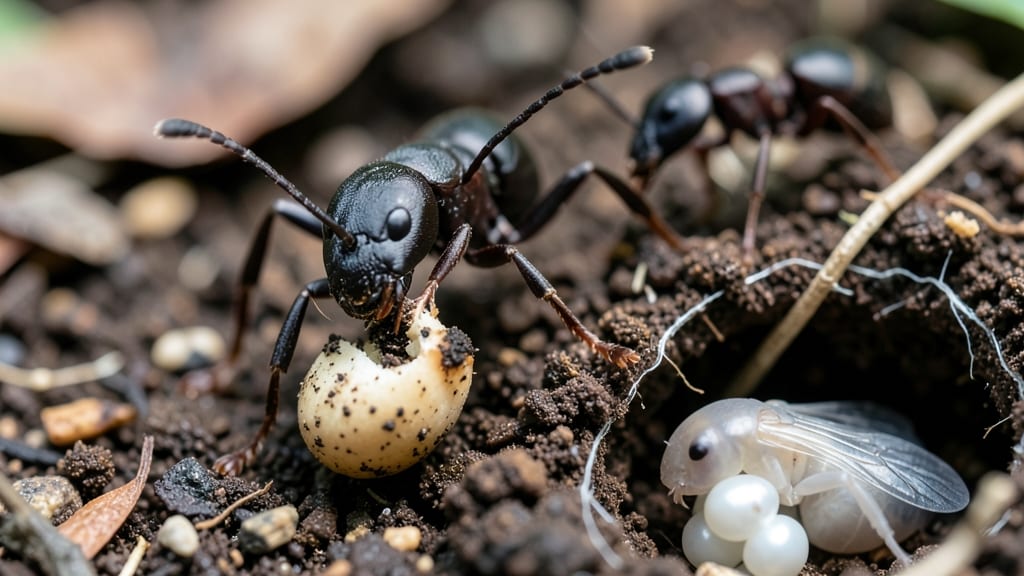
In Grow a Garden, ants act as soil engineers, aerating the ground through their tunnels, converting organic debris into nutrient-rich compost, and regulating pests by hunting aphids or cultivating them for honeydew. Their underground networks boost soil drainage and structure while keeping harmful insects in check—all without synthetic chemicals.
Ants are the unsung heroes of garden ecosystems, playing multiple roles that keep your plants thriving. 🌱 Their tunneling creates microscopic pathways that let air and water penetrate deep into the soil, preventing compaction—a common issue in heavily worked garden beds.
Plus, their waste (frass) acts as a natural fertilizer, releasing nutrients slowly over time. What's fascinating is how they manage pests: some species actively hunt garden predators like aphids, while others "farm" them for honeydew, indirectly controlling their populations.
This dual role makes ants invaluable for organic gardeners, though not all species are equal. For instance, harvester ants help break down tough plant matter, while fire ants can become invasive pests.
The key is encouraging beneficial species—like pavement ants or carpenter ants—while using natural deterrents (like diatomaceous earth) for harmful colonies. Their presence often signals a healthy, balanced garden ecosystem.
💡 In This Article
- How Ants Improve Soil Health Through Natural Engineering
- Ant Pest Control Strategies: Balancing Benefits and Garden Risks
How ants improve soil health through natural engineering
Ants act like tiny soil plows, creating intricate tunnel systems that stretch up to 10 feet deep in a single colony. These underground pathways boost oxygen circulation, preventing anaerobic pockets where roots suffocate.
Studies show ant tunnels can increase soil porosity by 30-50%—comparable to earthworm activity but on a more localized scale. Their foraging disrupts compacted layers, allowing water to penetrate 2-3 times faster than in undisturbed soil.
Their waste, called frass, is a powerhouse fertilizer. Ants digest organic matter like fallen leaves and plant debris, breaking it down into nitrogen-rich particles that plants absorb easily. A single colony can process 1-2 pounds of organic material annually, turning it into slow-release nutrients.
This process mimics composting but happens underground, where roots can access nutrients directly without competition from surface microbes.
Ant tunnels also create microhabitats for beneficial soil organisms. Fungal gardens cultivated by leafcutter ants, for instance, introduce mycorrhizal networks that enhance root systems. These underground ecosystems improve nutrient cycling—similar to how mycorrhizal fungi work with plants—while maintaining soil structure.
The result? Healthier roots, better drought resistance, and plants that thrive with minimal synthetic inputs.
However, not all ants contribute equally. Harvester ants excel at breaking down tough plant fibers, while carpenter ants focus on wood decomposition. Their collective activity loosens soil 10-20 times more effectively than tilling alone, reducing erosion risks.
The key difference from earthworms? Ants target specific layers, creating vertical channels that earthworms' horizontal burrows don't match—ideal for clay-heavy soils where drainage is critical.
What's surprising is how their tunneling patterns adapt to seasonal changes. During dry periods, ants deepen tunnels to access moisture, while after rain, they expand surface networks to prevent waterlogging. This dynamic engineering prevents soil crusting—a major problem in vegetable gardens—by maintaining consistent porosity year-round.
For gardeners, this means ants are nature's aerators. Their tunnels mimic the effects of aerating tools but with zero maintenance. The catch? Their benefits depend on species diversity.
A garden with multiple ant types (like pavement ants and fire ants) will see better soil health than one dominated by a single invasive species.