
Tools
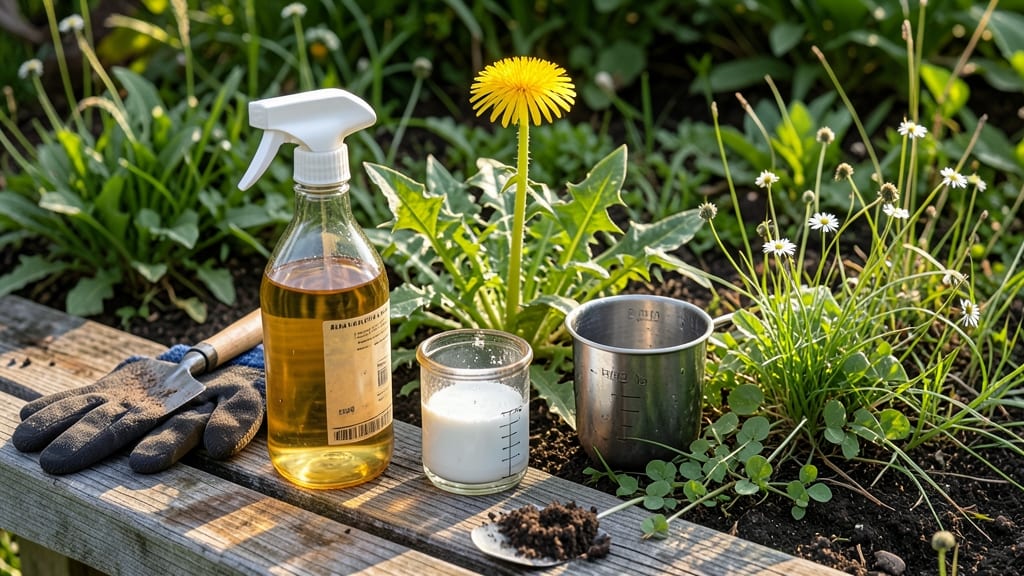
Using vinegar as a weed killer in the garden works because its acetic acid disrupts plant cell membranes, but effectiveness depends on concentration and application conditions. For best results, apply undiluted white vinegar (5% acidity) on sunny days while protecting nearby plants and soil.
White vinegar's acetic acid content—typically 5%—is what makes it such a potent natural herbicide. 🌱 When sprayed directly on weeds, it creates an acidic environment that breaks down cell structures, causing them to wilt and die within hours.
The key is timing: applying it on a bright, sunny day maximizes evaporation, ensuring the acid stays concentrated on the weeds rather than diluting into the soil. I've found that early morning applications work best because the sun helps dry the vinegar quickly, preventing it from spreading to desirable plants.
For tougher weeds like dandelions or clover, you might need to reapply after a week, as some plants have deeper root systems that require multiple treatments. Always use a spray bottle with a fine nozzle to control the application—this prevents overspray onto flowers or vegetables.
And remember, vinegar won't improve soil quality over time, so it's best used as a spot treatment rather than a regular garden maintenance solution.
💡 In This Article
- How Vinegar Kills Weeds: Science and Application Mechanics
- Safe Vinegar Weed Killer Ratios and Garden Application Tips
How vinegar kills weeds: science and application mechanics
The acetic acid in white vinegar—typically 5% concentration—works by disrupting the pH balance of plant cells, causing them to lose their ability to retain water. When sprayed on weeds, this 2-4% acidity creates an environment where cell membranes break down within 6-24 hours, leading to rapid wilting and death.
The process is similar to how acid rain damages plants, but on a more targeted scale. 🔥
Sunlight plays a crucial role because it accelerates evaporation, keeping the vinegar concentrated on the weed's foliage rather than seeping into the soil. On cloudy days, the acidity may dilute faster, reducing effectiveness—especially against deep-rooted weeds like quackgrass or dandelions, which require multiple applications.
For broadleaf weeds (e.g., chickweed, clover), a single application of undiluted vinegar often suffices, while grassy weeds may need a 1:1 vinegar-to-water dilution to avoid damaging surrounding grass.
Concentration matters: household white vinegar (5% acidity) is strong enough for most weeds, but higher concentrations (like 20% agricultural vinegar) can kill weeds faster but also pose greater risks to nearby plants.
The optimal pH for maximum weed kill is 2.0-3.0, which is what undiluted vinegar provides. This low pH denatures proteins in plant cells, essentially "cooking" the weed from the inside out.
What most people don't realize is that vinegar doesn't just kill the above-ground parts—it also disrupts the plant's root system over time. However, this process is slower for perennial weeds, which may regrow from roots if not treated repeatedly.
For best results, apply vinegar on a dry, windless day when weeds are actively growing, as the acid penetrates more effectively through open stomata (pores on leaves).
Grassy weeds like crabgrass are particularly resilient because their waxy leaf surfaces repel liquids. To improve absorption, add 1 tablespoon of dish soap per gallon of vinegar, which acts as a surfactant.
The soap breaks down the waxy layer, allowing the acetic acid to seep in more effectively. This combo works best for stubborn weeds that resist single vinegar treatments. ✨
One common misconception is that vinegar will "burn" weeds instantly like commercial herbicides. In reality, the process is gradual: you'll see wilting within hours, but complete death may take 3-7 days, depending on the weed type and weather conditions.
The visual effect is often a dramatic yellowing or browning of leaves before the plant collapses entirely.