
Container Gardens
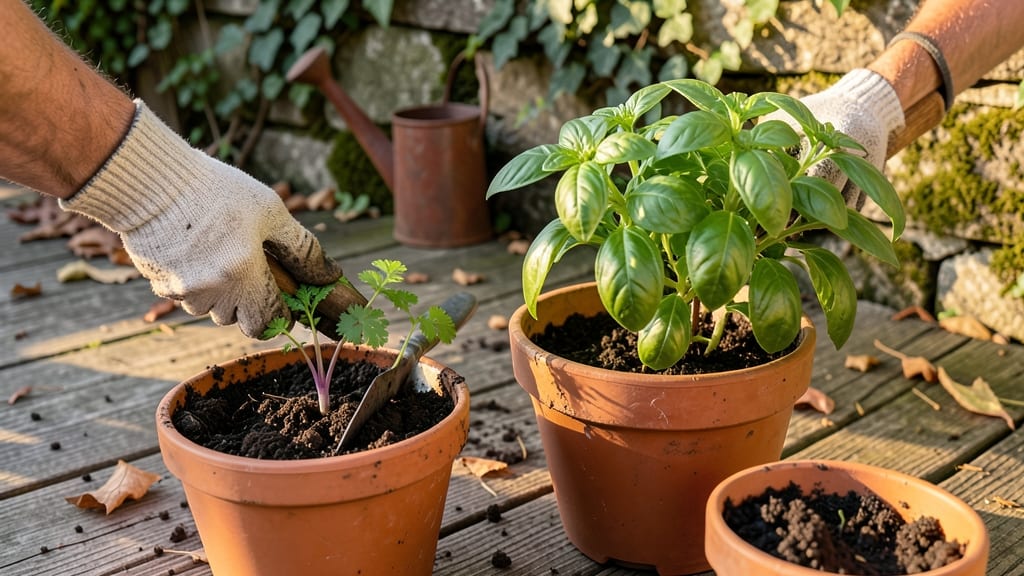
Using garden soil in containers works best for hardy plants like herbs or vegetables, but it often causes compaction, poor drainage, and pest issues. Always mix it with perlite, compost, and sand to improve aeration and structure before planting.
Garden soil's heavy clay content makes it ideal for in-ground planting but a poor choice for containers, where roots need room to breathe. 🌱 Without amendments, it can suffocate roots and trap moisture, creating perfect conditions for fungal growth.
I've found that even "good" garden soil often lacks the organic matter and grit containers demand—think of it like trying to bake a cake with just flour and water. The solution? Lighten it up with perlite for drainage and compost for nutrients, then adjust based on your plants' needs.
For example, herbs like basil thrive in a 50/50 mix of garden soil and perlite, while succulents need even more grit to prevent rot. 💫 The key is mimicking natural soil conditions: loose, well-draining, and rich in organic material. Don't skip this step—your plants' health depends on it.
💡 In This Article
- Why Garden Soil Fails in Container Gardens
- How to Safely Amend Garden Soil for Containers
Why garden soil fails in container gardens
Garden soil's natural composition makes it a poor fit for containers because its heavy clay particles pack tightly when wet, creating what scientists call "soil compaction."
This happens because clay particles (typically 0.002mm in diameter) bind tightly with water, reducing pore space by up to 30-50%—roots suffocate in this dense environment. 🌱 In-ground plants can push through compacted soil, but container roots have limited space to escape, leading to stunted growth or death.
The drainage issue stems from clay's hydrophilic nature—it absorbs water like a sponge but releases it slowly, often leaving roots waterlogged. Studies show that clay-heavy soils can hold 4-6 times their weight in water, while ideal container mixes should drain within 10-30 minutes of watering.
This moisture trap creates anaerobic conditions, where beneficial microbes die and harmful fungi like Phytophthora thrive.
Pest migration is another silent killer. Garden soil often contains dormant weed seeds and insect eggs that awaken in containers.
For example, a 1-gallon pot of unamended garden soil may harbor 500+ weed seeds, while pests like fungus gnats lay eggs in moist organic matter. 🐛 The confined space of containers accelerates these problems—what might be a minor issue in the ground becomes catastrophic in a pot.
Texture matters more than people realize. Garden soil's particle distribution (typically 40% sand, 40% silt, 20% clay) creates a dense matrix that restricts root expansion.
In contrast, ideal container mixes use 30-50% perlite/vermiculite to create 50% larger air pockets, allowing roots to grow 3-5 times faster than in unamended soil. Think of it like comparing breathing in fresh mountain air versus a sealed basement—roots need that oxygen too.
Nutrient availability also shifts dramatically. While garden soil provides a slow-release nutrient base, container plants deplete nutrients 2-3 times faster due to limited root zone volume. The organic matter in garden soil breaks down too quickly, leaving plants starved after just 4-6 weeks.
This is why even "fertile" garden soil often requires weekly feeding in containers—it's like trying to fill a thimble from a firehose.
For visual contrast, imagine holding two handfuls: one of garden soil (dense, cool, and heavy) versus a container mix (light, crumbly, and warm). The difference isn't just texture—it's the entire growing environment your plants experience. 🌿 Without amendments, you're essentially planting in a brick instead of fertile loam.