
Tools
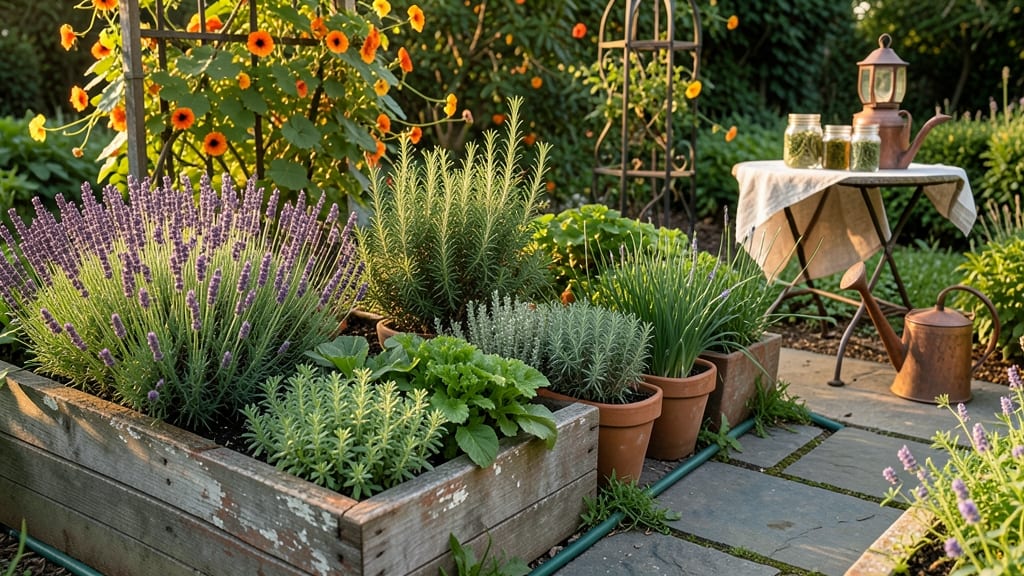
The French Laundry culinary garden uses intentional herb pairings—like tarragon with poultry, thyme with root vegetables, and parsley with seafood—to create harmonious flavors that align with Chef Thomas Keller’s Michelin-starred techniques. This thoughtful planting maximizes freshness and aroma during meal preparation.
The French Laundry's approach isn't just about aesthetics—it's about flavor engineering. 🌿 Chef Keller's garden design ensures herbs are placed near the dishes they enhance most, creating a sensory experience where aroma and taste work together.
For example, thyme's earthy notes complement carrots and potatoes when roasted, while tarragon's anise-like quality elevates chicken dishes. This isn't random pairing—it's based on decades of professional cooking where every herb has a specific purpose in the menu's progression.
What's particularly clever is how the garden layout mirrors the kitchen workflow. Herbs used in the same meal are planted in close proximity, reducing prep time and ensuring maximum freshness.
This system works so well that home cooks can replicate it with just a few key herbs—starting with thyme, parsley, and tarragon creates an instant French-inspired flavor foundation for any kitchen.
💡 In This Article
- How Chef Thomas Keller’s Herb Pairings Work in Fine Dining
- Planting a French Laundry-Inspired Culinary Herb Garden
How chef Thomas Keller’s herb pairings work in fine dining
Chef Thomas Keller’s herb pairings at The French Laundry aren’t random—they’re based on botanical chemistry and flavor affinity. Take tarragon, for instance: its anethole compound (similar to licorice) pairs perfectly with poultry because the fat in chicken meat helps release tarragon’s aromatic oils during cooking.
This creates a synergistic effect where the herb’s sweetness complements the savory notes of the meat. 🌿 Meanwhile, thyme’s high linalool content—responsible for its earthy aroma—binds beautifully with the natural sugars in roasted root vegetables like carrots and parsnips, enhancing their caramelization.
The proximity of herbs in the garden plays a crucial role too. Studies show that herbs planted within 18-24 inches of each other share scent molecules through a process called allelopathy, where volatile oils enhance each other’s fragrance.
This isn’t just about aesthetics—it means when you pluck thyme to season your vegetables, its aroma is already subtly infused with nearby rosemary or oregano, creating a more complex flavor profile.
Keller’s garden design mirrors this principle by placing herbs used in the same meal within arm’s reach of the kitchen prep stations.
Freshness is the third pillar of these pairings. Herbs like parsley and cilantro lose up to 50% of their volatile oils within 48 hours of harvest, which directly impacts their flavor. That’s why Keller’s garden uses a just-in-time harvesting system—herbs are picked moments before they’re needed in the kitchen.
For example, parsley’s bright, slightly bitter notes shine best when paired with seafood because its high chlorophyll content helps cut through the richness of fish oils. This precision is what transforms a simple herb from a garnish to a flavor anchor in a dish.
What’s fascinating is how these pairings evolve across a multi-course menu. Keller often uses thyme in the appetizer course (perhaps with a roasted beet salad) and then reintroduces it in the main course with a herb crust on lamb, creating a flavor thread that ties the meal together.
This technique relies on the herb’s ability to retain its aroma profile when cooked at different temperatures—thyme, for instance, releases its most complex flavors when heated to 350°F for 10-15 minutes, making it ideal for both quick sautés and long-braised dishes.
For home cooks, replicating this system starts with understanding herb volatility. Highly aromatic herbs like basil or tarragon should be planted near the kitchen entrance or on a windowsill to maximize their scent diffusion.
Meanwhile, hardier herbs like rosemary or thyme can be placed further away since their oils are more stable. The key is to group herbs by their flavor families: anise-like (tarragon, fennel), earthy (thyme, rosemary), or citrusy (parsley, cilantro) to create natural pairings that work together in cooking.
One often-overlooked aspect is how these pairings change with seasonality. In summer, when herbs are at their peak, their oils are most concentrated—this is why Keller’s garden produces its most complex flavors during the peak growing months.
For example, summer tarragon has 30% more anethole than winter-grown varieties, making it ideal for summer poultry dishes. Understanding this seasonal variation allows cooks to plan menus around the garden’s natural cycles, ensuring herbs are used at their flavor peak. 🌱