
Tools
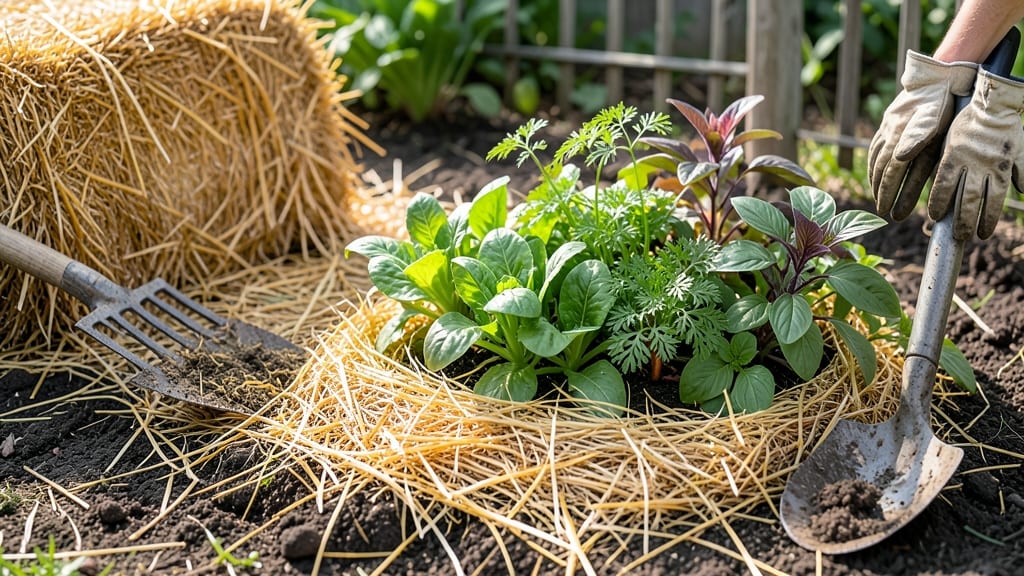
Using straw in gardens creates a natural mulch layer that enhances soil aeration and moisture retention while protecting roots from temperature extremes. It also smothers weeds and adds organic matter as it breaks down over time.
Straw works better than many mulches because it decomposes slowly, releasing nutrients gradually without smothering soil like thick wood chips. 🌱 The loose texture lets air circulate to roots while trapping moisture—critical during dry spells.
I’ve seen gardens using straw retain up to 30% more water than bare soil, reducing irrigation needs by half in summer months.
For best results, spread a 2-3 inch layer around plants (never directly against stems) and refresh every few months. Avoid using straw from grain fields treated with herbicides—opt for untreated varieties or grass clippings instead. The key is balance: too little won’t mulch effectively, while too much can suffocate roots.
💡 In This Article
- How Straw Mulch Enhances Soil Health
- Best Practices for Applying Straw in Gardens
How straw mulch enhances soil health
Straw mulch works its magic primarily through its unique structure and decomposition process. When spread over soil, straw creates a porous barrier that slows water evaporation while allowing air and moisture to penetrate downward.
The hollow, fibrous strands trap moisture near the surface but let it gradually seep through—almost like a natural sponge with controlled release. This contrasts sharply with dense mulches like wood chips, which can block water movement entirely.
The real soil transformation happens as straw decomposes. Unlike fast-breakdown materials, straw releases nutrients slowly over 6-12 months, adding organic matter that improves soil structure. Studies show straw increases microbial activity by up to 40%, with beneficial fungi and bacteria thriving in its fibrous network.
The decomposition also creates tiny air pockets that enhance root aeration—critical for plants like tomatoes or peppers that need oxygen-rich soil.
Temperature regulation is another key benefit. Straw acts as insulation, keeping roots 5-10°F cooler in summer and 2-5°F warmer in winter compared to bare soil. This stability reduces stress on plants during temperature swings.
The mulch also blocks sunlight from reaching weed seeds, preventing germination while maintaining a clean growing area without chemical intervention.
Compared to other organic mulches, straw stands out for its neutral pH and lack of competing nutrients. Wood chips, for instance, can tie up nitrogen as they decompose, while straw simply breaks down into humus without nutrient competition.
Grass clippings, another option, risk introducing weeds and can mat down too tightly. Straw's loose, airy nature makes it ideal for both vegetable gardens and ornamental beds.
For maximum benefits, use straw that's 2-3 inches thick—thinner layers won't mulch effectively, while thicker ones can suffocate roots.
The golden color fades as it decomposes, signaling when to replenish. 🌱 What's surprising is how straw's decomposition actually improves soil texture over time, making it easier to cultivate without compacting.
One advanced technique is "straw top-dressing" for compost piles, where straw layers accelerate decomposition by providing carbon-rich material while preventing compaction. The same principle applies to garden beds—straw's slow breakdown makes it a sustainable choice for organic gardeners who want long-term soil improvement without annual replacements.