
Tools
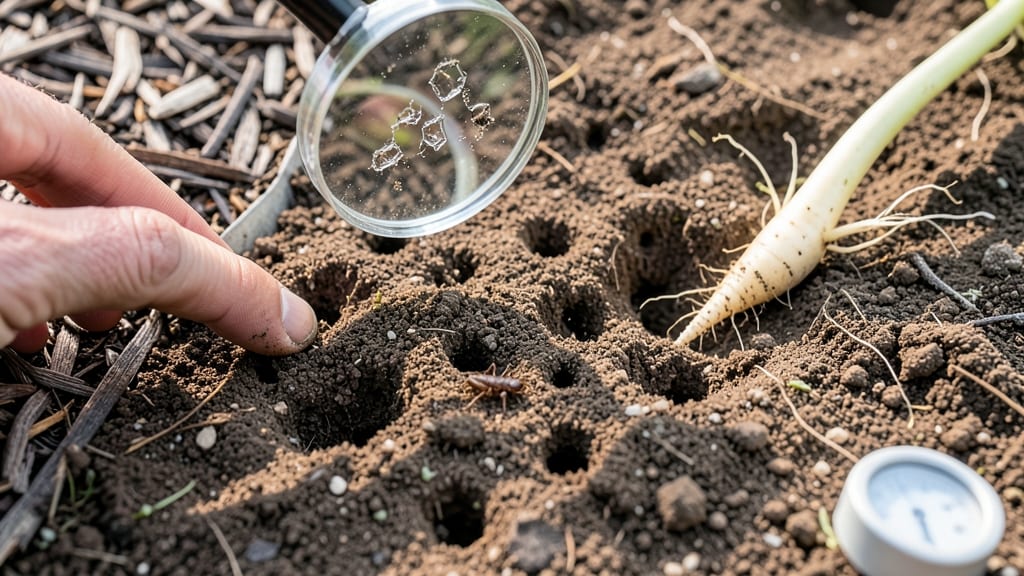
Small holes in garden soil are typically created by soil-dwelling insects like fungus gnats or nematodes, but they can also appear from natural processes such as decaying roots or earthworm activity. Always check whether these holes are caused by pests or organic breakdown before deciding on treatment.
These tiny soil disturbances can actually be a sign of either a thriving ecosystem or an unwanted infestation. 🌱 For instance, earthworm tunnels improve drainage and aeration, while fungus gnat larvae create small craters that may harm plant roots.
The key is examining the hole pattern—clustered, shallow holes suggest pests, while scattered, deeper ones often mean natural soil activity. I recommend testing a small patch first to avoid overreacting to harmless processes.
If you suspect pests, organic solutions like beneficial nematodes or neem oil sprays can target larvae without chemicals. For earthworm tunnels, simply leave them alone—they're nature's plow! Mulching with straw or wood chips also helps deter gnats while improving soil health over time.
💡 In This Article
- Common Causes of Small Holes in Garden Soil
- How to Fix or Prevent Soil Holes Without Harming Plants
Common causes of small holes in garden soil
Fungus gnat larvae create some of the most recognizable small holes in garden soil. These tiny, white maggots—about 1/8 inch long—tunnel just beneath the surface, leaving behind 1-2 millimeter holes that often appear in clusters near moist, organic-rich areas.
You’ll typically find them in potted plants or heavily mulched garden beds where decaying plant matter provides food. The holes look like tiny craters with a slightly raised rim, often surrounded by fine, powdery frass (insect excrement).
Nematodes, microscopic roundworms, create even smaller holes—so tiny they’re barely visible to the naked eye—when they feed on plant roots. These holes appear as pinprick-sized punctures along root surfaces, often accompanied by stunted plant growth or yellowing leaves.
Unlike fungus gnats, nematodes don’t leave surface craters; instead, they create internal damage that only becomes obvious when you examine roots closely or notice plants struggling despite adequate water and nutrients. 🔍
Earthworm activity, on the other hand, produces larger, deeper holes—often 1/4 to 1/2 inch wide—that serve as natural aeration tunnels. These holes have smooth, vertical walls and are usually scattered randomly throughout the soil.
Unlike pest-related holes, earthworm tunnels don’t cluster near the surface; they extend deeper and help improve soil structure. The key difference? Earthworm holes are 3-5 times larger than fungus gnat craters and lack the powdery residue.
Decaying roots and organic matter also contribute to small holes when they break down. As plant roots decompose, they leave behind irregularly shaped cavities that can resemble insect damage at first glance. These holes often contain dark, crumbly soil mixed with partially decomposed plant fibers.
The texture feels softer and more fibrous compared to the clean, powdery soil around fungus gnat holes. This type of hole is harmless and even beneficial, as it enriches the soil with nutrients.
Natural aeration from seasonal soil shifts can create tiny air pockets that resemble holes. When soil dries and cracks, then rehydrates, it forms microscopic fissures that may look like punctures. These are usually shallow and irregular, lacking the distinct patterns of insect activity.
To test, gently press your finger into the soil—if the "holes" collapse easily, they’re likely just air spaces rather than tunnels.
One way to distinguish between these causes is the location and pattern of the holes. Pest-related holes cluster near moisture sources, while natural holes spread evenly.
Use a hand lens (10x magnification) to examine soil samples: fungus gnat holes show distinct larval casings, while nematode damage appears as tiny, blood-red speckles on roots caused by feeding wounds. 🌱