
Tools
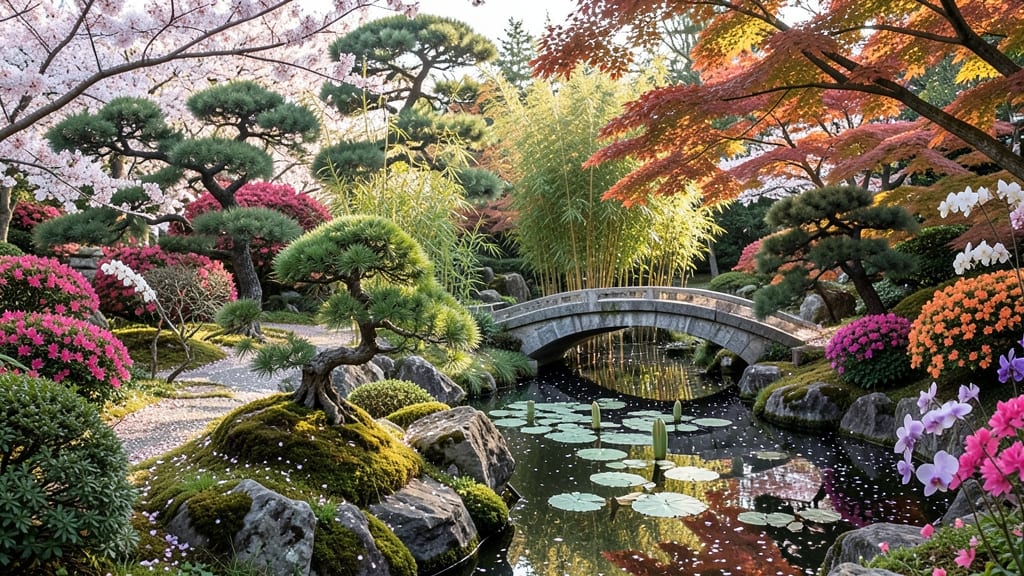
The New York Chinese Scholar’s Garden is a 6-acre retreat in Brooklyn’s Chinatown that merges Ming Dynasty-inspired design with urban horticulture, featuring rockeries, pavilions, and seasonal blooms like azaleas to embody nature’s harmony.
This Brooklyn landmark channels centuries-old Chinese garden philosophy into a modern urban setting, where every pathway and plant serves a purpose. 🌿 The garden’s design mirrors scholar retreats from China’s Ming Dynasty, using elements like curved bridges and stone lanterns to guide visitors through carefully balanced spaces.
What makes it unique is how it adapts these traditions for NYC’s climate—native species like ginkgo trees and bamboo thrive alongside imported camellias, creating a living bridge between cultures.
Whether you’re exploring its tranquil ponds or admiring the seasonal displays, the garden’s layout teaches quiet reflection, a core value in classical Chinese aesthetics.
Beyond its beauty, the garden offers practical inspiration for home gardeners. Its principles—like yin-yang balance through light/shadow play and borrowed scenery with strategic plant placement—can transform even small urban plots.
For example, a simple Japanese maple or hosta can anchor a corner with the same symmetry found in the scholar’s retreat. The key is layering textures and seasonal interest, just as the NYC garden does with its azaleas in spring and camellias in winter.
💡 In This Article
- Classical Chinese Garden Design Principles in Brooklyn
- Best Plants for Recreating Scholar Garden Aesthetics at Home
Classical Chinese garden design principles in Brooklyn
The New York Chinese Scholar’s Garden embodies three core principles from Ming Dynasty scholar retreats: yin-yang balance, borrowed scenery, and microclimate control. The garden’s layout mirrors these concepts through deliberate asymmetry—curved pathways and uneven rock formations create visual harmony by balancing solid and void spaces.
For example, the 15-foot-high stone walls frame views of the garden’s interior while "borrowing" the skyline of Manhattan beyond, a technique called shan shui (mountain-water). 🌿 This fusion of interior and exterior spaces is why the garden feels both intimate and expansive.
Microclimate control is achieved through strategic plant placement and structural elements. Native species like ginkgo trees (with their fan-shaped leaves) provide shade in summer, while bamboo groves filter wind and humidity.
The garden’s three-tiered stone bridges not only guide visitors but also create micro-zones where temperature and moisture vary—cool, shaded areas under bridges contrast with sunlit rockeries. These details reflect how scholar gardens were designed to adapt to China’s diverse climates, now replicated in Brooklyn’s temperate zone.
What’s fascinating is how the garden adapts these principles for modern urban life. The stone lanterns lining the pathways serve dual purposes: they illuminate at night (a practical feature) while symbolizing enlightenment in Chinese philosophy.
Similarly, the pond’s undulating shape mimics natural waterways, but its edges are lined with low-maintenance gravel—a nod to NYC’s need for durability. This blend of tradition and pragmatism is why the garden feels both timeless and relevant. 💫
Another standout feature is the use of seasonal plant rotations to maintain visual harmony year-round. In spring, azaleas and cherry blossoms burst with color, while winter brings evergreen junipers and camellias for texture.
This cyclical approach ensures the garden never feels static, much like how scholar gardens were designed to evolve with the seasons. The result is a living tapestry that changes with the weather—something rare in urban landscapes.
For visitors, the garden’s design principles create an immersive experience. The curved walls and hidden courtyards encourage slow exploration, while the stone bridges and lanterns guide movement without feeling restrictive.
This intentional layout reflects the scholar’s retreat philosophy: a space for contemplation and connection with nature, even in the heart of a bustling city. 🌟
The garden’s success lies in its ability to translate abstract concepts into tangible experiences. For instance, the yin-yang balance isn’t just about aesthetics—it’s felt in the contrast between the open pavilions (yang energy) and the enclosed rockeries (yin energy).
This interplay creates a sense of tranquility that’s both culturally rich and universally accessible. Whether you’re admiring the calligraphy-inspired stone carvings or simply listening to the water feature’s gentle flow, the garden’s design principles come alive in every detail.