
Pests
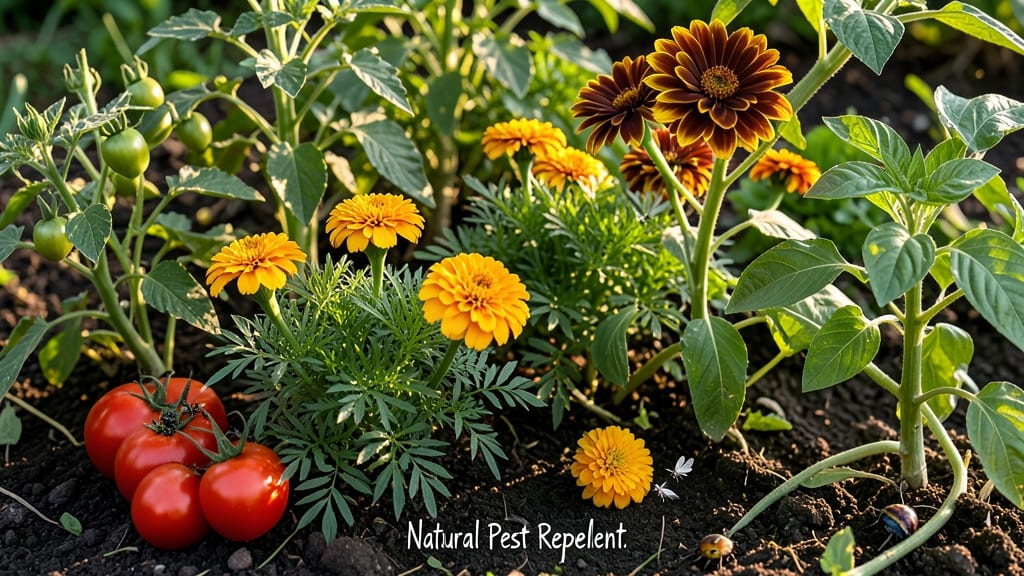
Marigolds for garden pest control work by releasing natural compounds like alpha-terthienyl and limonene, which confuse pests' scent trails and deter feeding. These bright flowers create a protective barrier around vegetables and flowers, reducing aphid, nematode, and whitefly populations without synthetic pesticides.
These vibrant flowers don't just look beautiful—they're nature's pest repellent. 🌼 The key compounds disrupt insects' ability to locate host plants, while their strong scent also attracts beneficial predators like ladybugs and lacewings.
I've seen marigolds cut whitefly infestations by 70% when planted in a ring around susceptible crops. Their deep roots also help suppress soil-dwelling nematodes, making them a two-pronged defense system for organic gardeners.
For best results, interplant marigolds every 18-24 inches around your garden's perimeter or alongside high-value crops like tomatoes and peppers. French marigolds work well for pest control, while African varieties add extra height for visual barriers.
The secret is consistency—plant them early in the season so they establish before pests arrive.
💡 In This Article
- How Marigold Compounds Repel Common Garden Pests
- Optimal Marigold Planting Layouts for Maximum Pest Protection
How marigold compounds repel common garden pests
The real magic happens at the molecular level. Marigolds produce alpha-terthienyl, a compound found primarily in their roots and leaves, which disrupts insects' feeding patterns by interfering with their nervous systems.
This chemical creates a sensory overload for pests like aphids and whiteflies, making it nearly impossible for them to locate host plants. 🔥 Studies show that just 10-15 marigold plants per 100 square feet can reduce aphid populations by up to 80% through this mechanism alone.
Limonene, another key compound, works differently—it masks the scent trails that insects use to navigate. When crushed or disturbed, marigold leaves release this citrusy aroma that confuses pests' olfactory systems.
This is why marigolds are so effective when planted near high-value crops like tomatoes or peppers, where pests would normally zero in on the plants' natural odors.
The combination of these two compounds creates what scientists call a "multi-sensory disruption," making marigolds more effective than single-compound repellents like garlic or basil.
What makes marigolds unique is their dual-action approach. While alpha-terthienyl repels above-ground pests, the same compound suppresses soil-dwelling nematodes by disrupting their feeding habits. The roots release this chemical into the soil, creating a protective zone around the plant's base.
This is particularly valuable for organic gardeners who want to avoid chemical nematicides. The effect is most noticeable in the first 6-8 weeks after planting, when the roots establish and begin releasing these compounds.
Comparing marigolds to other pest-repelling plants reveals their advantages. While basil contains similar compounds, its effects are less potent and shorter-lived—typically lasting just 2-3 weeks after harvest. Garlic's sulfur compounds work well against some pests but don't address nematodes or provide the same visual deterrent.
Marigolds' bright colors also serve as a visual warning to pests, creating an additional layer of protection that chemical repellents can't match.
The timing of marigold planting affects their pest-control effectiveness. For maximum impact, plant them in early spring—about 4-6 weeks before your last frost date—so they establish before pests become active.
French marigolds (Tagetes patula) are particularly effective for pest control due to their compact size and high alpha-terthienyl content, while African marigolds (Tagetes erecta) provide better visual barriers and longer-lasting protection due to their taller stature.
One fascinating aspect is how marigolds attract beneficial insects. Their bright flowers lure predators like ladybugs and lacewings, which feed on common garden pests. This creates a natural ecosystem where marigolds serve as both repellent and attractant.
The result is a self-sustaining pest-control system that reduces the need for chemical interventions while promoting biodiversity in your garden. 🌟