
Tools
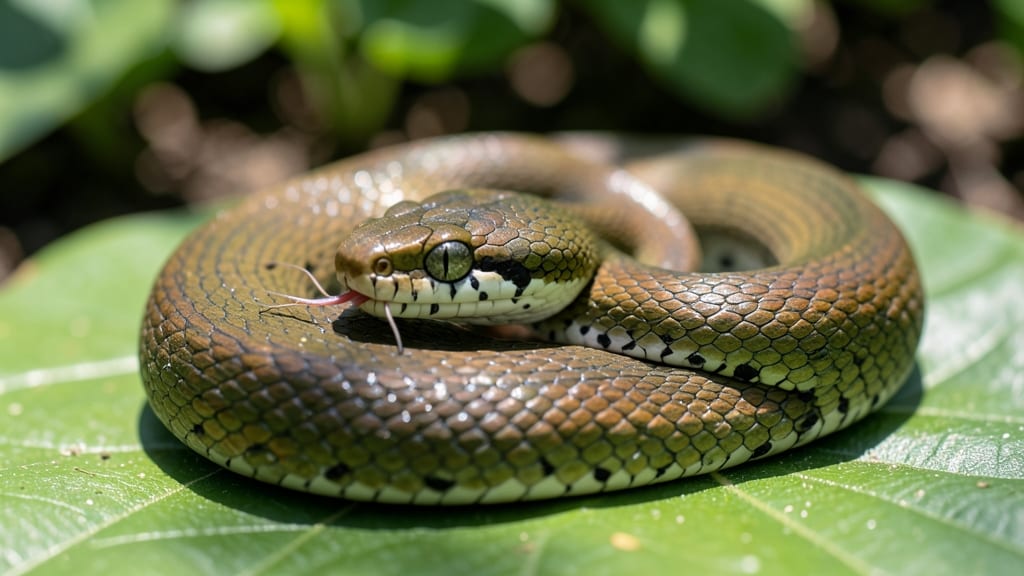
Identifying Louisiana garden snakes is essential for distinguishing harmless species like the rat snake, cooter snake, and garter snake from venomous look-alikes. These non-venomous snakes help control pests and thrive in gardens, wooded areas, and near water sources.
These snakes play a crucial role in Louisiana's ecosystem by keeping rodent and insect populations in check. 🐍 Rat snakes, for example, often sport gray or brown patterns with dark blotches, while garter snakes feature three yellow stripes and are more active during cooler months.
Their smooth scales and slender builds help them navigate through gardens and shrubbery effortlessly.
If you spot one in your yard, remember they're generally harmless and beneficial. For safe encounters, use a broom or shovel to gently guide them toward a nearby bush or wooded area.
Creating a snake-friendly environment—like adding rocks or logs—can also encourage them to stay away from your home while still allowing them to contribute to pest control.
💡 In This Article
- Common Louisiana Garden Snake Species and Their Traits
- How to Safely Encounter and Relocate Garden Snakes in Your Yard
Common Louisiana garden snake species and their traits
Louisiana's garden snakes belong primarily to three non-venomous families: rat snakes (Pantherophis spp.), garter snakes (Thamnophis spp.), and water snakes (Nerodia spp.).
Rat snakes, reaching 3-6 feet long, display striking patterns of dark blotches on gray or brown backgrounds, with juvenile colors resembling venomous copperheads to deter predators. Their smooth, glossy scales allow them to move swiftly through gardens, often hunting rodents and even small birds.
Garter snakes, typically 18-30 inches long, are instantly recognizable by their three vivid stripes (yellow, blue, or red) running along their bodies. These stripes serve as warning signals to predators about their mildly toxic skin secretions.
Unlike rat snakes, garter snakes prefer cooler, damp environments, often found near streams or under logs in wooded areas. Their smaller size and bright markings make them easier to spot during early morning or late evening hours.
Water snakes, like the banded water snake, thrive near ponds, marshes, and slow-moving streams, growing 2-4 feet long. Their dark bands and lighter crossbands help them blend into aquatic vegetation while hunting fish and amphibians.
A key identification trait is their rounded pupils (vs. venomous cottonmouths' vertical slit pupils) and tendency to flee rather than strike when threatened. These snakes' rougher scales and more robust bodies distinguish them from sleeker rat snakes.
All three species share smooth, shiny scales that help them glide effortlessly through grass and shrubs. However, their scale texture differs slightly: rat snakes have smooth, slightly keeled scales, while water snakes exhibit more pronounced keeling.
This keeling creates a subtle ridged texture when running your finger along their backs—a useful field identification trick. Their diets overlap significantly, with all three species contributing to natural pest control by consuming rodents, insects, and amphibians.
What sets Louisiana's garden snakes apart from venomous look-alikes like copperheads is their behavior. Non-venomous species rarely stand their ground when threatened; instead, they'll vibrate their tails (creating a dry rattling sound) or flee into dense vegetation.
Copperheads, by contrast, often remain motionless with raised heads, waiting to strike. The absence of triangular heads and heat-sensing pits (visible as small indentations between eyes and nostrils) further confirms their harmless nature.
Understanding these visual and behavioral cues helps you appreciate these snakes' ecological role while keeping encounters safe. For example, the eastern garter snake may appear intimidating with its bright stripes, but it's completely harmless and even produces a mild venom to subdue prey.
Their presence in your garden actually means fewer slugs, insects, and rodents—making them valuable allies rather than pests.