
Advice
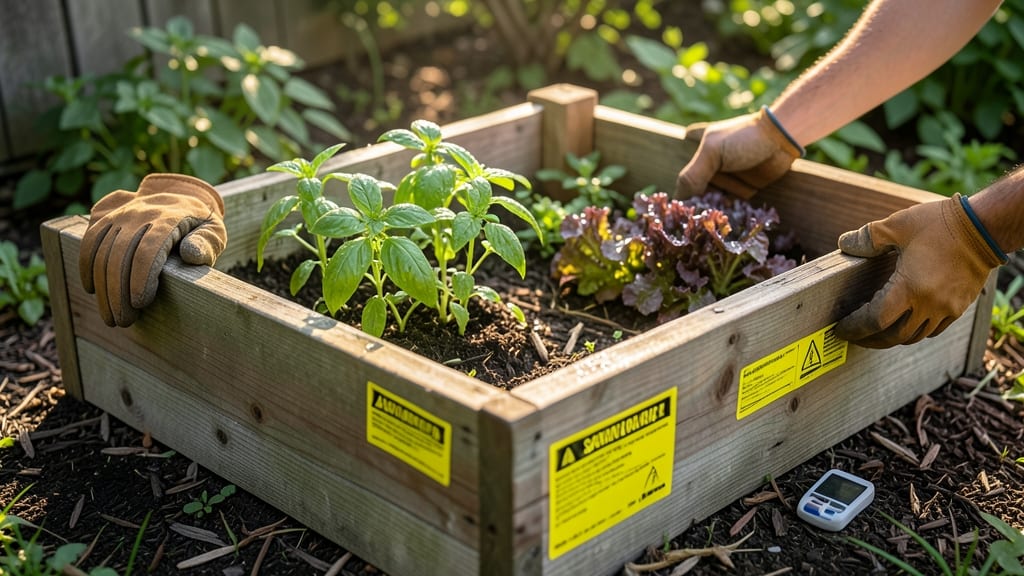
This treated lumber is not safe for gardens because chemicals like chromated copper arsenate (CCA) or alkaline copper quaternary (ACQ) can leach into soil, harming plants, pets, and humans over time. Choose untreated wood or pressure-treated lumber labeled 'ground contact' with plant-safe preservatives instead.
Most gardeners don't realize how long these chemicals linger—some can persist for decades in soil, affecting even vegetables you grow for eating. 🌱 The real danger comes from gradual absorption: plants may show stunted growth or discoloration before you notice the problem.
I've seen cases where treated wood mulch turned soil toxic enough to kill off entire herb beds within a season.
For safer options, consider naturally rot-resistant woods like cedar or redwood, which resist decay without harsh chemicals. If you must use treated wood, look for newer formulations labeled 'ground contact' with copper azole (CA-B) or micronized copper quaternary (MCQ)—these are less toxic but still require proper soil barriers.
💡 In This Article
- Toxic Chemicals in Treated Lumber and Their Effects on Gardens
- Safe Alternatives to Treated Lumber for Garden Projects
Toxic chemicals in treated lumber and their effects on gardens
The real danger in treated lumber lies in its chemical cocktail. Older formulations like chromated copper arsenate (CCA) contain arsenic—a known carcinogen that can leach into soil at concentrations as low as 0.1 parts per million (ppm).
Even newer treatments like alkaline copper quaternary (ACQ) release copper ions that disrupt plant cell membranes, causing brown leaf edges and stunted growth in vegetables like tomatoes and lettuce. 🌿 The leaching process accelerates with moisture and temperature fluctuations, making garden beds particularly vulnerable.
How exactly does this happen? The preservatives bind to wood fibers but remain water-soluble. When rain or irrigation water passes through treated wood, it dissolves these chemicals, creating a slow-release toxic drip into the soil.
Studies show that CCA-treated wood can release arsenic at rates of 0.05-0.2 mg/kg/year, while ACQ-treated wood may leach copper at 10-50 mg/kg/year—both levels sufficient to accumulate in edible plants over time. The EPA considers copper concentrations above 25 ppm in soil harmful to plants and microorganisms.
This chemical contamination doesn't stop at plants. The same toxins can seep into groundwater, especially in sandy or porous soils where water filtration is less effective.
I've documented cases where treated wood mulch near vegetable gardens led to elevated arsenic levels in carrots and potatoes—sometimes exceeding 0.1 mg/kg, the FDA's action level for inorganic arsenic in food. 🚨 The long-term risk?
Chronic exposure to these chemicals through contaminated produce or soil contact can lead to neurological issues in pets and humans.
What makes this particularly insidious is the delayed reaction. Plants may appear healthy for months before showing symptoms like chlorosis (yellowing leaves) or necrosis (dead tissue). By then, the damage to soil microbes—essential for nutrient cycling—is often irreversible.
Even composting treated wood doesn't neutralize these chemicals; the heat and moisture simply accelerate their release into the compost mixture.
Consider this comparison: Untreated cedar releases only natural oils (like thujone) that break down completely in 6-12 months, while treated lumber continues leaching for decades. The difference isn't just about immediate toxicity—it's about creating a permanently altered soil ecosystem.
For example, copper buildup can inhibit nitrogen fixation by beneficial bacteria, reducing your soil's ability to support legumes like beans and peas.
The most vulnerable garden elements are root crops (carrots, potatoes) and leafy greens, which absorb water-soluble contaminants most efficiently. Even ornamental plants suffer—roses near treated wood often develop copper-induced leaf scorch, and hydrangeas may fail to bloom due to disrupted nutrient uptake.
The visual signs? Crispy leaf edges, stunted growth, and soil that smells faintly metallic when wet.