
Tools
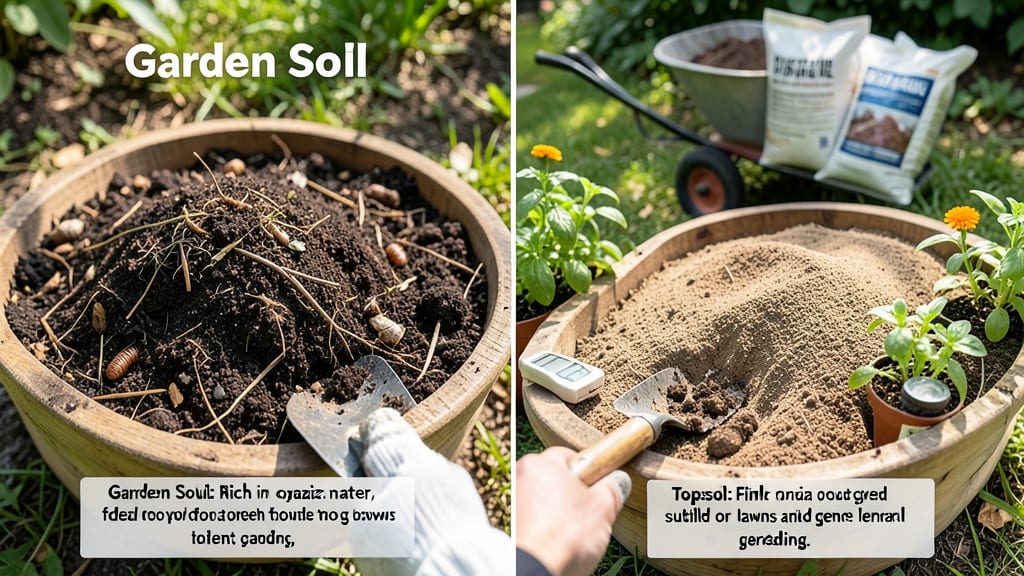
Garden soil and topsoil are not the same: garden soil is specially formulated with compost, nutrients, and amendments for planting, while topsoil is the natural upper layer of soil that may need enrichment to support healthy plant growth.
Garden soil is essentially a pre-mixed blend designed to give plants everything they need to thrive right from planting, including balanced nutrients and improved texture. 🌱 Meanwhile, topsoil is the raw material—often heavy on minerals but lacking the organic boost that encourages root development and microbial activity.
Think of it like comparing a pre-mixed cake batter to flour alone: one is ready to bake, while the other needs extra ingredients to become useful.
For most gardeners, the key difference comes down to purpose. Topsoil is ideal for leveling uneven ground or establishing new lawns, where you want a stable base. Garden soil, however, is the go-to for vegetable beds, flower gardens, or potted plants because it's already optimized for plant growth.
Many people make the mistake of using topsoil in planting beds, only to find their plants struggle without the added nutrients and structure of garden soil.
💡 In This Article
- Composition Differences Between Garden Soil and Topsoil
- When to Use Topsoil vs. Garden Soil in Gardening
Composition differences between garden soil and topsoil
At the microscopic level, topsoil is primarily composed of mineral particles—sand, silt, and clay—that form the foundation of any garden. The ratio of these particles determines its texture: sandy topsoil drains quickly but lacks moisture retention, while clay-heavy topsoil holds water but can become compacted and suffocate roots.
Most natural topsoil contains only about 1-5% organic matter, which is why it often appears dark brown or black but feels dense and gritty when dry. 🌱
Garden soil, on the other hand, is a carefully engineered blend that typically includes 30-50% organic matter—often from compost, peat moss, or aged manure—which introduces essential nutrients like nitrogen, phosphorus, and potassium. This organic content also improves soil structure by creating air pockets that roots need to breathe.
For example, a bag of quality garden soil might contain 20-30% compost, 10-20% perlite or vermiculite for aeration, and 50-60% topsoil or sand to balance texture. The result is a lighter, fluffier medium that holds moisture while preventing compaction.
Nutrient availability is where the two diverge most dramatically. Topsoil contains minerals like calcium, magnesium, and iron, but these are often locked in mineral forms that plants can't access without microbial activity—something garden soil promotes with its added organic matter.
A soil test might reveal topsoil with a pH of 6.0-7.5, but without organic amendments, essential nutrients like nitrogen remain tied up in the soil matrix. Garden soil, however, often has a more neutral pH (6.5-7.0) and includes slow-release fertilizers that feed plants over time.
Consider the difference in microbial life: a teaspoon of healthy garden soil can contain billions of beneficial bacteria and fungi that break down organic matter, while topsoil may have far fewer of these organisms.
This biological activity is what transforms raw minerals into plant-available nutrients—a process that takes years in natural topsoil but happens immediately in garden soil thanks to the added compost and microbial inoculants. 🔬
Texture is another critical factor. Topsoil's mineral composition can make it heavy and slow to warm in spring, delaying planting. Garden soil, with its higher organic content, warms faster and retains heat better, creating an ideal environment for seed germination.
For instance, while topsoil might take 2-3 weeks to reach 60°F in early spring, garden soil can hit that temperature in just 7-10 days—a crucial advantage for early-season planting.
One common misconception is that all topsoil is "good" soil—nothing could be further from the truth. Many topsoil samples contain high levels of sodium or other salts that inhibit plant growth, or they may be contaminated with weed seeds or pathogens.
Garden soil, however, undergoes sterilization and quality control to eliminate these issues, making it a safer choice for edible gardens and container plants.