
Fertilization
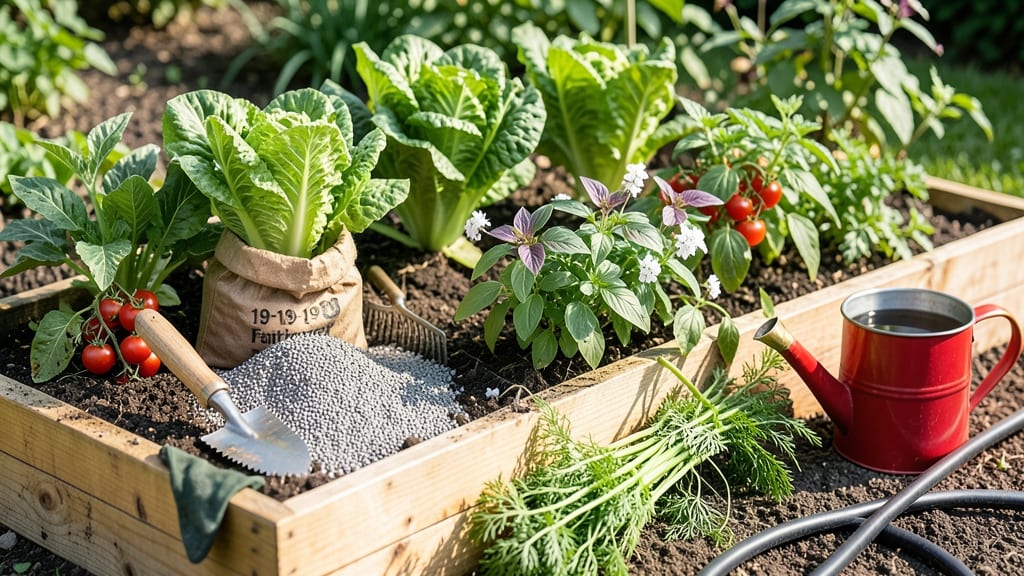
Yes, is 19-19-19 fertilizer good for vegetable gardens when applied properly, as its balanced nitrogen, phosphorus, and potassium ratio promotes healthy growth, but its high salt concentration may damage sensitive plants and alter soil pH over time if overused.
This all-purpose fertilizer works well for vegetables needing steady nutrient support, like tomatoes and peppers, but its synthetic salts can build up in soil, especially in sandy or well-drained conditions. 🌱 The real key is moderation—most gardeners apply it at half-strength (5-10 pounds per 100 square feet) and pair it with compost to offset potential pH shifts.
For leafy greens, I often reduce the rate further since they're more sensitive to salt buildup.
What sets 19-19-19 apart is its equal NPK ratio, which makes it versatile for different growth stages. However, the salt index of 100 (high for synthetic fertilizers) means you'll want to flush the soil occasionally with water to prevent accumulation.
Always do a soil test first—this tells you exactly how much your garden can handle without risking nutrient lockout or root damage.
💡 In This Article
- How 19-19-19 Fertilizer Affects Soil and Plant Health
- Best Practices for Using 19-19-19 in Vegetable Gardens
How 19-19-19 fertilizer affects soil and plant health
The 19-19-19 ratio means this fertilizer delivers equal parts nitrogen (N), phosphorus (P), and potassium (K), which are essential for plant growth. Nitrogen fuels leafy top growth, phosphorus strengthens root systems and flowering, while potassium regulates water and nutrient uptake.
For vegetables, this balance supports vigorous foliage, robust stems, and abundant fruiting—critical for tomatoes, peppers, and squash. The equal NPK ratio makes it ideal for mid-season feeding when plants need all three nutrients simultaneously.
However, the high salt content (salt index of 100) is a major factor. When dissolved in water, these salts can draw moisture out of plant roots through osmosis, causing dehydration and stress.
In sandy soils, salts leach away more easily, but in clay or loamy soils, they accumulate near the surface, creating a toxic layer that roots can't penetrate. Over time, this disrupts soil microbial activity, which breaks down organic matter and cycles nutrients. 🌱
Another critical aspect is soil pH. Synthetic fertilizers like 19-19-19 are typically acidic (pH ~5.5-6.5), which can lower soil pH over repeated applications.
Most vegetables thrive in slightly acidic to neutral soil (pH 6.0-7.0), so using this fertilizer without monitoring pH can lead to nutrient deficiencies—especially for micronutrients like iron and manganese, which become less available in overly acidic conditions. A soil test every 2-3 years helps track these shifts.
Comparing it to organic alternatives, 19-19-19 provides immediate, soluble nutrients, while compost or manure releases nutrients slowly over time. Organic options also improve soil structure and microbial life, but they require more frequent applications. The trade-off?
Synthetic fertilizers give quick results, but organic amendments build long-term soil health. For example, a blend of 19-19-19 with compost can give you the best of both worlds: fast nutrient availability with reduced salt buildup.
For sensitive crops like lettuce or spinach, the salt content can be particularly damaging. These leafy greens absorb water rapidly, and high salt levels can cause leaf scorch or stunted growth. In contrast, hardier vegetables like corn or beans tolerate higher salt levels better.
Always dilute the fertilizer to half-strength (5-10 pounds per 100 square feet) for these delicate plants to minimize risk.
One often-overlooked detail is how temperature affects salt solubility. In hot weather, salts dissolve more quickly, increasing the risk of root burn. Applying fertilizer in the early morning or late afternoon—when temperatures are cooler—reduces this risk.
Additionally, watering thoroughly after application helps wash excess salts deeper into the soil, away from root zones. 💧