Garden peas grow anywhere from 1 foot to 6 feet tall, depending on the variety you choose — a range that can completely change how you plan your garden layout.
Wondering whether your garden has space for peas? These versatile legumes range from compact bush varieties to towering vines, each with unique trellis requirements that can double your harvest potential.
Dwarf varieties like 'Little Marvel' stay under 2 feet, making them perfect for small spaces or containers, while climbing types like 'Wando' reach 6 feet and need sturdy support to thrive.
Below, I’ll break down how height affects spacing, trellising needs, and even how to maximize your yield based on the variety you grow.
Garden Garden Pea Height Range
0.0.5 ftto6 ft
0 ft
3 ft
6 ft
9 ft
12 ft
🌱
Medium Vegetable
Garden pea height guide: variety-specific growth ranges explained
When planning your pea patch, knowing how tall garden peas grow helps you choose the right variety for your space. Some peas stay compact, perfect for small gardens, while others climb like vines, ideal for maximizing vertical growth in tight plots.
The height range also determines whether you'll need trellises or can let them sprawl naturally.
Pea varieties fall into three main categories: dwarf (bush) types under 2 feet, semi-dwarf varieties reaching 3-4 feet, and climbing (pole) peas that can surge to 6 feet or taller. Your garden's layout and sunlight exposure will influence which category thrives best in your space.
Below is a detailed breakdown of 12 popular pea varieties, their mature heights, spacing needs, and ideal growing conditions. This guide helps you select varieties that fit your garden's dimensions while maximizing yield and ease of harvest.
For small gardens or containers, 'Little Marvel' and 'Tom Thumb' stay under 18 inches, making them ideal for balcony planters. In contrast, 'Wando' and 'Oregon Sugar Pod' climb to 6 feet, perfect for trellised corners or fences.
| Variety |
Type |
Height Range |
Spacing (in) |
Days to Harvest |
Best For |
| Little Marvel |
Dwarf |
12-18" |
2-3" |
60-65 |
Containers, small gardens |
| Tom Thumb |
Dwarf |
12-16" |
2" |
60-65 |
Balconies, window boxes |
| Sugar Ann |
Semi-Dwarf |
24-30" |
3-4" |
65-70 |
Small plots, trellises |
| Sugar Snap |
Semi-Dwarf |
30-40" |
4" |
65-70 |
Small gardens, fences |
| Oregon Sugar Pod |
Climbing |
6-8 ft |
4" |
65-70 |
Trellises, large plots |
| Wando |
Climbing |
6-7 ft |
3-4" |
60-65 |
Large gardens, fences |
| Telephone |
Climbing |
When and how to use trellises for maximum pea growth
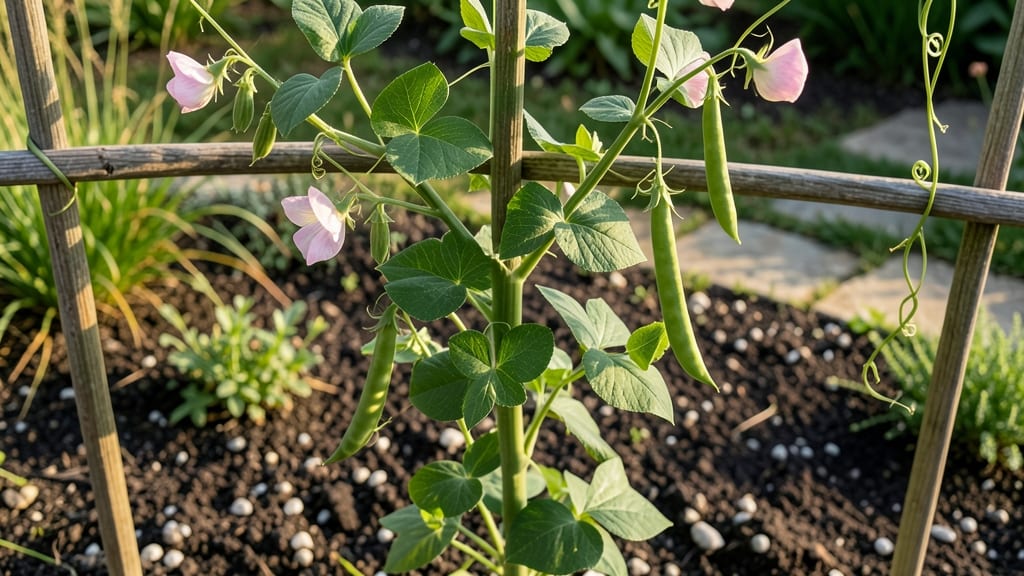
Trellises aren't just for show—they're game-changers for your pea harvest. Climbing varieties like 'Wando' can reach 6 feet tall with proper support, while bush types stay compact.
The right trellis boosts yield by 30-50% by improving air circulation and reducing disease. But timing and material matter just as much as the structure itself.
I've learned the hard way that installing trellises too late (after vines exceed 12 inches) stresses plants and weakens growth. The key is to set up support at planting time for climbing peas.
Even bush varieties benefit from lightweight stakes to prevent lodging during heavy rains. Let's break down the essential steps to maximize your pea plants' potential.
Step-by-Step Trellis Installation for Peas
- Step 1: Choose your material—bamboo poles (6+ ft) for tall varieties or wire mesh (18-24 inches wide) for bush types. Netting works well for small spaces.
- Step 2: Install supports 4-6 weeks before planting (early spring) or immediately after sowing for climbing peas. Drive stakes 6 inches deep for stability.
- Step 3: Space trellises 18-24 inches apart in rows. For tall varieties like 'Ambassador', use 8-foot stakes or A-frame structures.
- Step 4: Train vines by tying stems to trellis with soft fabric strips every 4-6 inches as they grow. Avoid wire ties that can damage stems.
- Step 5: Prune side shoots after flowering to direct energy upward. Remove any yellowing leaves to prevent disease spread.
🌱 Pro Tip: Add compost tea to soil before planting to boost root strength for taller varieties.
Your trellis choice directly impacts pea height and health. Bamboo poles are my go-to for tall varieties like 'Sugar Snap' because they're sturdy and biodegradable.
For small-space gardens, I recommend plastic-coated wire trellises (like those from Gardeners.com) that attach to fences. Netting trellises (3x3 feet) work beautifully for bush peas in containers.
One common mistake I see is overcrowding plants on trellises, which leads to tangled vines and poor air flow. Semi-dwarf varieties like 'Oregon Sugar Pod' need 12-18 inches between plants on the trellis, while climbing types should have 4-6 inches between vines**.
Proper spacing prevents powdery mildew and ensures even sunlight exposure.
Did you know that trellised peas mature faster? Studies show climbing varieties reach harvest 7-10 days earlier than bush types because their energy focuses on pod production rather than supporting their own weight.
The earlier harvest means you can extend your growing season by planting succession crops in the same space.
For troubleshooting, watch for floppy vines—this usually means the trellis isn't tall enough or the stakes aren't deep enough.
I fix this by adding cross-bracing to tall trellises or driving stakes deeper. Yellow leaves on lower stems often indicate overwatering, while brown spots suggest fungal issues from poor air circulation. Always remove affected foliage immediately to protect your harvest.
★★★★★5.0(13 reviews)