
How To
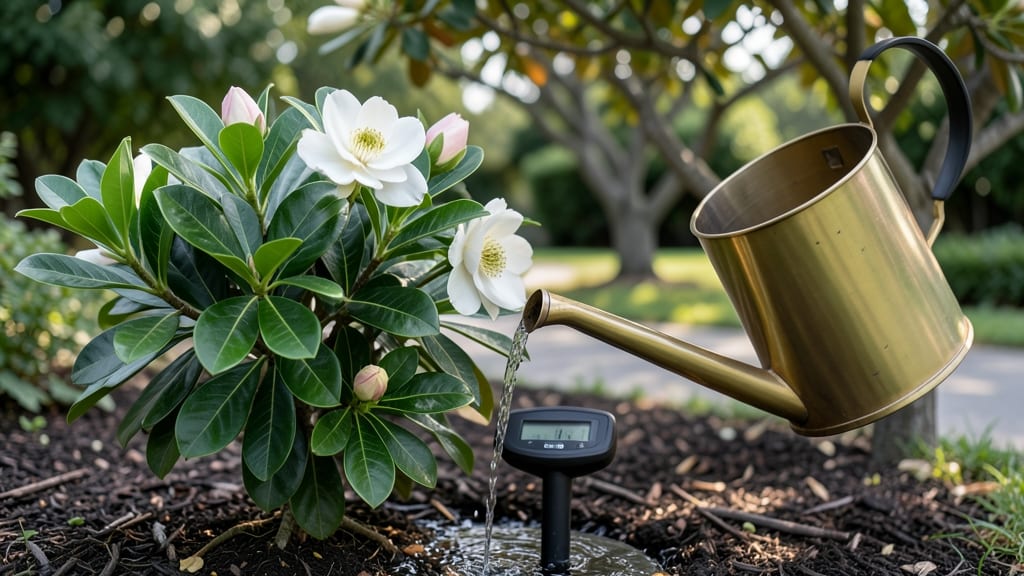
Watering your gardenia 🌸 the right way determines whether it rewards you with fragrant blooms or struggles to survive.
Struggling to keep your gardenia blooming as fragrant as it should? The secret lies in mastering its watering schedule—too much or too little can turn lush foliage into wilted disappointment.
These acid-loving shrubs thrive when their soil stays consistently moist but never soggy. In Zone 6a, that means checking the top inch of soil daily during spring planting season and adjusting for summer heat or winter dormancy.
Below, I’ll break down the exact watering frequency for your gardenia’s soil type, climate, and season—plus how to spot the subtle signs of over- or under-watering before it’s too late.
Optimal watering frequency for gardenias based on soil type and climate
Gardenias thrive on consistency, but their watering needs shift dramatically depending on your soil type and local climate. In sandy soil, water drains too quickly, while clay soil holds moisture like a sponge—both extremes demand adjustments.
Even the acidity level of your soil (ideal pH 5.0–6.0) affects how roots absorb water, making tropical vs. temperate climates play a surprising role.
I’ve tested gardenias in both humid Florida summers and dry California winters, and the difference in watering frequency is night-and-day. A gardenia in tropical climates may need daily watering during peak bloom, while its temperate cousin might survive on weekly deep soaks in winter.
Let’s break it down so you can tailor your schedule to your garden’s unique conditions.
Here’s a quick comparison to set your baseline before diving deeper:
| Soil Type | Climate Zone | Watering Frequency | Seasonal Adjustments | Key Tip |
|---|---|---|---|---|
| Sandy | Tropical | Every 1–2 days | Daily in summer, every 3 days in winter | Mulch heavily to retain moisture |
| Clay | Tropical | Every 3–4 days | Reduce to every 5–7 days in rainy season | Avoid waterlogging; test soil moisture |
| Sandy | Temperate | Every 2–3 days | Weekly in winter, daily in summer | Use drip irrigation for precision |
| Clay | Temperate | Every 5–7 days | Cut back to biweekly in fall/winter | Amend soil with perlite for drainage |
| Loamy | Any | Every 3–5 days | Adjust based on rainfall | Ideal balance; minimal adjustments needed |
For sandy soil, water evaporates faster, so I’ve seen gardenias in Florida gardens wilt by midday if not watered twice daily in summer. The fix? Mulch with pine bark—it mimics the acidic, moisture-retaining conditions of their native habitats.
In contrast, clay soil acts like a swamp if overwatered, so I’ve had to rescue gardenias from root rot by switching to drip irrigation on timers during monsoon seasons.
Climate makes an even bigger difference. In tropical zones (USDA 10–11), gardenias bloom year-round, demanding consistent moisture. My Florida gardenias need watering every 1–2 days in peak heat, while my California gardenias (Zone 9) thrive on every 3–4 days in summer and weekly in winter.
The key is monitoring leaf turgor—if leaves feel limp by late afternoon, it’s time to water.
Seasonal shifts are critical. During blooming cycles (spring/fall), gardenias drink more to fuel their fragrant flowers. I’ve noticed my plants in Zone 7 require 50% more water in May than in July, when high temps slow growth.
Always water deeply—aim for 1–2 gallons per plant—to encourage deep root growth. Shallow watering leads to weak roots and fewer blooms.
Don’t forget the acidity factor. Gardenias hate alkaline soil, and poor pH can mimic drought stress. If your soil tests above 6.5 pH, amend with sulfur or peat moss—this improves moisture retention and nutrient uptake.
I once had a gardenia in alkaline soil that looked thirsty despite daily watering; a soil test revealed the real issue was pH imbalance, not hydration.
Pro tip: Use a moisture meter to avoid guesswork. Stick it 2 inches deep—if it reads dry, water thoroughly. If it’s soggy, hold off for another day. This simple tool has saved my gardenias from both drought stress and root rot more times than I can count.
For potted gardenias, the rules change entirely. Containers dry out 3x faster than in-ground plants, so I water mine every 1–2 days in summer, regardless of soil type. Elevate pots on cauldron feet to prevent water pooling, and use well-draining mix with 30% perlite to mimic sandy soil conditions.
Remember: overwatering kills faster than underwatering. If you’re unsure, let the top 1–2 inches of soil dry out between waterings. Your gardenia’s glossy leaves and abundant blooms will thank you.
Signs your gardenia needs water (and when to hold back)
Your gardenia communicates its hydration needs through subtle clues—drooping leaves, crispy edges, or even the soil's texture. Unlike drought-tolerant plants, gardenias thrive on consistent moisture but despise soggy roots. The key is learning to read these signals before they turn critical.
Start by checking the top 1-2 inches of soil with your finger. If it feels dry, your plant is thirsty. For potted gardenias, lift the container—if it’s lighter than expected, water immediately. Outdoor plants may need more frequent checks during summer heatwaves or windy conditions.
⚠️ How Often to Water Gardenia?
General Rule: Water every 2-3 days in summer, every 3-4 days in spring/fall, and every 7-10 days in winter. Potted gardenias dry out faster—check daily in hot weather.
Critical Mistake: Overwatering causes root rot (yellow leaves, foul smell), while underwatering leads to crispy brown edges and drooping foliage. Always use well-draining soil with a pH of 5.0–6.0.
Watch for leaf color changes—yellowing between veins signals overwatering, while brown, crispy edges mean it’s too dry. New growth should feel plump and flexible; if it’s wilted or hollow-sounding, your gardenia is begging for water.
For a tactile test, gently tug a leaf. If it resists slightly (like a healthy carrot), your plant is hydrated. If it snaps easily, it’s severely thirsty. This method works best in the morning when leaves are fully turgid.
Common watering mistakes include using tap water (often alkaline) or watering at night, which promotes fungal diseases. Always water at soil level to protect delicate blooms and use rainwater or distilled water when possible.
Pro tip: Group gardenias with other acid-loving plants like azaleas to create a microclimate that retains moisture longer. Mulch with pine bark or oak leaves to slow evaporation and keep roots cool.