
Watering
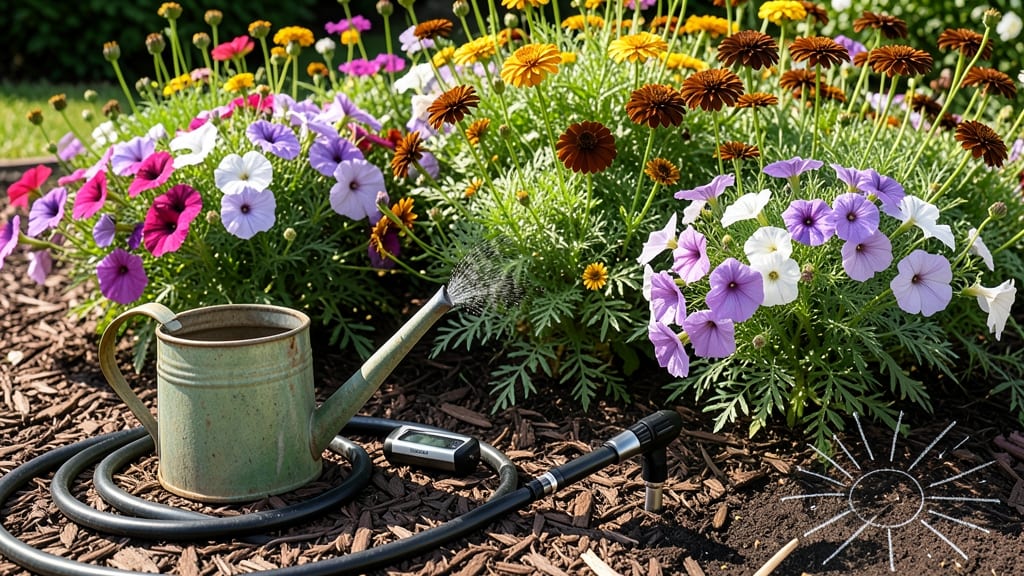
Watering your flower garden the right way means checking soil moisture deep—not just the surface—because shallow watering tricks you into thinking your plants are hydrated when their roots are still thirsty.
Overwatering kills more plants than drought—yet most gardeners still guess how often to water their flower beds. The secret lies in deep-soil tests that reveal when roots actually need hydration, not just surface moisture.
In USDA Zone 6a, where spring blooms kick off in April, your watering schedule shifts from every 3-5 days to daily soaks by summer. But without testing, you risk drowning tender petals or stressing delicate stems.
Below, I’ll show you the 3 foolproof tests to time watering perfectly, plus how to adjust for clay soil, mulch, and heat waves—so your 🌸 garden thrives without the guesswork.
Deep-soil moisture tests to water flower gardens perfectly
Most gardeners water based on a schedule or when the soil looks dry—but that’s a recipe for overwatering or underwatering. The key to perfect hydration lies in testing the root zone, where plants actually absorb moisture.
Unlike surface checks, these deep-soil tests account for soil type, plant needs, and weather conditions, ensuring your annuals and perennials thrive without stress.
Why does this matter? Sandy soil drains quickly, while clay soil holds moisture for days. Annuals like petunias need frequent watering, but lavender (a drought-tolerant perennial) wilts if overwatered.
By testing 1-2 inches deep, you’ll match watering to root depth and plant type, not just guesswork. Let’s dive into the three most reliable methods.
Step-by-Step Deep-Soil Moisture Tests
- Finger Test (Best for Beginners)
- Push your index finger 1-2 inches into the soil near the plant’s base.
- If soil feels dry and crumbly, water deeply. If moist but cool, wait 1-2 days.
- Clay soil stays damp longer; sandy soil dries faster.
- Trowel Check (For Precision)
- Dig a small hole 2-3 inches deep with a trowel.
- Examine the soil: Dark and moist = hold off watering; light and dry = water immediately.
- Ideal for bulbs and perennials with deep roots.
- Moisture Meter (For Tech-Savvy Gardeners)
- Insert the meter’s probe 2 inches deep near the plant.
- Read the moisture percentage: Below 30% = water; 40-60% = ideal.
- Calibrate for your soil type (sandy vs. clay) for accuracy.
- Adjust for Plant Type
- Annuals (e.g., marigolds, zinnias): Test daily in hot weather; they dry out fast.
- Perennials (e.g., coneflowers, daylilies): Test every 3-5 days; deep roots store moisture.
- Succulents/Sedums: Only water if soil is bone-dry.
- Time It Right
- Water in the early morning (before 10 AM) to reduce evaporation and fungal risk.
- Avoid watering at night—wet foliage invites powdery mildew.
- Use a soaker hose or drip irrigation to deliver water directly to roots.
💧 Pro Tip: Mulch with 2-3 inches of organic mulch (like straw or shredded bark) to retain moisture and reduce testing frequency by 30%.
Here’s how to interpret your results: If your finger test shows dry soil but your trowel check reveals moisture 2 inches down, your annuals (with shallow roots) need water, while your perennials (with deeper roots) can wait.
This layered approach prevents both root rot and wilting, two common mistakes that kill flower beds.
For sandy soil, which drains like a sieve, you may need to water every 1-2 days in summer, while clay soil might only need watering every 5-7 days.
Pay attention to weather patterns: After a heavy rain, skip testing for 24-48 hours—nature’s done the watering for you. Use a rain gauge to track precipitation and adjust accordingly.
Don’t overlook the visual cues from your plants. Wilted leaves by midday often signal thirst, but yellowing leaves or mushy stems mean you’ve overdone it. Combine these deep-soil tests with observational checks for foolproof results.
For example, hydrangeas droop when thirsty but perk up after a deep drink, while roses may show crispy edges if underwatered.
Tools like a moisture meter ($20-$30) or a simple wooden dowel (free!) can save your flower garden from guesswork. I keep a small trowel and a notebook nearby to log soil moisture readings—this helps me spot patterns over time.
For instance, I noticed my sandy loam dries out 2 days faster in July than in June, so I adjust my watering schedule proactively.
One final tip: Water deeply each time you water—aim for 1-2 inches of moisture per session. Shallow watering encourages surface roots, which dry out quickly and stress your plants.
Use a measuring stick or a clear plastic bottle (like a soda bottle with markings) to track how much water your soil absorbs. This ensures you’re hydrating the entire root zone, not just the top layer.
By mastering these deep-soil tests, you’ll transform from a guessing gardener to a data-driven grower. Your flower beds will reward you with vibrant blooms, healthier foliage, and fewer plant casualties.
Start with the finger test this week, and soon you’ll water with the confidence of a seasoned pro. 🌸
Watering frequency schedule by flower type and climate Zone
Finding the perfect watering schedule for your flower garden depends on two key factors: plant type and climate zone. What works for petunias in Zone 9 will drown roses in Zone 5—and vice versa.
Let’s break down the science-backed intervals for three popular flowers across USDA zones 3 through 10, plus how mulch and seasonal shifts change the game.
First, a critical rule: Morning watering (before 10 AM) is always better than evening. Why? It reduces fungal risks from prolonged leaf wetness and lets roots absorb moisture during the day’s heat. Evening watering can trap moisture on foliage, inviting powdery mildew—especially in humid zones like 7-10.
That said, if you’re in Zone 3 or 4, evening watering might be your only option during freezing nights.
Here’s how to adjust watering based on mulch thickness (aim for 2–3 inches of organic mulch like straw or shredded bark). Mulch slows evaporation, cutting water needs by 30–50% in hot climates.
In Zone 9’s summer, mulched petunias might only need water every 3 days, while unmulched ones dry out in 2 days. In cooler zones like Zone 5, mulch helps retain moisture through spring’s unpredictable rains.
| Flower Type | USDA Zones 3–4 | USDA Zones 5–6 | USDA Zones 7–8 | USDA Zones 9–10 |
|---|---|---|---|---|
| Roses | Every 5–7 days (deep soak) | Every 4–5 days (spring/fall) | Every 3–4 days (summer) | Every 2–3 days (daily in heatwaves) |
| Hydrangeas | Every 7–10 days (spring only) | Every 5–7 days (consistent) | Every 4–5 days (mulch helps) | Every 3–4 days (drought-prone) |
| Petunias | Every 4–5 days (short season) | Every 3–4 days (spring/fall) | Every 2–3 days (summer) | Daily (or every other day) |
| Seasonal Adjustments: Reduce by 30% in winter; increase by 50% in summer heat. | ||||
Notice how petunias (annuals) need more frequent watering than hydrangeas (perennials), which store moisture in their woody stems. In Zone 10, petunias might wilt by midday without daily watering, while roses in Zone 5 can survive weeks with just spring rains.
Always check soil moisture 2 inches deep—surface dryness doesn’t mean roots are thirsty!
Pro tip: Group plants with similar water needs together. Pair roses and hydrangeas in one bed, and petunias and zinnias in another. This way, you’re not zigzagging across the garden with your hose.
And if your area gets less than 1 inch of rain per week, supplement with drip irrigation on a timer for consistency.
Finally, watch for seasonal shifts. In Zone 7, you might water roses every 4 days in May, but by August, that drops to every 2 days—unless you’ve added mulch.
Always adjust based on weather forecasts, not just the calendar. A 90°F day in July will dry soil twice as fast as a 75°F day in June.