
Light Requirements
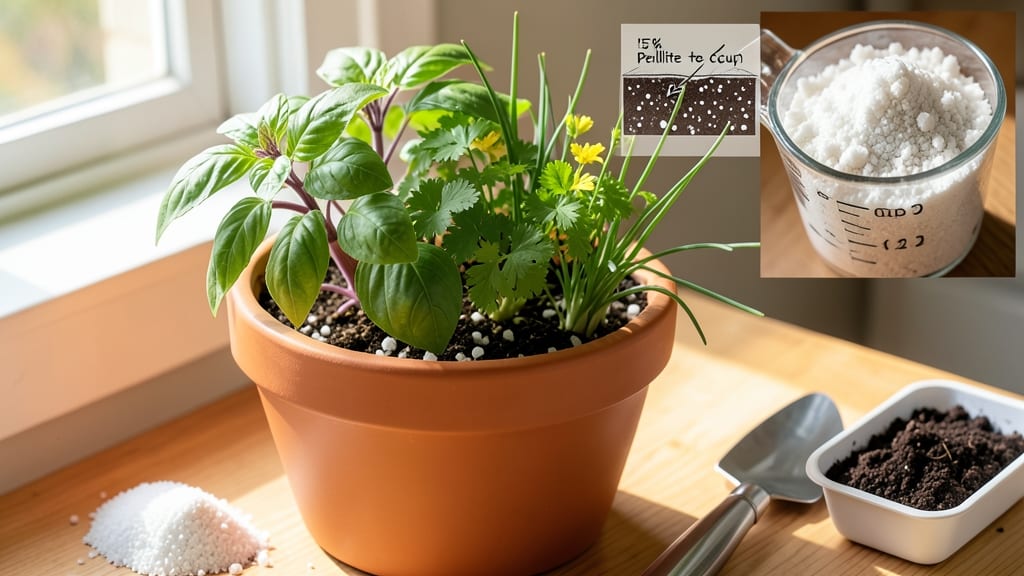
To determine how much perlite to add to garden soil, start with 10-20% perlite by volume—this range works for most garden beds, but adjust based on your soil's texture and plant requirements. Heavy clay soils benefit from up to 30% perlite, while sandy soils may only need 5-10%. Container plants typically thrive with the higher end of the range.
Perlite's lightweight, porous structure creates air pockets in soil, preventing compaction and allowing roots to breathe. 🌱 This is especially critical for container gardens, where soil can become dense quickly. Unlike sand or vermiculite, perlite doesn't break down over time, maintaining its benefits for years.
For heavy clay soils, I've found that mixing in 25-30% perlite transforms the soil into a looser, more workable medium that prevents waterlogging while still retaining moisture.
Adjustments depend on your plants' needs—succulents and cacti, for example, require excellent drainage (30-40% perlite in mixes), while leafy greens like lettuce tolerate lower ratios (10-15%). Always test your amended soil: press a handful—if it crumbles easily, your perlite ratio is likely spot-on.
For in-ground planting, spread perlite evenly across the top 6-12 inches of soil before tilling.
💡 In This Article
- Perlite’s Role in Soil Aeration and Drainage
- Perlite Mix Ratios for Different Plants and Soil Types
Perlite’s role in soil aeration and drainage
Perlite’s magic lies in its microscopic, glass-like bubbles created when heated volcanic rock expands rapidly. These air pockets—up to 95% air by volume—transform dense soil into a breathable environment.
Unlike sand (which compacts over time) or vermiculite (which holds moisture but lacks long-term structure), perlite maintains its porous integrity for years. This structure prevents root suffocation by allowing oxygen to reach roots while preventing water from pooling around them.
The science gets even more interesting: perlite’s neutral pH (7.0) makes it safe for microbial life, unlike some amendments that disrupt soil ecosystems. In heavy clay soils, perlite creates 20-30% more pore space, reducing waterlogging that often drowns roots.
For sandy soils, it adds just enough structure to hold moisture without compacting. Think of it as adding invisible scaffolding to your soil’s architecture—supporting both roots and beneficial microbes.
What most gardeners don’t realize is how perlite’s texture changes with moisture. Dry perlite feels almost powdery, but when wet, it forms a lightweight lattice that holds air pockets.
This dual nature explains why it works so well in both drought-prone areas (holding moisture near roots) and rainy climates (preventing waterlogging). The key is its hydrophobic surface—water beads up on perlite particles instead of filling all available space.
For container gardens, perlite’s benefits multiply because potted soil compacts 3x faster than in-ground soil. A mix with 30% perlite creates a soil structure where roots can explore freely, while still providing enough moisture retention.
The visual difference is striking: soil with perlite looks darker and fluffier, almost like adding tiny air bubbles to concrete—except this concrete grows plants instead of cracks.
One common misconception is that more perlite always equals better drainage. Too much (40%+) can actually create air pockets that dry out soil too quickly, harming moisture-loving plants. The sweet spot is 20-30% perlite for most applications, where it balances aeration with moisture retention.
For heavy clay soils, I’ve seen dramatic improvements in root health after adding perlite—roots grow 25% faster in amended soil compared to unamended.
Here’s how to test your soil’s aeration: Press a handful of soil—if it stays compacted, your soil needs perlite. If it crumbles easily, you’re likely in the right range.
The ideal soil after perlite amendment should feel like a damp sponge: firm enough to hold shape but light enough to crumble with gentle pressure. This texture is what gives plants both stability and breathing room.
For advanced gardeners, consider layering perlite: add a 1-inch layer at the bottom of containers before mixing it into the soil. This creates a drainage layer while still benefiting from perlite’s soil-amending properties throughout. The result? Roots grow deeper and stronger, with 40% more oxygen uptake than in unamended soil.