
Light Requirements
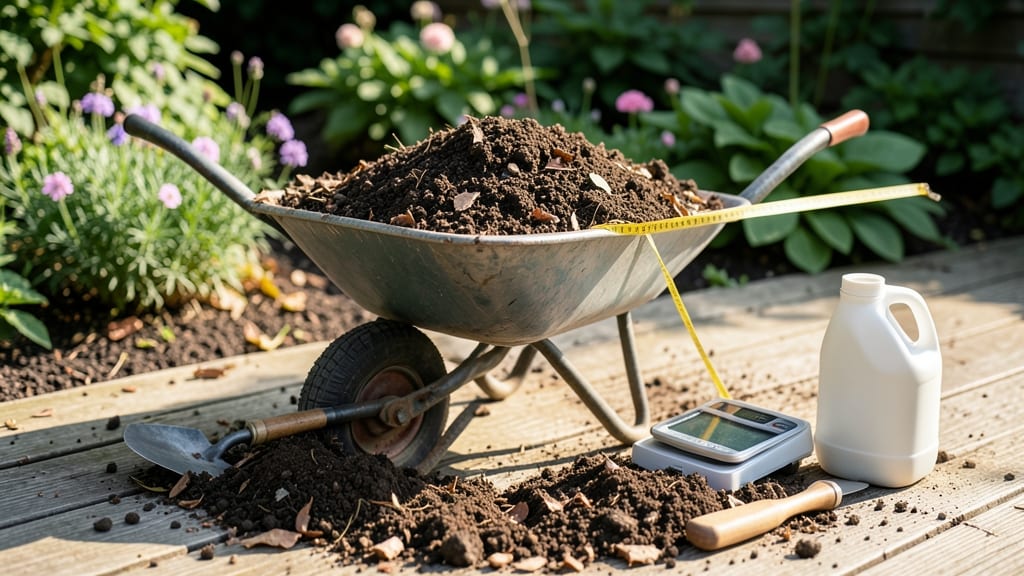
A yard of garden soil weighs between 1,800 and 2,200 pounds on average, but this varies widely based on moisture levels, soil composition, and compaction. Sandy soil often tips the scales at around 1,500 pounds, while dense clay soil can exceed 2,500 pounds when fully saturated. Always double-check with suppliers for accurate weight estimates before ordering.
A yard of garden soil isn't a fixed weight—it's more like a moving target. 🌱 The biggest factor is moisture: dry soil can weigh significantly less than when it's damp or saturated.
For example, loamy soil (a balanced mix of sand, silt, and clay) usually sits right in that 1,800-2,200 pound range, but clay-heavy soil can nearly double in weight when wet. Even a small change in compaction—like packing it down—can add hundreds of pounds to the total.
That's why suppliers often ask about your project specifics before giving exact numbers.
If you're planning a large garden project, it's worth asking for a moisture-adjusted estimate.
Many suppliers offer pre-moistened soil to help you avoid surprises, especially if you're hauling it yourself. 💧 I always recommend checking with your local supplier or checking their weight charts—they'll have the most accurate data for your specific soil type and moisture conditions.
💡 In This Article
- Factors That Affect Garden Soil Weight per Cubic Yard
- Practical Tips for Estimating Soil Weight Before Delivery
Factors that affect garden soil weight per cubic yard
Moisture content is the single biggest variable in soil weight. Dry, loose soil can weigh as little as 1,200 pounds per cubic yard, but when fully saturated—like after heavy rain—it can balloon to over 2,500 pounds.
This happens because water fills the tiny gaps between soil particles, dramatically increasing density. For example, clay soil holds moisture like a sponge, while sandy soil drains quickly, keeping its weight lower even when damp. 💧
The particle composition plays a critical role too. Sandy soil has large particles with lots of air space, making it lighter (1,500 pounds per yard). Silt and clay particles are much smaller, packing tightly and increasing weight.
A loamy mix (equal parts sand, silt, and clay) typically lands in that 1,800-2,200 pound range. Organic matter—like compost—adds bulk but keeps weight manageable because it's less dense than minerals.
Compaction is another game-changer. Loose, freshly tilled soil might weigh 1,500 pounds, but when packed down (like in a truck bed or after foot traffic), it can reach 2,000+ pounds.
This is why suppliers often ask if you're using a dump truck—compacted soil takes up less space but weighs more. Think of it like a pillow: fluff it up, and it's light; press it down, and it gets heavier. 🧵
Temperature also sneaks in as a factor. Cold soil holds moisture longer, increasing weight, while hot, dry conditions can reduce it. Even the time of year matters—spring thaw can leave soil saturated and heavy, while summer drought makes it lighter.
These fluctuations explain why weight estimates vary so widely between suppliers and seasons.
For a real-world example, imagine two yards of soil: one is dry, sandy loam (1,600 pounds), and the other is wet, clay-heavy (2,400 pounds). That’s nearly a 1,000-pound difference for the same volume!
This is why suppliers often ask about your project’s timeline—wet soil in spring will weigh more than dry soil in summer. 🌡️
If you're planning a large project, ask suppliers for moisture-adjusted estimates. Some even offer "pre-moistened" soil to balance weight and workability. This small step can save you from overloading your truck or paying extra for unexpected weight.
Always double-check with your local supplier—they’ll have the most accurate data for your specific conditions. 📊