
Light Requirements
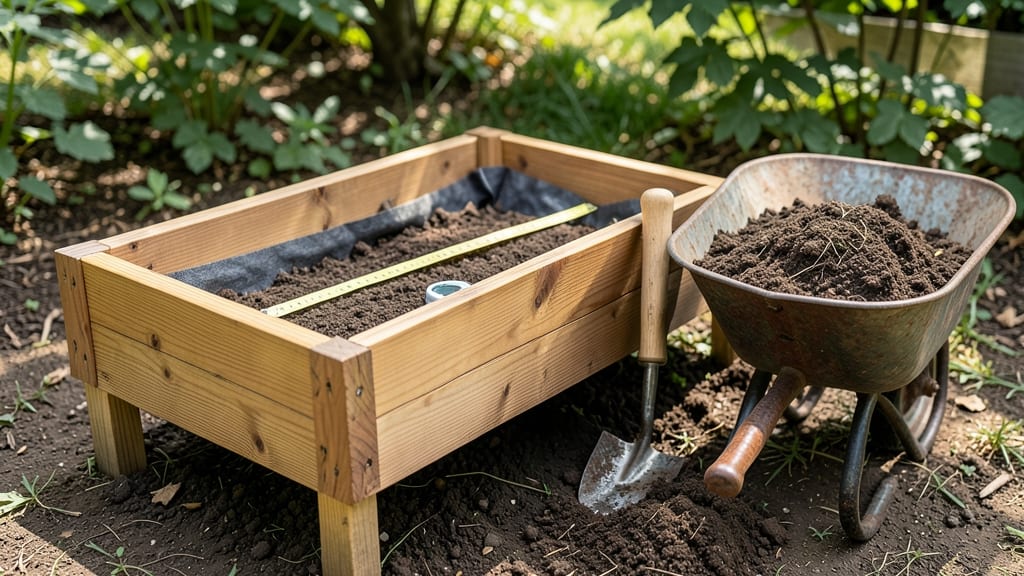
To determine how much dirt you need for your raised garden, multiply the bed’s length by width by depth (in feet) to calculate cubic feet—typically 6–12 inches deep. For example, a 4’x8’ bed with 10” depth requires ~26 cubic feet of soil mix. Always account for compaction and plant root space.
Calculating garden soil needs goes beyond simple measurements—it's about understanding how your plants will grow and how the soil settles over time. 🌱 A 4-foot by 8-foot bed filled to 10 inches depth might need 26 cubic feet of loose soil, but after settling, you'll likely need 10-15% more to ensure proper root space.
I always recommend adding a 2-inch drainage layer of gravel or landscape fabric first, which reduces the actual soil volume needed by about 10%. This adjustment prevents waterlogging while giving roots the room they need to thrive.
For larger beds, consider breaking the calculation into sections—like dividing an 8’x12’ garden into two 4’x12’ sections—to make hauling soil easier. Most nurseries sell soil by the cubic yard, so converting your cubic feet measurement (divide by 27) helps avoid overordering.
Pro tip: Loose, airy mixes (like 60% topsoil + 40% compost) settle less than dense clay-heavy blends, so adjust your volume accordingly.
💡 In This Article
- Calculating Raised Garden Soil Volume by Dimensions
- Best Soil Mixes for Raised Garden Beds
Calculating raised garden soil volume by dimensions
Here's what's actually happening when you calculate soil volume: you're measuring three dimensions—length, width, and depth—in feet to determine cubic feet. For example, a 4-foot by 8-foot bed filled to 10 inches depth converts to 0.83 feet (10 ÷ 12).
Multiply these: 4 × 8 × 0.83 = 26.56 cubic feet. This formula works because soil volume is three-dimensional space, just like a rectangular box. The key is converting inches to feet first—most gardeners forget this step and end up with soil shortages or waste.
Soil doesn't stay loose forever—it settles over time due to moisture and root pressure. A freshly filled bed might measure 26 cubic feet, but after watering and root growth, that same volume could shrink by 20-30%. That's why I recommend adding 10-15% extra soil to your calculation.
For our 4’x8’ example, that means ordering 30 cubic feet instead of 26. This buffer ensures roots have adequate space to develop without becoming waterlogged. The texture matters too: sandy soils compact less than clay-heavy mixes.
Drainage layers change the equation too. Adding 2 inches of gravel or landscape fabric at the bottom reduces your usable soil depth by 0.17 feet (2 ÷ 12).
In our example, the effective soil depth drops from 10 inches to 8 inches, cutting the cubic feet needed by about 10%. This adjustment prevents root rot while maintaining proper aeration. Visualize it like layers in a lasagna—each component serves a purpose in the garden's ecosystem.
For larger beds, break calculations into manageable sections. An 8’x12’ garden could be split into two 4’x12’ sections, making soil delivery and placement easier. Most nurseries sell soil by the cubic yard (27 cubic feet), so convert your measurements: 26.56 ÷ 27 ≈ 0.98 cubic yards.
Round up to 1 cubic yard to account for settling and drainage. Pro tip: Use a soil calculator or spreadsheet to automate these conversions for multiple bed sizes.
Consider these practical factors when estimating:
- Soil type: Loamy mixes settle 15-20% less than clay-heavy blends
- Planting depth: Deep-rooted veggies (like carrots) need 12+ inches of soil
- Delivery limits: Most trucks carry 1-2 cubic yards per load
- Amendments: Adding compost increases bulk by 10-15%
What most people don't realize is how much difference a few inches make. A 6-inch depth in a 4’x8’ bed requires only 13.3 cubic feet, while 12 inches jumps to 32 cubic feet.
This 140% increase shows why precise measurements save money and prevent mid-project scrambling. Always measure your bed's interior dimensions—not the lumber's outer edges—to avoid overestimating.