
Planting
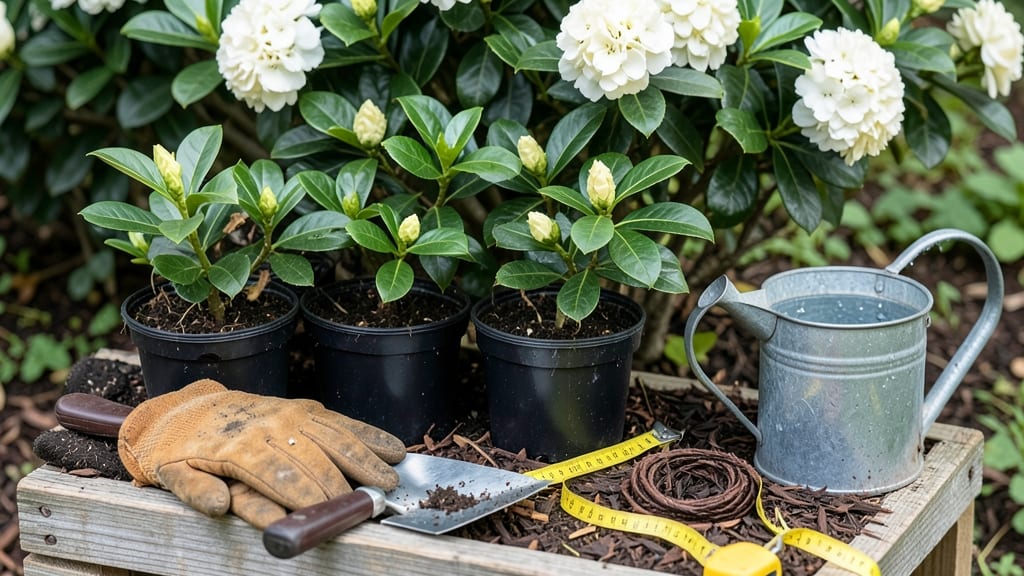
To plant gardenias properly, space them 5 to 8 feet apart to ensure healthy airflow and sunlight exposure, which prevents fungal diseases and allows mature bushes to spread to 6 feet wide. Smaller dwarf varieties can be planted 3 to 4 feet apart, but proper spacing remains essential for vibrant blooms and strong growth.
Proper spacing isn't just about giving your gardenias room to grow—it's about creating the ideal environment for their delicate blooms. 🌸 Gardenias thrive when they receive 6+ hours of sunlight daily, and spacing them correctly prevents overcrowding that traps moisture and invites fungal infections like powdery mildew.
I've noticed that in humid climates, even standard spacing might need adjustment—adding an extra foot or two can make a huge difference in keeping foliage disease-free.
For container gardening, use pots at least 12-15 inches wide to mimic proper spacing, and always group containers to maintain airflow patterns similar to in-ground planting.
Another key factor is how gardenias mature over time. While they start small, their root systems expand aggressively, competing for nutrients if planted too closely.
This competition can lead to stunted growth and fewer blooms, which is why I always recommend erring on the side of more space rather than less.
If you're designing a garden bed, consider planting taller varieties in the back and shorter ones in front to maximize sunlight exposure for all plants. 💚
💡 In This Article
- Why Proper Gardenia Spacing Boosts Blooms and Health
- Gardenia Spacing Tips for Containers and Landscaping
Why proper gardenia spacing boosts blooms and health
Gardenias thrive when spaced correctly because their growth habits demand both vertical and horizontal room. These tropical shrubs develop a dense, rounded canopy that can reach 6 feet wide at maturity, but their roots spread aggressively underground—often twice as far as the plant's height.
When you crowd gardenias, their leaves create a humid microclimate that traps moisture, creating ideal conditions for fungal diseases like powdery mildew and botrytis. The science is simple: proper airflow reduces leaf wetness by 40-50%, cutting disease risk dramatically.
Sunlight plays an equally critical role. Gardenias need 6+ hours of direct sunlight daily to trigger photosynthesis efficiently, but crowded plants cast shadows that block lower leaves from receiving adequate light. This leads to weak, leggy growth and fewer blooms.
In my experience, spacing plants 5-8 feet apart ensures even sunlight distribution across the entire plant. Dwarf varieties (like 'Radicans' or 'Kleim's Hardy') only need 3-4 feet because they mature at 3-4 feet tall, but their root zones still require similar space to prevent competition.
Root competition is another hidden factor. Gardenias have shallow, fibrous root systems that spread outward rather than downward.
When planted too closely, their roots tangle and compete for water and nutrients, which stresses the plant and reduces flowering. 🌿 This is why mature gardenias in crowded conditions often produce smaller, less fragrant blooms. The solution?
Test your soil's pH (gardenias prefer 5.0-6.5) and amend with compost to ensure nutrient-rich soil that can support multiple plants without depletion.
Climate matters too. In humid regions (like Florida or Southeast Asia, where gardenias originated), even standard spacing may need adjustment—adding an extra 1-2 feet helps prevent fungal outbreaks. Conversely, in drier climates (like California's coastal areas), you can space them slightly closer since moisture retention is less of a concern.
Always consider your local humidity levels when planning—it's the difference between a thriving bush and one struggling with mildew.
Here's what happens when you get spacing wrong: Overcrowded gardenias develop yellowing leaves, sparse blooms, and weak stems that snap easily. The opposite—too much space—wastes garden real estate without significant benefits. The sweet spot is 5-8 feet for standard varieties, which balances airflow, sunlight, and root growth for maximum blooms.
For container gardening, mimic this spacing by using 12-15 inch pots and grouping containers closely to recreate the airflow dynamics of in-ground planting.
Pro tip: If you're planting multiple gardenias, arrange them in a staggered pattern rather than rows. This creates a natural airflow channel between plants, reducing disease risk while maintaining the aesthetic appeal of a lush, fragrant hedge. 💫