
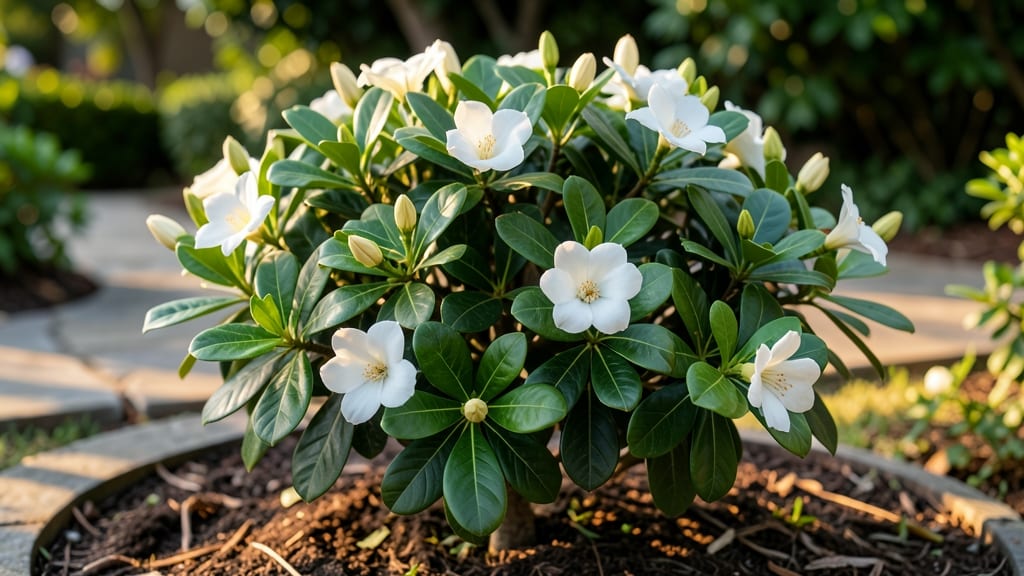
How Big Do Gardenias Grow: Mature Size Ranges by Variety & Pruning Needs

Size

How Big Do Gardenias Grow: Mature Size Ranges by Variety & Pruning Needs

Gardenias grow to sizes that range from compact shrubs to small trees, depending on the variety and growing conditions—some stay under 3 feet while others reach 12 feet or taller.

If you’re dreaming of fragrant, glossy gardenias 🌸 but wondering whether they’ll fit your garden’s layout, their mature size is the first question to answer—because some varieties grow as small as shrubs while others stretch like small trees!

Most gardenias mature between 4 and 6 feet tall with a spread of 3 to 5 feet, making them ideal for shrub borders or as standalone specimens. However, dwarf varieties like G. jasminoides stay under 2 feet, perfect for containers or small spaces.

In this guide, I’ll break down how variety, pruning, and climate shape gardenia size—plus tips to keep them within your desired footprint, whether you’re working with a 6-foot garden or a balcony pot.

Gardenia Height Range
2 ftto6 ft
0 ft 3 ft 6 ft 9 ft 12 ft
🌱 Medium Shrub

Gardenia mature size by variety: compact shrubs vs. tall trees

Choosing a gardenia isn’t just about their intoxicating fragrance—it’s also about their mature size. Some varieties stay compact enough for containers, while others grow into towering shrubs. Knowing these differences helps you plan your garden layout and avoid overcrowding.

For example, a dwarf gardenia fits perfectly in a patio pot, while a standard variety needs space near a fence or wall.

Gardenias typically fall into three size categories: dwarf (2–4 ft), standard (6–10 ft), and giant (12–15 ft). Their growth habits also vary—some grow bushy and rounded, while others stretch upward like small trees.

Understanding these traits ensures you pick the right variety for your space, whether it’s a small balcony or a sprawling backyard.

Spacing is critical for gardenia health. A 6-foot-tall gardenia needs at least 4–5 feet of clearance on all sides to avoid competition for nutrients and airflow. In tight spaces, opt for dwarf varieties or use pruning to control growth. For instance, a Radicans gardenia (a climbing type) can be trained along a trellis, saving ground space while adding vertical interest.

Variety Mature Height Spread Growth Habit Best For
Radicans 6–10 ft 4–6 ft Climbing Trellises, walls
Fortuniana 10–15 ft 8–10 ft Upright, tree-like Large gardens, privacy screens
Jasminoides 'Kleim's Hardy' 3–5 ft 3–4 ft Bushy, rounded Containers, borders
Augusta 12–15 ft 10–12 ft Tree-like Specimen planting
Veitchii 6–8 ft 5–7 ft Bushy, upright Foundation planting
Mystery 2–3 ft 2–3 ft Compact, rounded Containers, small gardens
Kleim's Hardy 4–6 ft 4–5 ft Bushy, cold-hardy Cold climates, borders
Florida 8–12 ft 6–8 ft Upright, sprawling

Pruning gardenias for size control: when, how, and what to avoid

Pruning your gardenias isn’t just about shaping their lush foliage—it’s the key to controlling their mature size and ensuring those fragrant blooms thrive year after year. Without proper pruning, even dwarf varieties can sprawl beyond your garden’s design, while larger types may become unruly.

The good news? With the right timing and technique, you can keep your gardenias at your ideal height—whether that’s a compact 3-foot shrub or a tall 8-foot specimen.

Timing is everything when it comes to pruning gardenias. I’ve learned the hard way that cutting at the wrong time can stress the plant, reduce flowering, or even invite pests and diseases. The best time to prune is late winter or early spring, just as new growth begins.

This gives your gardenias enough time to recover and bloom beautifully before summer. Avoid pruning in fall or winter, as this can leave them vulnerable to cold damage and fungal issues.

Before you grab your shears, gather the right tools: sterilized pruning shears, sharp bypass pruners, and rubbing alcohol (for cleaning tools between cuts). I also recommend wearing gloves—gardenias have thorny stems and can irritate your skin.

Start by removing any dead, diseased, or crossing branches first. These cuts should be made at a 45-degree angle, about 1/4 inch above a leaf node to encourage healthy regrowth.

Step-by-Step Pruning Guide

  1. Step 1: Inspect your gardenia for dead or damaged branches. Use sterilized shears to remove these first, cutting just above a leaf node.
  2. Step 2: Shape the plant by trimming overgrown branches to your desired height. Aim to reduce height by no more than 1/3 in a single pruning session.
  3. Step 3: Thin out crowded branches to improve air circulation. Focus on removing branches that rub against each other or grow inward.
  4. Step 4: Prune spent flowers regularly throughout the growing season to encourage new blooms. Cut just above the next set of leaves.
  5. Step 5: Clean your tools with rubbing alcohol between cuts to prevent the spread of bacterial or fungal diseases.
  6. Step 6: Apply a balanced, acidic fertilizer (like 10-10-10) after pruning to support new growth and flowering.

One of the biggest mistakes I see gardeners make is pruning too aggressively. Gardenias are sensitive plants, and over-pruning can lead to stunted growth or even no flowers the following season.

If you’re aiming for a compact gardenia, limit pruning to light shaping and focus on removing only the oldest wood to encourage new, bushier growth. For larger varieties, you can be slightly bolder, but never cut more than 1/3 of the plant’s height at once.

Avoid pruning gardenias in fall or winter, as this can leave them vulnerable to cold stress and fungal infections. I’ve also learned that pruning after a heavy bloom cycle can reduce the number of flowers the following year.

Instead, wait until the blooms have faded and new growth has started before reaching for your shears. Another critical mistake? Using dull or dirty tools. Dirty shears can spread diseases like anthracnose, which can devastate your gardenia’s leaves and flowers.

After pruning, give your gardenias some extra care to help them recover. Water deeply and mulch around the base to retain moisture and protect the roots. If you’ve pruned heavily, consider applying a slow-release fertilizer to support new growth.

With the right pruning techniques, your gardenias will stay healthy, vibrant, and at the perfect size for your garden—whether that’s a neat 3-foot hedge or a stately 8-foot shrub.

★★★★★4.6(12 reviews)
Categories Size