
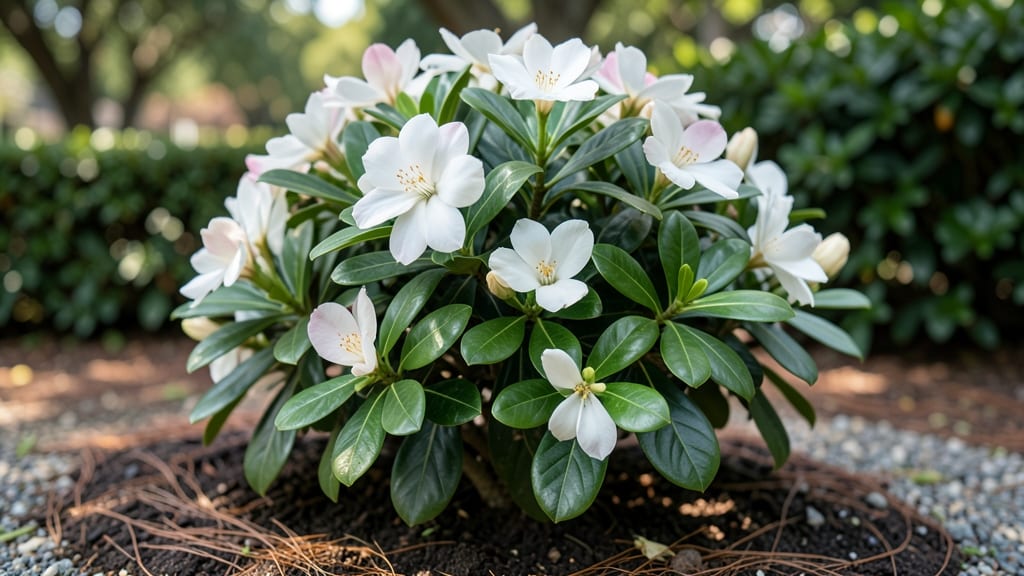
How Big Do Gardenias Get: Mature Size Guide by Variety and Growth Habits

How To

How Big Do Gardenias Get: Mature Size Guide by Variety and Growth Habits

Gardenia plants grow to 3 to 6 feet tall at maturity, depending on the variety and growing conditions, making them a versatile choice for gardens, patios, or even large containers.

If you're dreaming of fragrant gardenias but wondering whether they'll fit your garden, patio, or balcony, their mature size could make all the difference—some varieties grow as small as shrubs while others become small trees.

The most popular variety, Gardenia jasminoides 🌸, typically reaches 4 to 6 feet in height with a spread of 3 to 5 feet, while dwarf varieties like Kleim's Hardy stay between 2 and 3 feet.

This means you can choose a gardenia that suits everything from a cozy balcony planter to a backyard shrub border.

Below, I’ll break down how sunlight, soil, and pruning habits influence their size, plus tips to keep them compact if space is limited. You’ll also learn how to spot the signs of healthy growth versus overgrowth.

Gardenia mature size by popular variety: a complete height and spread guide

Choosing the right gardenia variety depends heavily on your space—whether you have a cozy balcony, a sprawling backyard, or a sunny patio. Gardenias vary dramatically in size, from compact shrubs perfect for containers to towering small trees that need room to stretch their branches.

Understanding these differences helps you plan for their mature height, spread, and ideal placement before planting.

Most gardenias thrive in USDA Zones 6-10, but their growth habits differ based on species. For example, Gardenia jasminoides, the most common variety, typically reaches 3-6 feet tall with a spread of 3-5 feet.

Meanwhile, dwarf varieties like Gardenia 'Radicans' stay under 2 feet, making them ideal for small gardens or window boxes. Let’s explore the most popular varieties and their mature sizes.

Note: Gardenias grow best in well-draining, acidic soil (pH 5.0-6.5) with partial shade. Overcrowding or poor soil can stunt growth, while ideal conditions encourage their full potential size.

Variety Mature Height Mature Spread Growth Habit Best For
Gardenia jasminoides (Common) 3–6 ft 3–5 ft Upright, mounding Backyards, borders
Gardenia augusta (Large) 6–10 ft 5–8 ft Tree-like, upright Large gardens, privacy screens
Gardenia radicans (Trailing) 1–2 ft 3–5 ft (trailing) Trailing, cascading Containers, trellises, balconies
Gardenia 'Kleim's Hardy' 2–3 ft 2–3 ft Compact, bushy Small gardens, pots
Gardenia 'Veitchii' 4–6 ft 4–6 ft Upright, dense Hedges, foundation planting
Gardenia 'Fortuniana' 5–8 ft 5–7 ft Semi-upright, spreading Large containers, borders
Gardenia 'Mystery' 2–3 ft 2–3 ft Bushy, rounded

How gardenia growth habits affect planting space and pruning needs

Understanding a gardenia's growth habits is key to planning your planting space and pruning strategy. These plants aren't one-size-fits-all—their root systems, growth rate, and pruning needs vary dramatically between varieties.

For example, a standard gardenia jasminoides can reach 6 feet tall with a 4-foot spread, while dwarf varieties stay under 3 feet. This difference isn't just about aesthetics; it directly impacts where you plant them and how you maintain them.

The way gardenias grow also changes with the seasons. In spring and summer, they experience rapid new growth and flowering, which requires more frequent pruning to keep them shaped.

During fall and winter, their growth slows dramatically, making it the ideal time for major pruning or root system adjustments. If you're working with limited space—like a container garden—you'll need to prune more aggressively to control their size without stunting their blooming potential.

⚠️ CAUTION: Overcrowding and Improper Pruning Can Stunt Growth Gardenias have shallow but expansive root systems that need room to spread. Planting them too closely together or in restrictive containers can lead to root-bound stress, which weakens the plant and reduces flowering.

Additionally, pruning at the wrong time—like cutting back new spring growth—can shock the plant and delay blooming. Always prune after flowering or in late winter to encourage healthy regrowth. For in-ground planting, leave at least 3-4 feet of space between plants to accommodate their mature spread.

Sunlight plays a critical role in determining how large your gardenia will grow. While they thrive in partial shade (4-6 hours of morning sun), too little light can result in leggy growth and fewer blooms.

If you're growing gardenias in containers, place them near an east-facing window or under dappled shade to prevent heat stress. In-ground plants need similar conditions—plant them where they'll receive filtered sunlight to avoid scorching leaves while still promoting robust growth.

Pruning isn't just about controlling size—it's also about encouraging blooms. Gardenias produce flowers on old wood, so avoid heavy pruning that removes too many mature stems. Instead, focus on shaping prunes to open up the plant's center for better airflow and light penetration.

For container-grown gardenias, prune lightly throughout the growing season to maintain compact growth, but never remove more than 1/3 of the plant's foliage at once. This approach keeps them manageable while preserving their fragrant blooms.

Seasonal growth patterns also dictate your planting timeline. If you're planting gardenias in-ground, do it in early spring after the last frost, giving them the entire growing season to establish their root systems before winter dormancy.

For container gardening, you can plant at any time, but avoid transplanting during peak heat (summer) or freezing temperatures (winter). Container gardenias may need winter protection, like moving them to a sheltered spot or wrapping the pot in burlap to insulate the roots.

To summarize, gardenias' growth habits are influenced by their variety, pruning routine, sunlight exposure, and planting environment. By understanding these factors, you can create the perfect conditions for your gardenias to thrive—whether you're aiming for a small patio shrub or a tall garden focal point.

With the right care, you'll enjoy their fragrant blooms for years to come! 🌿✂️🌸

★★★★★4.6(9 reviews)
Categories How To