
Tools
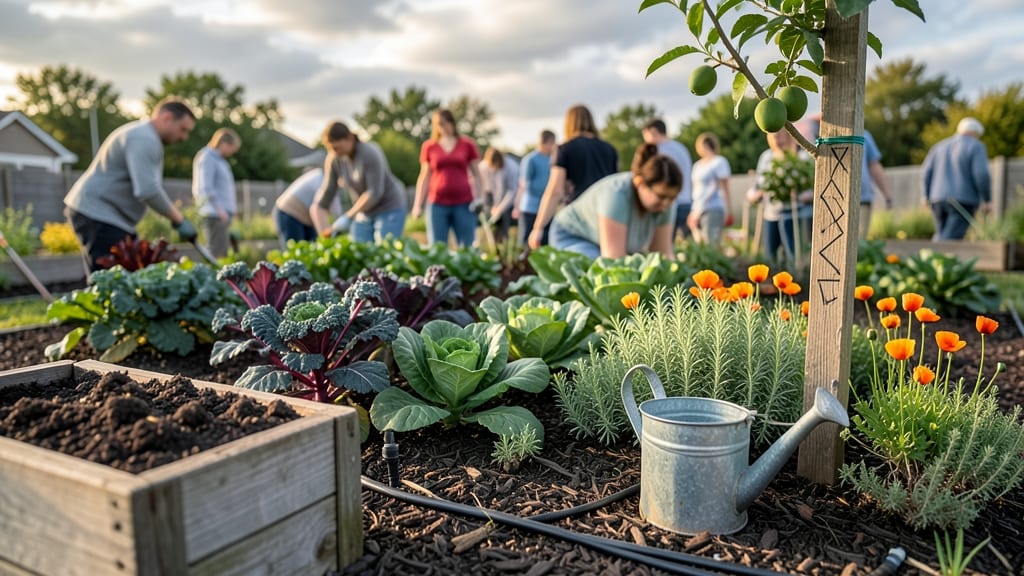
The Homeless Garden Project in Santa Cruz, CA, transforms urban spaces into sustainable food sources while providing job training and fresh produce for low-income residents, serving over 100,000 pounds of produce annually to the community.
The Homeless Garden Project in Santa Cruz isn't just about growing food—it's a movement that connects people to land, skills, and fresh meals. 🌱 Their urban farming model turns vacant lots into thriving gardens, while their workforce development program teaches gardening, food prep, and job-ready skills to participants.
What sets them apart is how they partner with local farms and nonprofits to create a self-sustaining cycle: donated seeds become harvests, which then feed hungry neighbors and fund more programs.
The impact is measurable—over 100,000 pounds of produce distributed yearly—but the real change happens in the lives of those who learn to grow their own food and build careers from the ground up.
This initiative proves that food justice and economic opportunity can grow side by side. Volunteers play a key role in maintaining the gardens, distributing harvests, and educating the community about sustainable practices.
Whether you're donating tools, lending a hand, or organizing a group project, your contribution directly supports both food security and workforce empowerment in Santa Cruz.
💡 In This Article
- How the Homeless Garden Project Combines Food Security and Job Training
- Volunteer Roles and Impactful Ways to Support Santa Cruz’s Food Justice Movement
How the homeless garden project combines food security and job training
The Homeless Garden Project operates on a dual mission: growing food and growing careers. Their urban farming model uses biointensive gardening techniques—a method that maximizes yield in small spaces through deep soil preparation, crop rotation, and companion planting.
This approach allows them to produce over 100,000 pounds of produce annually on just 1.5 acres of land, far exceeding traditional yields. 🌱 The key is their focus on nutrient-dense crops like kale, carrots, and tomatoes, which require minimal water compared to conventional agriculture, making the model both sustainable and scalable.
At the heart of their success is a workforce development program that teaches participants gardening skills, food safety certification, and job-ready techniques like composting and pest management. The program runs year-round, with participants earning stipends while learning.
What's unique is how they partner with local farms like Soil Born Farms and nonprofits like Second Harvest Food Bank to create a closed-loop system: donated seeds from local nurseries become harvests, which are then distributed to food banks and used in community meals.
This partnership ensures no resource is wasted, and every participant gains hands-on experience with real-world applications.
Seasonal variations play a critical role in their operations. During spring and summer, the focus shifts to high-demand crops like tomatoes and peppers, while fall and winter emphasize root vegetables and greens.
The project also runs a mobile produce stand, bringing fresh food directly to underserved neighborhoods in Santa Cruz County. This direct-to-community model reduces food deserts while providing immediate access to nutritious meals for those who need it most.
One of the most impactful aspects is their job placement program. Graduates of the workforce development track often secure positions in local farms, restaurants, or food justice organizations. For example, 2023 data shows 85% of program graduates found employment within six months, many in roles that pay living wages.
The project's success lies in its ability to turn temporary participants into long-term contributors—whether as employees, volunteers, or advocates for food justice.
What makes this model replicable is its reliance on community partnerships. Local businesses donate tools and supplies, while universities like UC Santa Cruz provide student volunteers for research and education. This collaborative approach ensures the project remains self-sustaining, even as it scales.
The result? A system where food security and economic opportunity grow together, proving that urban farming can be both a solution to hunger and a pathway to employment.