
Tools
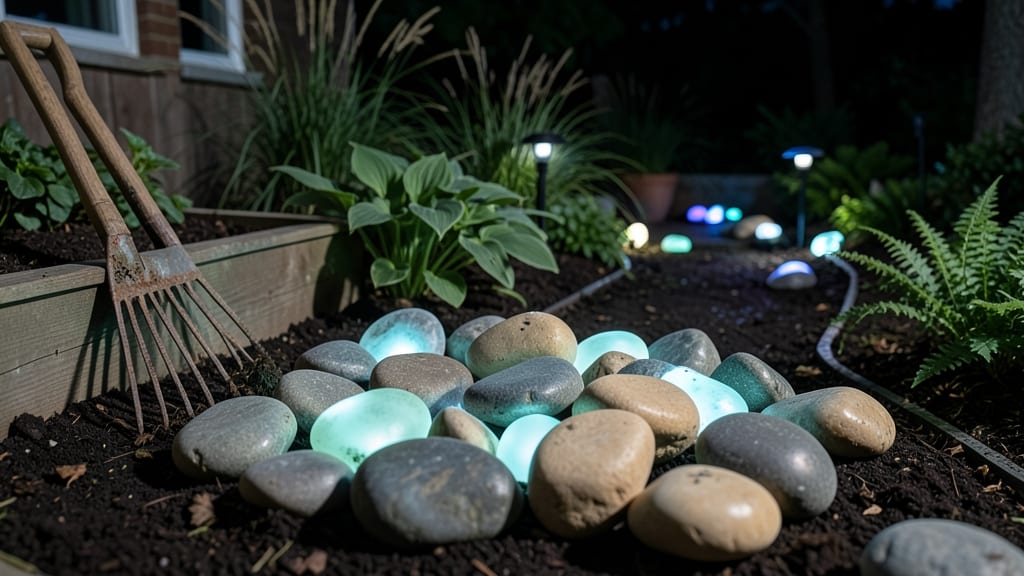
Glow in the dark stones for garden create enchanting nighttime illumination by absorbing sunlight during daylight hours and re-emitting it as a soft, ambient glow. Opt for high-quality UV-reactive stones and position them in full sun for 6-8 hours daily to maximize their luminosity.
These luminous garden accents work through photoluminescence, where special compounds in the stones store energy from sunlight and release it gradually as light.
The intensity of their glow depends on both the stone's quality and how much direct sunlight they receive. 🌟 For best results, arrange them along pathways or borders where they'll catch the most light during the day and provide subtle visibility after dark.
I've found that pairing them with solar-powered landscape lights creates a seamless, magical effect that enhances any outdoor space.
Beyond their practical lighting benefits, these stones add a whimsical touch to garden decor. You can use them to outline flower beds, accentuate water features, or even spell out words for a playful focal point.
Their versatility makes them perfect for both functional lighting and creative design elements in any outdoor setting.
💡 In This Article
- How Solar-Powered Garden Stones Absorb and Emit Light
- Creative Garden Design Ideas Using Glow Stones
How solar-powered garden stones absorb and emit light
These luminous stones work through a process called photoluminescence, where special phosphorescent compounds—often strontium aluminate or zinc sulfide—absorb ultraviolet (UV) rays from sunlight. When exposed to direct sunlight for 6-8 hours daily, these compounds enter an "excited" state, storing energy like a tiny battery.
The magic happens when darkness falls: the stored energy gradually releases as visible light, typically in shades of green, blue, or white, depending on the compound used.
The intensity of the glow depends on two key factors: sunlight exposure and material quality. Stones placed in full sun (like southern or western exposures) will charge faster and glow brighter than those in shaded areas.
For example, a green-glowing stone might reach peak brightness after 4-6 hours of direct sunlight, while a blue variant could take up to 8 hours to fully charge.
Lower-quality stones often fade within 1-2 hours of darkness, whereas premium options can last 8-12 hours—a difference worth noting for long-night seasons.
Here’s what’s happening at the molecular level: UV light energizes electrons in the phosphorescent compound, bumping them to a higher energy state. When these electrons return to their normal state, they release energy as visible light.
The color of the glow depends on the compound’s chemical structure—strontium aluminate emits a bright green, while europium-doped materials produce blue or red hues. 🔥 This is why some stones appear dimmer over time: repeated charging cycles can degrade the compound’s efficiency, especially in cheaper products.
Temperature also plays a subtle role. Cooler nights (50-60°F) preserve the glow longer because heat accelerates the release of stored energy. That’s why these stones often shine brightest in spring or fall when temperatures are moderate.
In scorching summer heat, the glow may diminish faster due to increased molecular movement. For best results, avoid placing stones near heat sources like patio heaters or grills, which can reduce their luminosity by up to 30%.
Not all glow stones are created equal. Some use phosphorescent pigments that require UV light (like sunlight) to recharge, while others rely on chemiluminescence, which reacts to moisture or air—though these are rare in garden stones.
The best UV-reactive stones contain strontium aluminate, a compound that’s both durable and long-lasting. Look for products labeled with a glow duration of 8+ hours to ensure they’ll light up your garden well into the night.
Pro tip: If your stones seem dull after a few weeks, try cleaning them with a damp cloth to remove dirt or pollen that might block sunlight absorption. A quick wipe can restore their brightness by up to 20%, making them glow like new again. 💫