
Tools
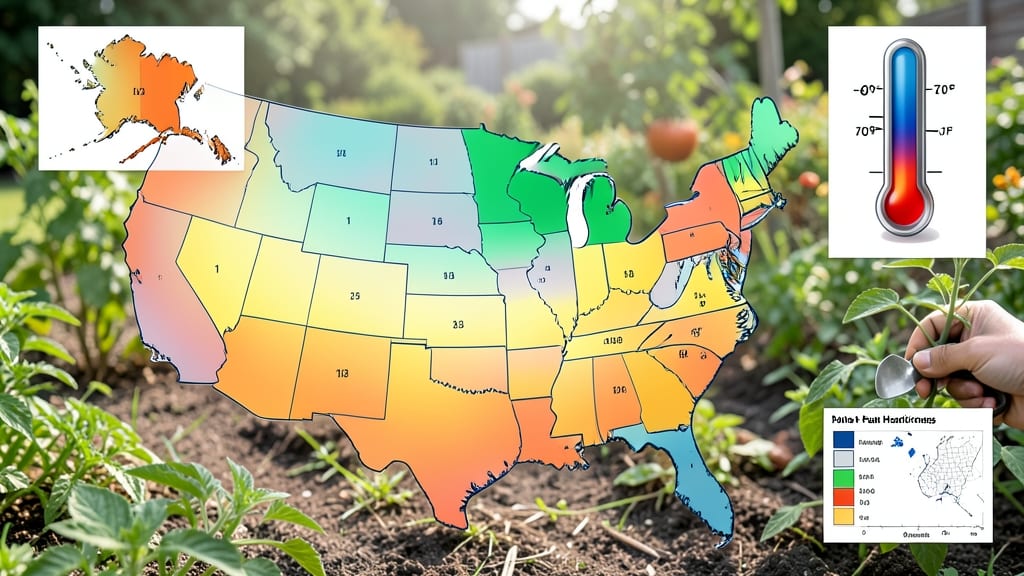
US gardening zones help you choose the right plants by mapping average annual minimum temperatures across 13 zones (1-13), each with 10°F increments. Use the USDA Plant Hardiness Zone Map to locate yours, then fine-tune for local conditions like sun exposure or wind patterns.
These zones are based on 30-year averages of the coldest winter temperatures, which is why they're updated every 10 years to reflect climate shifts. 🌡️ For example, Zone 5 (between -20°F and -10°F) might suit hardy perennials, while Zone 9 (20°F to 30°F) allows for tropical plants.
The map uses complex algorithms that analyze weather stations nationwide, ensuring accuracy for gardeners across the country.
Once you've identified your base zone, local factors can push your growing range further. A south-facing wall, for instance, can create a microclimate warm enough to support plants from a higher zone, while a windy area might require frost protection.
I always test soil temperatures in spring—if it's consistently 10°F warmer than the zone average, I can safely plant a zone up!
💡 In This Article
- How USDA Plant Hardiness Zones Are Calculated
- Adjusting for Microclimates in Your Garden
How USDA plant hardiness zones are calculated
The USDA Plant Hardiness Zone Map relies on 30-year averages of the coldest winter temperatures recorded at thousands of weather stations nationwide. Scientists analyze these data points using complex algorithms that identify patterns and calculate the average annual minimum temperature (AAMT) for each location.
This AAMT becomes the foundation for assigning a zone—Zone 5, for example, covers areas where the coldest winter temperatures typically fall between -20°F and -10°F, while Zone 9 spans 20°F to 30°F.
What makes this system so precise is the use of isotherm lines—imaginary boundaries that connect points with the same temperature. These lines aren't straight but follow geographical features like mountain ranges and coastal areas, where temperatures can vary dramatically over short distances.
For instance, a valley might be Zone 6, while the surrounding peaks could drop into Zone 4 due to higher elevations cooling faster.
The USDA updates the map every 10 years to account for climate change, which has already shifted many zones northward by one or more zones since the 1990s.
Here's the fascinating part: the zones aren't just about survival—they reflect how plants grow and thrive. A plant labeled "Zone 5 hardy" won't just survive in Zone 5; it will flower, fruit, and perform optimally.
The science behind this involves chilling requirements—many plants need a certain number of hours below 40°F to trigger blooming, while others avoid dormancy if winters are too mild. This is why some gardeners in Zone 8 struggle with fruit trees that need Zone 5 winters to set buds properly.
Temperature isn't the only factor, though. The USDA also considers heat zones and growing degree days, which measure how quickly plants mature based on accumulated warmth. For example, a tomato plant might need 1,200 growing degree days above 50°F to ripen, regardless of your hardiness zone.
This explains why you can grow tropical plants in Zone 9 but might need to start them indoors in Zone 5 to extend the growing season. The interplay between cold tolerance and heat accumulation is what makes gardening both a science and an art!
One common misconception is that zones are static, but they're actually dynamic. Climate change has warmed average winter temperatures by 2-3°F over the past century, causing zones to shift. In some areas, Zone 6 plants now thrive where only Zone 5 plants could survive decades ago.
The USDA's 2023 update reflected these changes, with entire regions moving into higher zones. This shift means gardeners must periodically re-evaluate their planting choices to avoid overestimating their zone's true capabilities.
To find your exact zone, use the interactive USDA map and zoom in to your location. You'll see your AAMT displayed alongside your zone designation. But remember—this is just your starting point.
The real magic happens when you factor in your garden's unique conditions, like how a south-facing slope might add 5-10°F of warmth compared to the zone average. That's where microclimates come into play, and they can make all the difference in what you can grow successfully.