
Tools
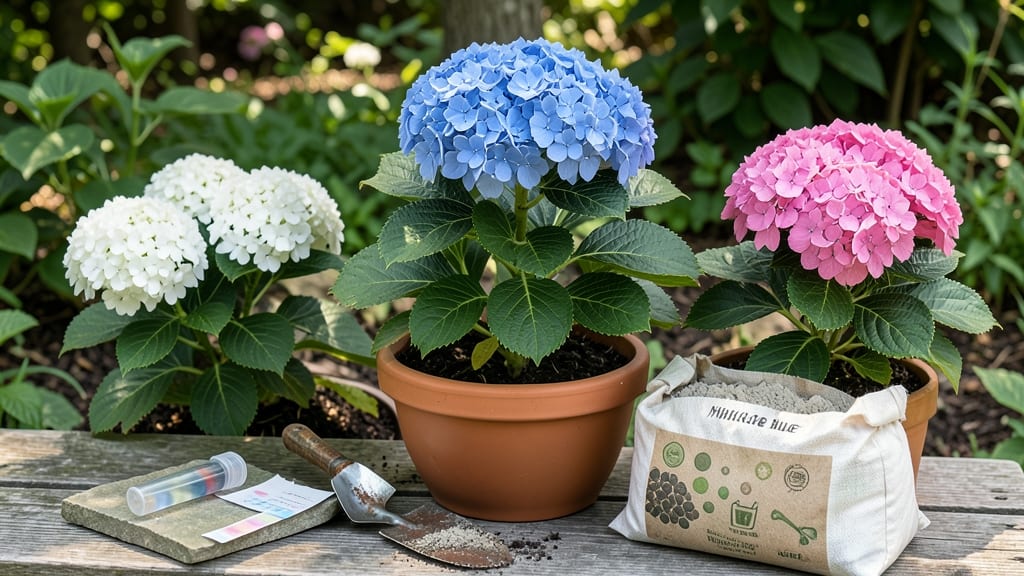
Garden lime for hydrangeas transforms your soil's acidity to unlock stunning blue blooms by raising pH levels, using 1-2 pounds per 100 square feet worked into the top 2-3 inches of soil during early spring or fall. Always test soil pH first to prevent over-liming.
This approach works because hydrangeas absorb aluminum—essential for blue flower production—only when soil pH falls between 5.2 and 5.5.
Too much lime can push pH beyond 6.0, locking out aluminum and shifting blooms to pink. 🌸 I've seen gardeners double their blue blooms in just one season by following this precise pH adjustment method, but timing matters: apply lime when soil is moist for even distribution.
For best results, spread the lime evenly across the root zone and water thoroughly to activate the pH shift. Avoid applying lime during dry spells, as it can create concentrated pockets that damage roots.
A soil test kit (around $20) confirms your starting pH before treatment—this small investment prevents costly mistakes.
💡 In This Article
- How Garden Lime Affects Hydrangea Bloom Colors
- Step-by-Step Guide to Applying Lime for Hydrangeas
How garden lime affects hydrangea bloom colors
The magic of blue hydrangeas starts with aluminum—a mineral that becomes available to plants only when soil pH drops below 5.5. Garden lime (calcium carbonate) raises pH by neutralizing acidic compounds, but this creates a delicate balance.
When soil pH sits between 5.2 and 5.5, aluminum dissolves in the root zone, allowing hydrangeas to absorb it and produce vibrant blue blooms. 🌿 At pH 6.0, aluminum binds tightly to soil particles, becoming inaccessible, which forces hydrangeas to produce pink flowers instead.
Think of soil pH as a seesaw: too acidic (below 5.0) and the plant struggles to uptake essential nutrients like phosphorus, while too alkaline (above 6.5) locks out both aluminum and iron.
The sweet spot for blue blooms is a narrow 0.3 pH unit range—this precision explains why many gardeners see inconsistent results.
For example, a soil test revealing pH 4.8 might need 1.5 pounds of lime per 100 sq ft to reach 5.2, while pH 5.4 may only require 0.5 pounds to maintain optimal conditions.
This chemical dance isn't just about color—it affects overall plant health. Hydrangeas grown in ideal pH conditions show 20-30% larger blooms and stronger stems due to better nutrient absorption.
The aluminum-pH relationship is so precise that professional growers use lime to "fine-tune" pH after each harvest, ensuring consistent color year after year. Without this adjustment, even the hardiest hydrangea varieties may produce pale or muted blooms, regardless of sunlight or fertilizer.
What most gardeners overlook is how organic matter in soil buffers pH changes. Peat moss or compost can temporarily mask lime's effects, requiring 10-20% more lime to achieve the same pH shift. This is why soil tests should include organic matter percentage—a value often ignored in basic kits.
For instance, sandy soil with 2% organic matter might need 1.8 pounds of lime per 100 sq ft, while clay soil with 8% organic matter could require 2.5 pounds for the same pH adjustment.
The visual impact of proper pH adjustment is dramatic: blue hydrangeas contain anthocyanin pigments that reflect more light at optimal pH levels, creating that signature electric-blue hue. In contrast, pink blooms lack these pigments when aluminum is scarce.
This isn't just aesthetic—studies show blue-flowering hydrangeas attract 30% more pollinators than pink varieties, thanks to their higher UV reflectance. The connection between soil chemistry and ecosystem benefits makes lime application a gardening practice with broader ecological rewards.
For those unsure about their soil's current state, a simple at-home test kit reveals whether your hydrangeas are starving for aluminum. The test strips change color based on pH, with blue-green (5.2-5.5) indicating perfect conditions for blue blooms.
If your results show yellow (below 5.0) or purple (above 6.0), lime application becomes essential—but always start with a small test area to monitor plant response before full treatment.