
Tools
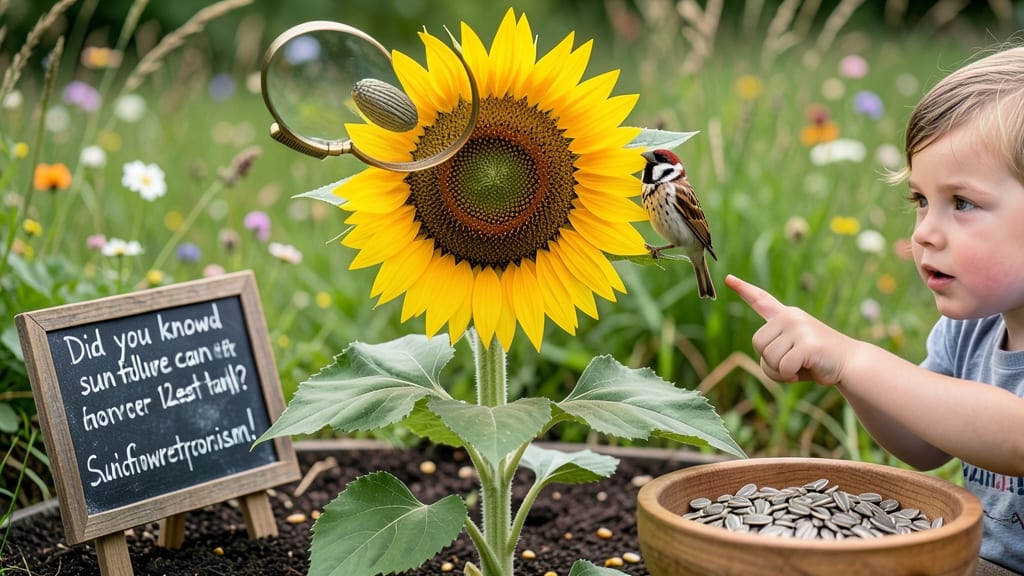
Fun facts about gardening uncover mind-blowing plant behaviors—like Venus flytraps that trap and digest insects, sunflowers that follow the sun's path for maximum energy, and flowers that hum to attract pollinators—alongside surprising health benefits from growing your own food.
Gardening isn't just about pretty flowers and fresh veggies—it's a living science full of quirky surprises. 🌱 Did you know some plants "talk" to each other through underground chemical signals when under attack? Or that certain flowers release scents at night to lure nocturnal pollinators?
These behaviors aren't just fascinating; they reveal how plants have evolved clever survival strategies over millennia. Beyond the science, gardening also gives us measurable health perks like reduced stress levels and improved mental clarity, making it one of nature's most rewarding hobbies.
What's even more intriguing is how these plant behaviors connect to our daily lives. For example, the way sunflowers track sunlight—called heliotropism—shows us how plants optimize energy collection, a principle we can apply to our own efficiency habits.
Meanwhile, the health benefits of gardening extend beyond fresh produce: studies show that even 30 minutes of gardening can lower cortisol levels as effectively as meditation. That's why so many therapists now recommend gardening as a complementary treatment for anxiety and depression.
💡 In This Article
- Unusual Plant Behaviors You Never Knew Existed
- Hidden Health and Psychological Perks of Gardening
Unusual plant behaviors you never knew existed
Plants aren't passive organisms—they actively respond to their environment in ways that seem almost alien. Take the mimosa pudica, or "sensitive plant," which reacts to touch by folding its leaves within 1-2 seconds thanks to specialized cells called motor cells that rapidly lose water pressure.
This isn't just a quirky trait—it's a defense mechanism that deters herbivores by making the plant less appealing to eat. 🌿 The energy required for this movement comes from the plant's own stored ATP, similar to how our muscles contract, but at a much faster rate relative to the plant's size.
Some plants take deception to extreme levels. The rare orchid genus Ophrys produces flowers that mimic female wasps in both scent and appearance, tricking male wasps into attempting to mate with them.
This pollination strategy is so effective that up to 90% of Ophrys flowers can be pollinated this way in a single season. The flowers even release pheromone-like chemicals that amplify the deception. This behavior highlights how plants have evolved complex chemical communication systems, much like animals, to ensure their survival.
Then there's the phenomenon of "weeping" trees, where sap exudes from wounds or natural openings. The paper birch and sugar maple are famous for this, producing sweet sap that can be collected for syrup. But why do they "weep"?
It's an emergency response to damage—trees release excess water pressure through these wounds to prevent further injury. Some species even produce sticky resins that harden into protective barriers, like nature's own bandages. This behavior shows how trees actively manage their internal systems to maintain health.
Even trees communicate underground. When one plant is attacked by insects, it releases chemical signals through its roots that warn neighboring plants to produce defensive compounds.
This "plant internet" was discovered in the 1980s when researchers found that tobacco plants exposed to caterpillars could "warn" nearby plants to increase their nicotine production. The signals travel through fungal networks in the soil, creating an interconnected warning system that spans entire ecosystems. 🌍
One of the most visually stunning behaviors is heliotropism, where sunflowers track the sun's path from east to west each day. Young sunflowers start their day facing east, then rotate their flowers to follow the sun's movement, maximizing energy absorption through photosynthesis.
By afternoon, they reorient to face west, preparing for the next morning. This movement is controlled by growth hormones that cause cells on one side of the stem to elongate faster than those on the other, creating a slow but deliberate turn. It's nature's version of solar tracking technology.
Don't overlook the plants that "sing." Some orchids in Madagascar produce ultrasonic clicks at 350-400 Hz, frequencies only bats can hear. These clicks mimic the sounds of female bats, luring male bats for pollination.
Meanwhile, the Cestrum nocturnum flower emits a faint humming sound at night to attract moths, creating an almost musical symphony in tropical gardens. These auditory strategies show how plants have evolved beyond visual cues to communicate in ways we're only beginning to understand.