
Landscaping
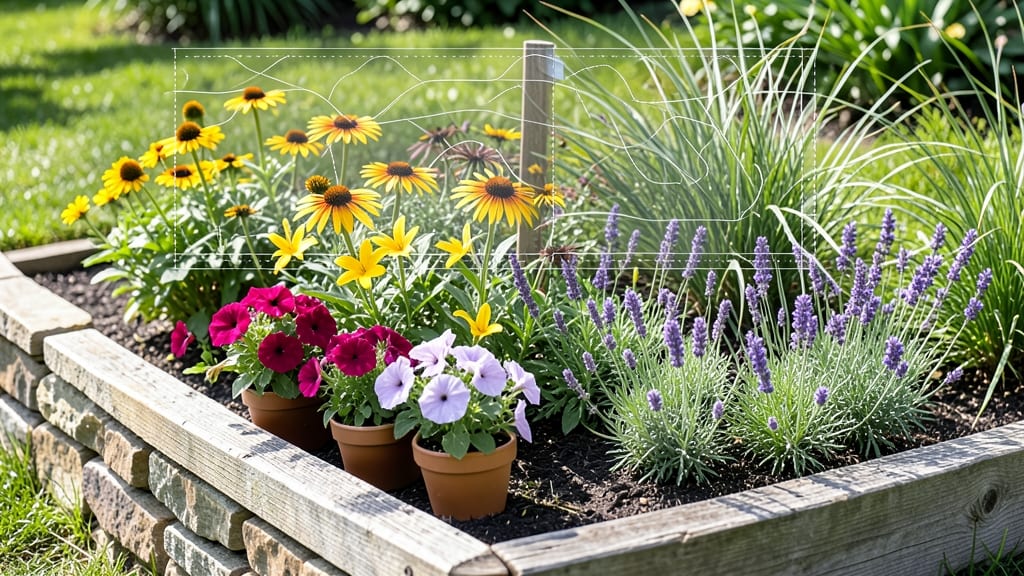
Creating flower garden design plans requires balancing color palettes, plant heights, and seasonal blooms to match your yard's size, sunlight exposure, and local climate. Use a strong focal point, layer textures vertically, and group plants with similar water needs for a polished, low-maintenance look.
Great flower garden design plans start with understanding your space's unique conditions—like sunlight patterns and soil type—which directly impact which plants thrive. 🌸 For example, a sunny spot might host heat-loving lavender and coneflowers, while shade-loving ferns and hostas would shine in cooler areas.
I always recommend sketching a rough layout first, marking where the sun hits strongest at different times of day, then arranging taller plants like delphiniums or hollyhocks at the back with shorter annuals like marigolds in the front. This creates natural depth and prevents smaller plants from getting lost.
Another pro tip? Mix perennials with annuals for continuous color—perennials provide structure year after year, while annuals fill gaps with seasonal pops. For instance, planting black-eyed Susans (perennial) alongside pansies (annual) ensures your garden stays vibrant from spring through fall.
Don't forget to leave room for pathways or seating areas if you plan to enjoy your garden regularly!
💡 In This Article
- Key Principles for Effective Flower Garden Layouts
- 15 Customizable Flower Garden Layouts by Yard Size
Key principles for effective flower garden layouts
Successful flower garden layouts rely on three core principles: color harmony, height layering, and seasonal succession. Color harmony uses the 12-tone color wheel—plants with analogous colors (like purples and blues) create cohesive visuals, while complementary colors (red/yellow) add contrast.
For example, pairing salvia's deep purple with yellow black-eyed Susans creates high-impact visuals while maintaining balance.
Height layering works by placing tall plants (like delphiniums at 3-5 feet) at the back, mid-height plants (such as coreopsis at 1-2 feet) in the middle, and low-growing annuals (like pansies at 6-12 inches) in front. This creates natural depth and prevents smaller plants from being obscured.
The science behind this involves visual weight distribution—taller plants draw the eye upward, while rounded or bushy forms add softness. Studies show that gardens with 3-5 distinct height layers appear more structured and inviting.
Sunlight plays a critical role too: full-sun plants (like lavender) need 6+ hours of direct light daily, while shade-tolerant varieties (such as impatiens) thrive with less than 4 hours. A common mistake is placing sun-loving plants in shaded areas, which stunts growth and reduces blooms.
For instance, coneflowers in partial shade may produce only half the flowers they would in full sun.
Focal points anchor the design—think of a striking ornamental tree, a sculpture, or a water feature as the garden's centerpiece. These should be placed where they're visible from key vantage points, like your patio or kitchen window.
Seasonal interest means selecting plants that bloom at different times: spring bulbs (tulips, daffodils) kick off the season, summer annuals (petunias, zinnias) provide mid-year color, and fall perennials (mums, asters) extend the show.
A well-designed garden might include early bloomers like crocus (February-March), followed by peony blooms in May, and late-season sedum that lasts until frost.
Water needs are often overlooked but critical for maintenance. Grouping plants with similar moisture requirements (e.g., drought-tolerant lavender with rosemary) simplifies irrigation. The 12-inch rule applies here: plants with the same water needs should be within 12 inches of each other to prevent over- or under-watering.
For example, a sunny border might feature salvia (drought-tolerant), yarrow (moderate water), and columbine (moisture-loving) in separate zones with drip lines adjusted accordingly.
Texture adds another dimension—mixing smooth leaves (hostas), fuzzy foliage (lamb's ear), and spiky blooms (gladiolus) creates visual interest. The rule of thirds suggests dividing your garden into three equal sections vertically and horizontally, then placing focal points along these lines for balanced composition.
For instance, a 3-foot-tall hollyhock placed at the intersection of these lines will draw the eye naturally. Don't forget to leave 18-24 inches of walking space between plantings for easy access and airflow, which reduces disease risk.
Finally, consider pollinator pathways—planting in 3-5 foot swaths of native flowers (like milkweed and bee balm) creates continuous nectar sources for butterflies and bees. Research shows that gardens with diverse plant species support 30% more pollinators than monoculture plantings.
For a small space, even a 5-foot-wide strip of pollinator-friendly flowers can make a difference. The key is to avoid isolated plantings; instead, think of your garden as an interconnected ecosystem where every element—color, height, and function—works together seamlessly.