
Planting
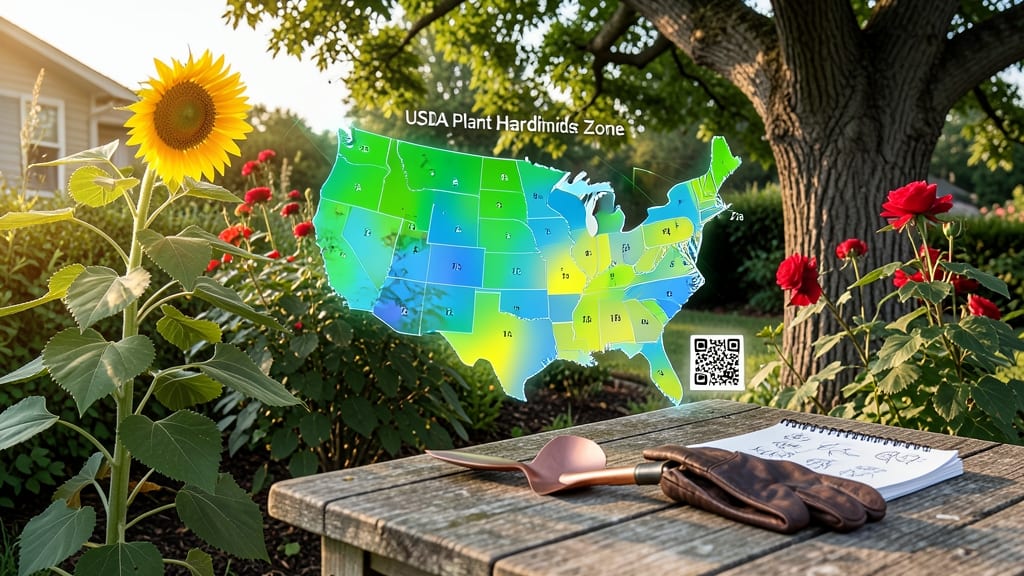
To find your gardening zone, use the USDA Plant Hardiness Zone Map to locate your area based on average winter lows, then fine-tune for local factors like sun exposure or wind patterns that create unique microclimates.
Your gardening zone isn't just about where you live—it's about how your specific location's climate interacts with your plants.
The USDA map divides the country into 13 zones based on average annual minimum temperatures, but even neighbors can have different growing conditions. 🌱 For example, a south-facing wall can create a Zone 8 microclimate in an otherwise Zone 7 area, allowing you to grow plants that wouldn't typically survive.
Start by entering your ZIP code on the USDA website, then observe your garden's unique conditions to make precise adjustments for successful planting.
Understanding these nuances helps you select plants that thrive in your exact conditions. Many gardeners discover they can push their zones slightly by using frost blankets or choosing heat-tolerant varieties. The key is balancing the official zone with your garden's specific microclimates to maximize your growing potential.
💡 In This Article
- How USDA Plant Hardiness Zones Determine Your Gardening Potential
- Adjusting for Microclimates: Sun, Wind, and Soil Variations
How USDA plant hardiness zones determine your gardening potential
The USDA Plant Hardiness Zone Map divides North America into 13 zones based on average annual minimum winter temperatures. Each zone represents a 10°F range—Zone 3a (-40°F to -35°F) is the coldest, while Zone 12 (-50°F to -25°F) covers tropical areas.
These temperature thresholds determine which plants can survive winter dormancy, as most perennials and woody plants enter dormancy when temperatures drop below 40°F for extended periods. For example, a peach tree (Zone 5) won't survive in Zone 3's harsh winters, but a hardy apple variety (Zone 3) thrives there.
Beyond winter lows, frost-free days and growing degree days (GDDs) further refine plant suitability. GDDs measure heat accumulation—plants like tomatoes need 2,500-3,000 GDDs to mature, while cool-season crops like spinach tolerate 1,500 GDDs or less.
Zone 9b's 25-30°F winters allow year-round growing for frost-sensitive plants, while Zone 5's -15°F to -10°F winters require cold-hardy varieties or seasonal adjustments. The map's precision helps gardeners avoid costly mistakes like planting tender annuals too early in cooler zones. 🌡️
Zone designations also correlate with plant hardiness ratings—look for the USDA zone number on seed packets or plant tags. A Zone 6 plant can survive -10°F winters, but if you're in Zone 5a (-20°F to -15°F), you'll need to use frost blankets or choose Zone 4 varieties.
The difference between Zone 5a and Zone 9b isn't just about temperature—it's about the entire growing season length, which can vary by 6-8 months between regions. For instance, Zone 9b's mild winters allow citrus trees to thrive, while Zone 5a gardeners must grow them in containers and overwinter them indoors.
Heat zones add another layer of complexity, particularly in arid climates. The American Horticultural Society's Heat Zone Map categorizes areas by summer highs—Zone 1 (30-40°F nighttime lows) is ideal for tropical plants, while Zone 12 (100-110°F daytime highs) requires extreme heat tolerance.
This explains why a palm tree might thrive in Zone 10 but wilt in Zone 7's occasional 95°F heatwaves. Understanding these interactions helps you select plants that match both your winter cold tolerance and summer heat exposure. 🌿
Practical applications include choosing perennials that match your zone—like coneflowers (Zone 3-9) for cold climates or bougainvillea (Zone 9-11) for heat. Even within a zone, elevation matters: Denver's Zone 5 sits at 5,280 feet, where temperatures drop 3.5°F per 1,000 feet of elevation, creating cooler microclimates than nearby plains.
This is why a Zone 6 plant in a lowland area might struggle at 7,000 feet elevation. The USDA map provides a baseline, but real-world success depends on these finer details.
For gardeners in transition zones (like Zone 7b), the challenge is balancing cold-hardy and heat-tolerant plants. A Zone 7 gardener might grow roses (Zone 4-9) but struggle with olive trees (Zone 8-11) unless using microclimate strategies.
The key is testing plants over multiple seasons—what survives one winter might fail the next due to unpredictable cold snaps. This trial-and-error process refines your zone understanding beyond the map's static boundaries. ❄️