
Fertilization
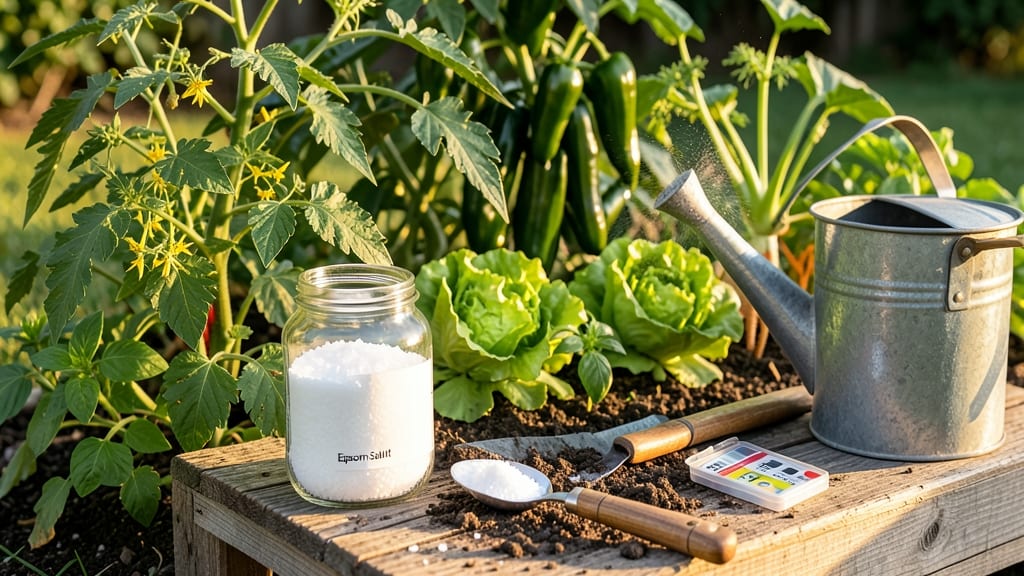
Epsom salt for veggie gardens helps plants absorb more magnesium and sulfur, which strengthens their growth and boosts yields in tomatoes, peppers, and leafy greens. Mix 1 tablespoon per foot of plant height into water and apply monthly during the growing season.
Magnesium is a vital mineral for plant health, especially for crops that produce heavy yields like tomatoes and peppers. 🌱 When dissolved in water, Epsom salt releases magnesium and sulfur directly into the soil, which helps plants produce more chlorophyll—the green pigment that drives photosynthesis.
This means your plants can grow faster, develop stronger stems, and resist stress better, especially during hot weather. The key is moderation—overuse can actually harm your plants by disrupting soil pH or causing nutrient imbalances, so always follow the recommended dosage.
For best results, apply Epsom salt during the active growing season, typically from spring through early fall.
You can use it as a soil drench or foliar spray, but always dissolve it in water first to prevent burning plant roots. 💧 I’ve found that combining it with compost tea or fish emulsion can further enhance nutrient uptake, giving your veggies the extra boost they need to thrive.
Just remember to monitor your plants for signs of overuse, like yellowing leaves or stunted growth.
💡 In This Article
- How Epsom Salt Enhances Nutrient Absorption in Vegetables
- Best Vegetables to Grow with Epsom Salt and Application Tips
How Epsom salt enhances nutrient absorption in vegetables
Epsom salt, chemically known as magnesium sulfate (MgSO4·7H2O), works as a fast-acting fertilizer because it dissolves quickly in water, releasing magnesium and sulfur ions that plants can absorb through their roots and leaves.
Magnesium is a central component of chlorophyll—the pigment that gives plants their green color and powers photosynthesis. When plants struggle with magnesium deficiency, you’ll often see yellowing between leaf veins (a condition called interveinal chlorosis), especially in older leaves.
Epsom salt helps correct this by providing an immediate magnesium boost, which is particularly critical for heavy feeders like tomatoes and peppers that demand high nutrient levels to produce fruit.
The sulfur component of Epsom salt also plays a crucial role in plant metabolism. Sulfur is essential for synthesizing amino acids (the building blocks of proteins) and vitamins, which strengthen cell structure and improve disease resistance.
For example, sulfur-deficient plants may develop weak stems or poor fruit quality, while adequate sulfur levels help tomatoes develop thicker skins and peppers maintain vibrant colors. 🌿 What’s fascinating is how magnesium and sulfur work together: magnesium activates enzymes that help plants convert sulfur into usable forms, creating a synergistic effect that enhances overall nutrient uptake.
Root development is another area where Epsom salt shines. Magnesium helps regulate the opening and closing of stomata (tiny pores on leaves), which controls water loss and nutrient absorption. During hot, dry periods, plants with sufficient magnesium can better manage stress by maintaining stable water levels in their cells.
This is why gardeners often notice improved resilience in their crops—especially in containers where nutrient leaching is more common. The key mechanism here is that magnesium helps stabilize cell membranes, preventing damage from extreme temperatures or drought conditions.
For nutrient-dense crops like tomatoes and peppers, the benefits are especially noticeable. Tomatoes, for instance, require high levels of magnesium to support their rapid growth and heavy fruiting. Without enough magnesium, tomato plants may drop blossoms or produce misshapen fruit.
Peppers, on the other hand, benefit from sulfur’s role in flavor development—adequate sulfur levels contribute to the sweetness and crispness of bell peppers. 🌶️ The visual difference is striking: plants treated with Epsom salt often show darker green leaves, stronger stems, and more abundant blooms compared to those without supplemental magnesium.
However, the magic of Epsom salt isn’t just about what it provides—it’s also about how it bypasses common nutrient uptake issues. Many garden soils, especially sandy or acidic ones, lock magnesium in forms that plants can’t access. By applying Epsom salt, you’re essentially "unlocking" magnesium that would otherwise remain unavailable.
This is why it’s particularly effective in container gardens or soils with high clay content, where nutrient binding is a frequent problem. The result? Healthier plants that can focus their energy on growth rather than struggling to access essential minerals.
One common misconception is that Epsom salt can replace traditional fertilizers. While it’s a valuable supplement, it shouldn’t be used as a primary nutrient source. Think of it as a targeted boost—like giving your plants a quick energy drink during their most demanding growth phases.
For best results, combine it with a balanced fertilizer to ensure all essential nutrients are covered. 💡 The goal is to create a nutrient-rich environment where your vegetables can thrive without competition for resources.