
Size
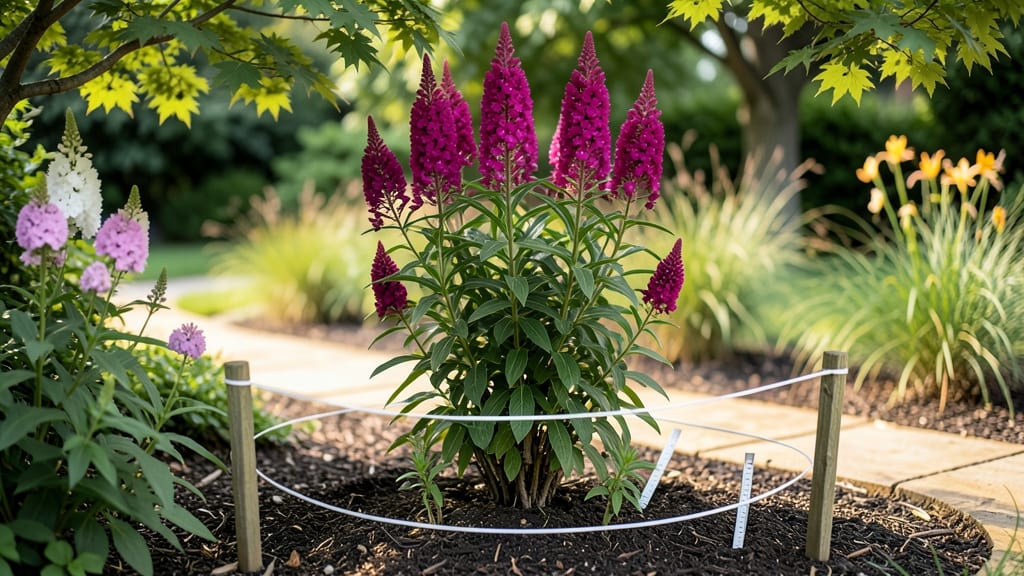
Tall garden phlox spreads gradually through underground rhizomes, expanding about 12–18 inches annually under ideal growing conditions, though its natural clumping growth keeps it more controlled than invasive spreaders.
This slow, steady growth makes tall garden phlox a great choice for borders or cottage-style gardens where you want some natural expansion without losing control. 🌿 The rhizomes—those horizontal roots—send up new shoots, but they don’t creep aggressively like bamboo or mint.
Think of it as a polite neighbor rather than a garden takeover artist.
What sets phlox apart is how its clumping habit keeps it tidy. Unlike plants that send out long runners, phlox stays in its own space while still filling in gradually. This makes it perfect for mixed borders or wildflower meadows where you want texture without the chaos.
💡 In This Article
- How Tall Garden Phlox Spreads: Rhizome Growth Explained
- Managing Tall Garden Phlox in Landscapes: Spacing and Pruning Tips
How tall garden phlox spreads: rhizome growth explained
Tall garden phlox spreads primarily through rhizomes—thick, horizontal underground stems that store nutrients and produce new shoots. Unlike stolons (which grow above ground and root at nodes), phlox rhizomes develop just below the soil surface, typically at a depth of 2-4 inches.
This shallow root system allows the plant to spread efficiently while staying anchored, creating a dense clump rather than sprawling vines.
The spread rate of 12-18 inches per year depends on soil fertility, moisture, and sunlight. In well-draining, nutrient-rich soil with consistent moisture, rhizomes can extend faster—up to 24 inches annually—while drought or poor soil slows expansion.
The key difference from aggressive spreaders like mint is that phlox rhizomes don't send out long, wandering stems; instead, they form a circular growth pattern, keeping the plant's footprint predictable.
Seasonal growth patterns also play a role. Most rhizome expansion occurs in spring and early summer, when temperatures are mild (55-75°F) and soil moisture is high. In hot, dry climates, growth may pause until fall rains return.
This seasonal rhythm explains why phlox often looks fullest in late spring, with new shoots emerging from the outer edges of the clump—like a natural, slow-motion expansion.
Soil type influences spread behavior dramatically. In sandy or loamy soils, rhizomes can spread more freely due to easier root penetration, while clay-heavy soils may restrict expansion to 8-12 inches per year by limiting root movement.
The plant's natural clumping habit also means that even with spread, individual plants maintain their identity, unlike bamboo or mint, which form dense, interconnected colonies.
Here's what's happening biologically: Each rhizome node contains dormant buds that can sprout into new stems. When conditions are ideal, these buds activate, creating a ring of growth around the original plant.
This process is self-regulating—older rhizomes in the center often die back, making room for newer growth at the edges. 🌱 The result is a perpetually youthful plant that fills space gradually without overwhelming it.
For gardeners, this means you can enjoy phlox's beauty without constant division. Unlike bamboo, which requires barrier systems, phlox's spread is manageable with simple spacing and occasional pruning. The rhizomes' shallow nature also makes them easy to control—digging up stray shoots is straightforward compared to deep-rooted invaders.