
Size
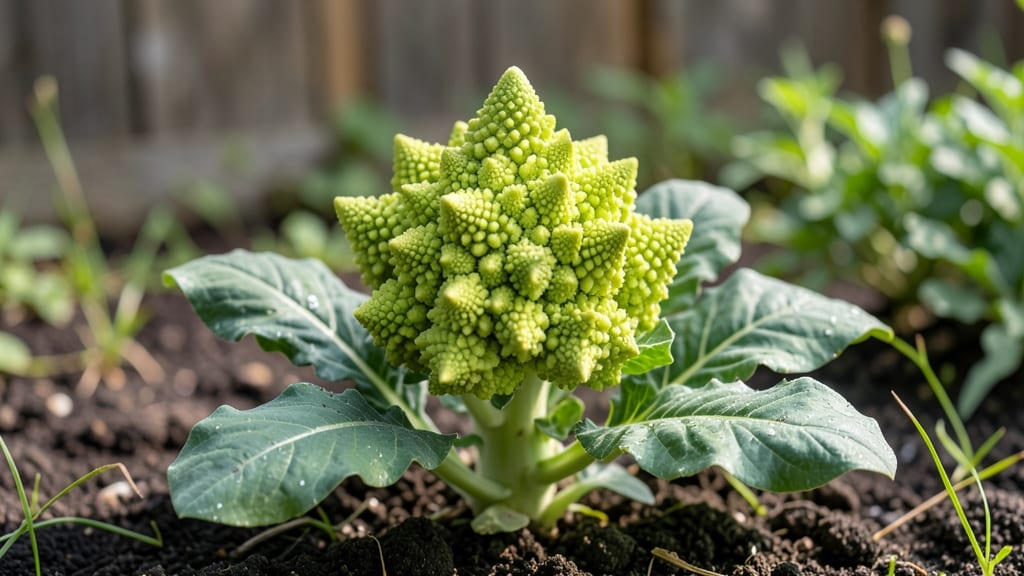
Yes, romanesco does grow back in a garden, as it regenerates after harvesting the main head by producing smaller side shoots that develop into new edible buds with attentive care and proper pruning.
This perennial vegetable stores energy in its thick stem, which fuels new growth when you harvest the central head. 🌱 The key is patience—side shoots typically emerge within 4-6 weeks under ideal conditions, though cooler temperatures may slow the process.
Unlike annuals, romanesco's ability to regrow makes it a rewarding crop for gardeners who want multiple harvests from a single planting.
For best results, focus on maintaining consistent moisture and well-draining soil while avoiding over-fertilizing. The plant's natural resilience means it can tolerate some neglect, but proper care significantly boosts your chances of getting those prized fractal-shaped buds back.
I've found that harvesting side shoots when they reach 8-10 inches gives you the best balance between size and flavor.
💡 In This Article
- How Romanesco Regrowth Works: Biology and Growth Stages
- Step-by-Step Guide to Maximizing Romanesco Regrowth
How romanesco regrowth works: biology and growth stages
Romanesco's remarkable ability to regrow stems from its unique botanical structure as a biennial plant. When you harvest the main head, you're essentially cutting the plant's primary growing point, but the thick, energy-rich stem remains intact.
This stem acts like a biological battery, storing carbohydrates and nutrients that fuel new growth. The plant's meristematic cells—undifferentiated cells capable of division—remain active along the stem's lateral buds, allowing them to develop into side shoots once the main head is removed. 🌱
The regrowth process begins with the plant redirecting its energy from seed production (which would normally occur in its second year) back into vegetative growth.
Under optimal conditions—60-75°F temperatures and 6-8 hours of sunlight daily—you'll typically see new shoots emerging from the stem's axillary buds within 4-6 weeks.
These side shoots grow more slowly than the main head because they're competing for the same stored energy, which is why they often produce smaller, but still delicious, fractal-shaped buds.
Light plays a crucial role in this process. Romanesco is a photoperiod-neutral plant, meaning it doesn't rely on day length to trigger growth, but full sun exposure is essential for photosynthesis to replenish the stem's energy reserves.
In cooler climates or during fall planting, regrowth may slow significantly, sometimes taking 8-10 weeks or longer. The plant's natural resilience means it can tolerate some shade, but partial sunlight will result in slower growth and less vigorous side shoots. 💫
What makes romanesco's regrowth particularly interesting is its fractal geometry. The same mathematical patterns that create the main head's iconic spiral shapes appear in the side shoots, though often on a smaller scale.
This occurs because the plant's growth follows the Fibonacci sequence, where each new bud forms at a 137.5° angle from the previous one—a biological manifestation of efficient packing in nature. The smaller size of regrown buds is simply a result of limited energy redistribution from the stem.
Temperature thresholds also influence regrowth success. The plant enters dormancy below 50°F, halting new shoot development until warmer conditions return. Conversely, temperatures above 85°F can cause stress, leading to bitter-tasting buds. The sweet spot for regrowth is 65-75°F, where the plant balances growth and energy storage efficiently.
This is why gardeners in warmer climates often get more consistent regrowth than those in cooler regions. ✨
One fascinating aspect is how romanesco's regrowth mirrors its natural lifecycle in the wild. In its native Mediterranean region, plants often produce multiple smaller heads rather than one large one, suggesting that the regrowth behavior we observe in gardens is an evolutionary adaptation.
This makes romanesco particularly well-suited to home gardening, where space and resources might be limited compared to commercial farms. 🔥