
Plants
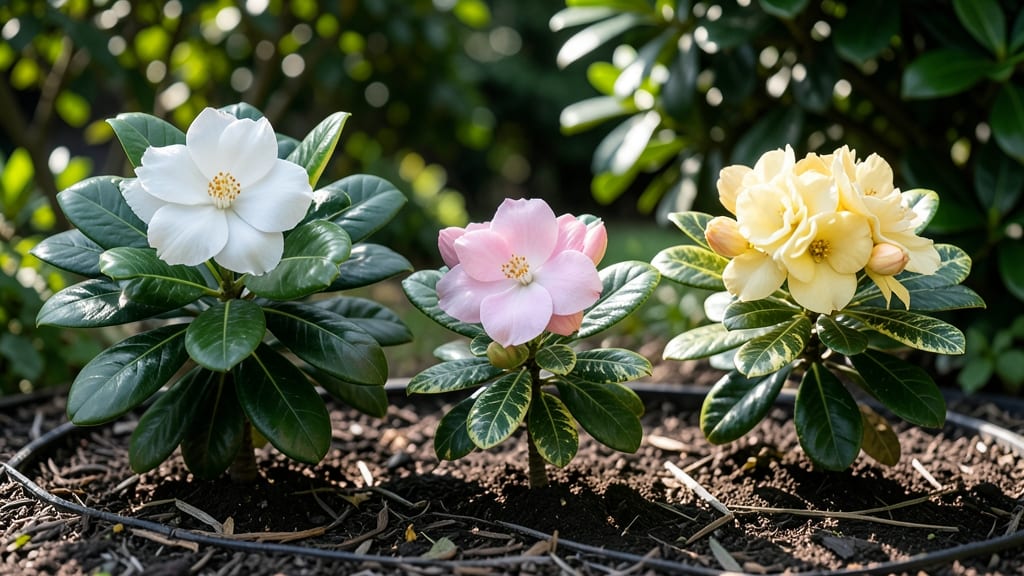
Yes, gardenias do come in different colors, though most common varieties bloom in white, with rare pink, yellow, and deep cream hybrids available through specialized cultivation.
While traditional gardenias are famous for their pristine white flowers, breeders have developed stunning variations through selective hybridization. 🌸 Pink gardenias, like the 'Kleim's Hardy' variety, are particularly striking, while yellow blooms—such as those in the 'Veitchii' series—are prized for their golden hue.
These color variations often result from crossbreeding between species like Gardenia jasminoides and Gardenia augusta, which naturally produce different pigment levels. The trade-off? Colored gardenias can be more delicate, requiring precise care to maintain their vibrant shades.
If you're eager to grow these rare beauties, focus on well-draining, acidic soil (pH 5.0-6.5) and partial shade to protect their delicate petals. 💫 Many nurseries now offer grafted hybrids, which are more stable than seeds.
Just remember—yellow and pink gardenias often need extra humidity and frost protection compared to their white counterparts.
💡 In This Article
- Natural Color Variations in Gardenia Species and Hybrids
- How to Grow Rare-Colored Gardenias in Your Garden
Natural color variations in Gardenia species and hybrids
The classic white gardenia we recognize is primarily from Gardenia jasminoides, but nature and human breeding have introduced stunning variations. 🌸 The color differences stem from variations in anthocyanin and carotenoid pigments.
For example, Gardenia augusta produces small yellow-green flowers, while Gardenia taitensis from the South Pacific features pale yellow blooms. These natural variations occur because different species evolved in distinct climates, adapting their pigmentation for pollinator attraction.
Hybridization plays the biggest role in creating the pink and yellow gardenias we see today. Breeders cross G. jasminoides with species like G. augusta or G. radicans to intensify or alter pigmentation. The 'Kleim's Hardy' pink gardenia, for instance, results from careful selection of seedlings showing pinkish hues.
Yellow gardenias like 'Veitchii' often contain higher levels of carotenoids, which give them their golden tones. These hybrids typically require more stable genetic backgrounds than wild types, which is why they're often grafted rather than grown from seed.
The science behind these colors involves complex genetic pathways. White gardenias lack anthocyanins, while colored varieties express these pigments due to specific gene activations.
Temperature also affects color intensity—cooler growing conditions can deepen pink hues, while excessive heat may bleach yellow tones. 💫 This is why colored gardenias often need precise environmental control to maintain their vibrant appearance. The trade-off for these stunning variations is increased sensitivity to environmental stressors.
Wild-type gardenias rarely show significant color variation beyond creamy whites or pale yellows. The most dramatic colors—deep pinks, rich yellows—are almost always human-made through selective breeding. This process can take decades, as gardeners must wait for rare mutations or carefully cross-pollinate plants to stabilize new traits.
The result? A stunning array of colors that wouldn't exist in nature without human intervention.
One fascinating example is the 'Fortuniana' series, which produces deep cream blooms with subtle pink undertones. These varieties demonstrate how small genetic shifts can create entirely new visual experiences.
The key difference between wild and cultivated gardenias lies in their genetic stability—hybrids often require more careful cultivation to maintain their color consistency across generations.
For those interested in the mechanics, colored gardenias typically have higher levels of flavonoid compounds in their petals. These compounds not only create color but also contribute to the flowers' fragrance intensity.
The more vibrant the color, the stronger the scent profile often becomes—a beautiful synergy between visual appeal and aromatic experience. 🌟