
Tools
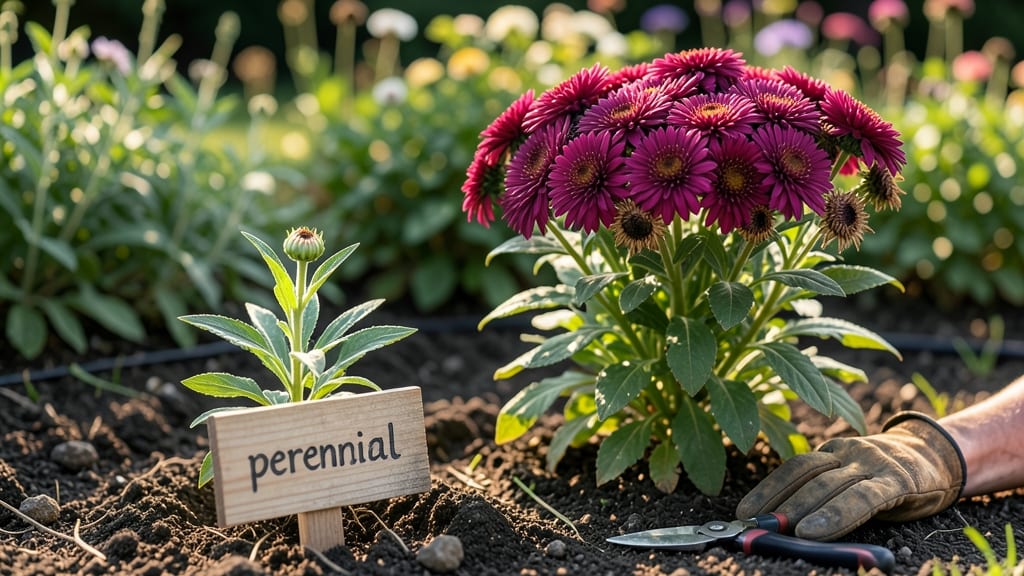
Garden mums do not come back every year unless you plant perennial varieties like Chrysanthemum morifolium ‘Perennial’ types. Most store-bought mums are annuals, so they'll need replanting unless you grow them from tubers or live in mild climates where they can overwinter naturally.
Most garden mums you buy at nurseries are bred as annuals, meaning they complete their life cycle in one season. 🌱 The key to year-after-year blooms lies in choosing hardy perennial types that thrive in your USDA zone.
I've found that varieties like 'Dynasity' or 'Jeana' often survive winters in zones 5-9 with proper care, while regular annuals simply won't make it through freezing temperatures. The difference comes down to their root systems and cold tolerance—perennials develop deep, resilient roots that store energy for regrowth.
For those who want reliable annual blooms, tubers offer a middle ground. These underground stems can be dug up after flowering, stored over winter, and replanted in spring. This method works well for gardeners in colder zones who want consistent color without dealing with perennial care requirements.
The trade-off is more work during storage, but the payoff is predictable blooms season after season.
💡 In This Article
- Perennial vs. Annual Garden Mums: Key Differences
- How to Grow Perennial Mums That Return Year After Year
Perennial vs. annual garden mums: key differences
At the botanical level, the distinction between annual and perennial garden mums comes down to their life cycles and cold hardiness. Annual varieties like Chrysanthemum × grandiflorum complete their entire growth cycle in one season, typically dying off after frost.
These plants focus all their energy on rapid flowering rather than building winter-resistant structures. Perennial types, however, develop woody stems and deep root systems that can withstand freezing temperatures down to -10°F to -20°F (USDA zones 5-9), allowing them to regrow each spring.
The science behind this difference lies in their dormancy mechanisms. Perennial mums enter a state of endodormancy during winter, where their metabolic processes slow dramatically to conserve energy. This is triggered by shorter daylight hours and cooler temperatures, allowing them to survive months without growth.
Annuals lack this physiological adaptation, making them vulnerable to frost damage. 🌡️ What's fascinating is how the plant's abscisic acid levels rise during dormancy, acting like a natural antifreeze to protect cell structures from ice crystal formation.
Climate plays a crucial role in determining which type will return. In mild winter regions (zones 8-10), even some annual varieties might survive if protected, but their blooms tend to be less vibrant the following year.
The hardiest perennial mums, like 'Dynasity' or 'Jeana', can push their survival range to zone 5 with proper care. These varieties develop thicker rhizomes (underground stems) that store up to 30% more carbohydrates than annual types, fueling their spring regrowth.
Most store-bought mums fail to return because they're bred for showy annual blooms rather than winter survival. The trade-off is striking: annuals produce 20-30% more flowers in their first season but lack the root structure to persist.
Perennials, while requiring more patience, develop larger, more robust blooms over time as their root systems expand. This is why gardeners in colder zones often start with perennial tubers or divide established plants rather than relying on annual purchases.
Here's what happens when you try to overwinter annual mums: their stems die back completely, leaving only the roots. Without proper insulation, these roots can suffer freeze-thaw damage from fluctuating temperatures, killing the plant.
Perennial mums, however, maintain some living tissue in their roots throughout winter, allowing them to leaf out within 2-3 weeks of spring's arrival. This biological difference explains why even well-intentioned gardeners often see their mums disappear after the first frost.
For those curious about the numbers, consider this comparison: A healthy perennial mum can develop roots that extend 2-3 feet deep and spread 3 feet wide over three years, while an annual's root system rarely exceeds 12 inches in depth.
This structural difference is what makes perennial mums the gold standard for year-after-year blooms in suitable climates. The key is selecting varieties with proven cold hardiness and providing the right growing conditions to maximize their survival potential.