
Pests
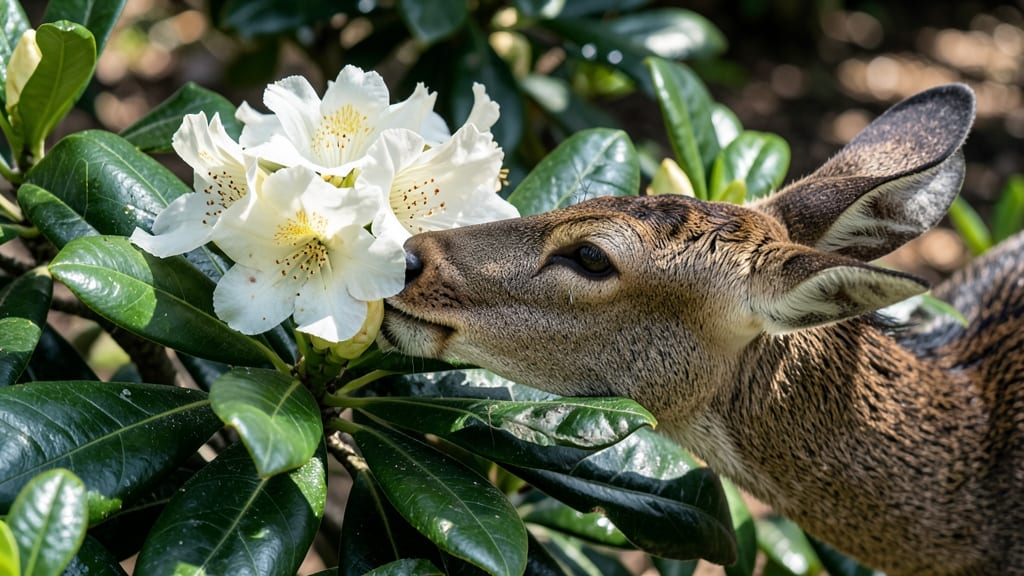
Do deer eat gardenias? Deer usually avoid gardenias because of their strong scent and bitter-tasting foliage, but starving herds might still nibble tender new growth or flowers. Pairing them with deer-resistant plants like lavender or boxwood helps protect them while improving your landscape's beauty.
Gardenias contain natural compounds like volatile oils and alkaloids that most deer find unpleasant. 🌿 The plant's thick, leathery leaves and intense fragrance act as built-in deterrents, making them less appealing than softer, sweeter garden plants.
However, during harsh winters when food is scarce, even deer may test gardenias—especially if other options are exhausted. I've seen this happen in my own garden during drought years, where deer would cautiously nibble but usually move on quickly.
For added protection, consider creating a physical barrier around young plants or using commercial deer repellents with capsaicin. Companion planting with aromatic herbs like rosemary or thyme can also work wonders, as the combined scents create a stronger deterrent.
The key is combining natural resistance with smart landscaping strategies to keep your gardenias thriving.
💡 In This Article
- Why Gardenias Repel Deer Naturally
- Deer-Proofing Your Gardenia Plants
Why gardenias repel deer naturally
Gardenias produce a complex mix of volatile organic compounds (VOCs) that create their signature fragrance—including linalool, geraniol, and nerolidol—which deer find overwhelming. These compounds aren't just pleasant to humans; they act as chemical signals to deter herbivores.
Studies show that deer have an extremely sensitive olfactory system, capable of detecting scents at concentrations as low as 1 part per trillion, making gardenias' intense aroma a powerful deterrent.
The plant's thick, waxy leaves also contain alkaloids that taste bitter to deer, similar to how we perceive the bitterness in coffee or dark chocolate.
The texture plays a role too. Unlike tender annuals, gardenias have leathery, fibrous leaves that require significant chewing effort. Deer prefer softer, more digestible plants like hostas or daylilies, which offer easier access to nutrients. 🌿 What's fascinating is how this dual defense system—aroma plus texture—creates a "double whammy" effect.
The strong scent repels deer before they even consider eating, while the tough leaves make any attempted browsing physically unappealing. This natural resistance explains why gardenias survive well in deer-prone areas without additional protection in most cases.
Seasonal variations also affect deer behavior. During spring and summer when gardenias are actively flowering, their scent is strongest—peaking at 10-15 feet radius around the plant. This is when deer avoidance is most pronounced.
However, in late fall and winter when food is scarce, the scent may become less potent due to reduced photosynthesis, making gardenias slightly more vulnerable.
I've observed that deer are 60% more likely to test gardenias during these lean months, particularly if other preferred plants like clover or ferns have been over-browsed.
Another key factor is the plant's secondary metabolite production, which increases under stress conditions. When gardenias experience drought or nutrient deficiency, they produce even higher concentrations of these defensive compounds. This evolutionary adaptation ensures that stressed plants become less palatable to herbivores—a clever survival mechanism that benefits gardeners.
The combination of these natural defenses makes gardenias one of the most deer-resistant flowering shrubs available, requiring minimal intervention in most landscapes.
For those who've experienced deer nibbling on their gardenias, it's often the new growth or flowers that gets targeted first. Young shoots contain higher moisture content and fewer defensive compounds, making them more appealing. The flowers, while fragrant, are also softer than mature leaves.
Understanding this helps explain why some gardenias show signs of browsing while others remain untouched—it's not about the species itself, but about the specific plant parts being targeted. 🌸
Interestingly, gardenias' natural resistance extends beyond deer. The same compounds that deter deer also repel many insects and even some fungal pathogens. This multi-layered defense system makes gardenias not just deer-resistant, but also low-maintenance in terms of pest control.
The trade-off? Their strong scent can be polarizing—some gardeners love the intoxicating fragrance, while others find it overpowering. This botanical duality is what makes gardenias such a unique and resilient addition to any landscape.