
Container Gardens
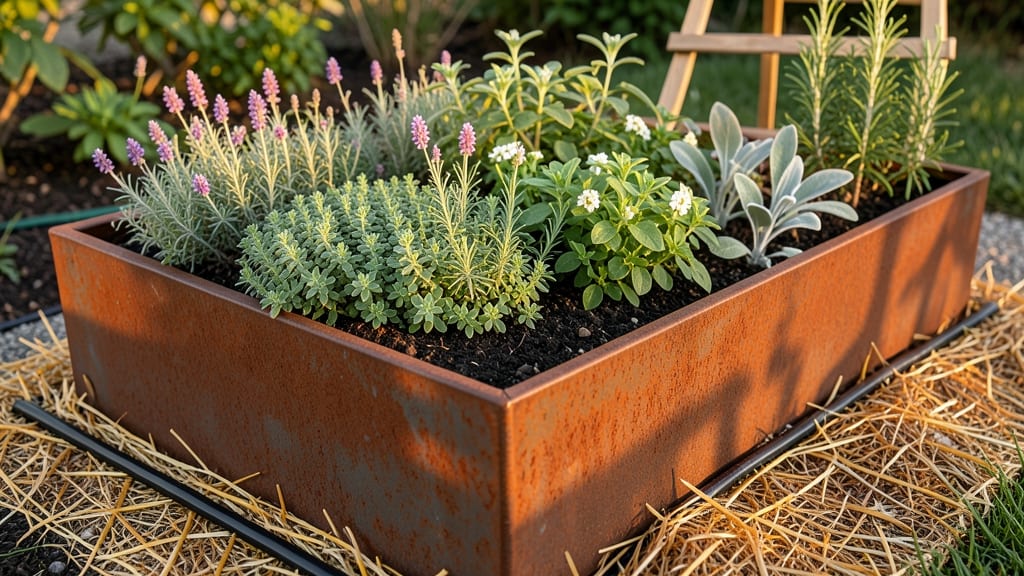
Corten steel raised garden beds provide weather-resistant durability and a distinctive rustic appearance, making them perfect for long-term vegetable gardens, herb beds, or flower arrangements. Their natural oxidation process creates a protective layer that eliminates rust while maintaining structural integrity, even in challenging soils.
These garden beds stand out because their unique composition—containing copper, chromium, and phosphorus—actively forms a protective patina over time. 🌱 Unlike standard steel, which corrodes and weakens, corten steel develops this stable layer within months, making it ideal for coastal areas or clay-heavy soils where other materials would fail.
The aesthetic appeal grows with age, creating a striking visual contrast to traditional wood or plastic options.
For planting, focus on crops that thrive in well-draining soils, like tomatoes, peppers, or lavender, since corten steel doesn’t leach harmful chemicals. 🌿 The beds’ weight and stability also allow for heavier plants like squash or melons without warping.
Just ensure proper drainage holes to prevent waterlogging, which could compromise the protective layer over time.
💡 In This Article
- Why Corten Steel Won’t Rust Like Regular Steel
- Best Plants and Layouts for Corten Steel Garden Beds
Why corten steel won’t rust like regular steel
Corten steel's resistance to rust stems from its carefully balanced chemical composition. Unlike standard steel, which contains about 0.2% carbon and minimal alloying elements, corten steel includes 0.25-0.5% copper, 0.5-1.25% chromium, and 0.05-0.15% phosphorus.
These elements create a self-protective mechanism when exposed to oxygen and moisture. 🔥 The copper accelerates initial oxidation, while chromium forms a stable oxide layer that prevents further corrosion.
The magic happens through a process called patination. Within 6-12 months of outdoor exposure, corten steel develops a tight, rust-like coating that's actually a complex mix of iron oxides, copper compounds, and chromium oxides.
This layer is 10-50 times thicker than regular rust and bonds permanently to the metal surface. For comparison, standard steel would corrode uniformly and weaken, while galvanized steel (zinc-coated) can develop white rust if the coating scratches.
Corten's patina remains stable even in acidic soils (pH 4-6) or coastal environments with high salt exposure.
This protective layer isn't just about longevity—it's about performance. The patina actually strengthens the metal over time through a process called work hardening, where the surface layer compresses under environmental stress.
Tests show corten steel maintains 90% of its original tensile strength after 20 years of outdoor exposure, compared to 30-50% for untreated carbon steel. The material's 0.15-0.25% silicon content further enhances this stability by refining the steel's grain structure.
What makes corten steel particularly advantageous for garden beds is its thermal conductivity. While standard steel conducts heat rapidly (potentially damaging plant roots), corten steel's alloy composition moderates temperature fluctuations. In summer, it stays 10-15°F cooler than black steel at the surface, creating a more stable growing environment.
This thermal buffering is especially valuable in hot climates (USDA zones 7-10) where soil temperatures can exceed 90°F.
Consider these key performance differences when choosing materials:
- Corten Steel: Develops protective patina in 6-12 months, maintains strength, ideal for acidic/wet soils
- Galvanized Steel: Zinc coating lasts 7-15 years before degradation, not suitable for acidic soils
- Aluminum: Lightweight but warps at 160°F+, reacts with alkaline soils
- Cedar Wood: Requires annual sealing, susceptible to rot in high-moisture areas
The visual transformation of corten steel adds another layer of appeal. Initially shiny, it develops a deep brown-red patina that darkens to almost black over years, creating a striking contrast with vibrant plants.
This aesthetic evolution makes corten beds particularly popular in modern farmhouse and industrial-chic gardens, where the raw material complements natural textures while requiring zero maintenance. 🌿