
Advice
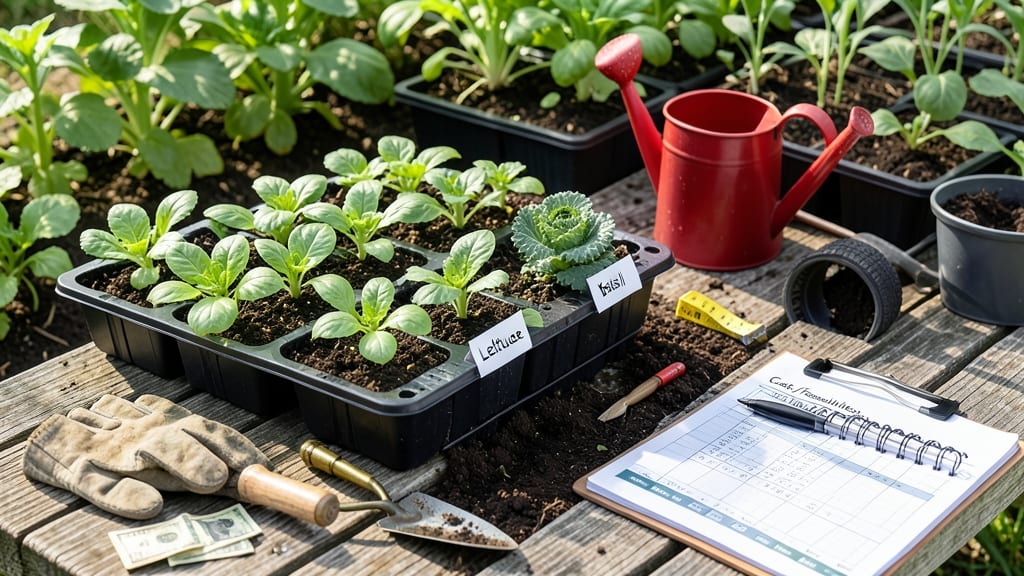
A community garden startup budget and operating costs feasibility study reveals initial investments of $5,000 to $50,000+ for land, materials, and infrastructure, with annual operating expenses averaging $2,000–$20,000 for upkeep and staffing. Success depends on funding sources, volunteer support, and strategic partnerships.
Planning a community garden requires balancing upfront costs with long-term sustainability.
The initial budget covers essentials like land acquisition, soil testing, and basic tools, while ongoing expenses include water, pest management, and insurance. 💛 Smaller plots (under 0.5 acres) typically stay on the lower end of this range, but larger gardens need more funding for irrigation systems and expanded fencing.
I've seen gardens cut costs by partnering with local businesses for donations or securing grants from environmental organizations.
Feasibility isn't just about money—it's about community engagement. Gardens with active volunteer programs often reduce labor costs significantly, while membership fees can create a steady revenue stream. The key is starting small, testing demand, and scaling up only when the garden proves self-sufficient.
💡 In This Article
- Key Cost Factors in Community Garden Feasibility
- Funding and Revenue Strategies for Sustainable Gardens
Key cost factors in community garden feasibility
The foundation of any community garden budget lies in land acquisition and preparation. For a 0.25-acre plot, you might spend $3,000–$8,000 on leasing or purchasing land, but urban lots can exceed $20,000 due to higher property values.
Soil testing and amendments are critical—improving clay-heavy soil with compost and sand can cost $500–$2,000, while raised beds add $1,000–$3,000 depending on materials. The texture of well-amended soil transforms from dense and compacted to loose and nutrient-rich, making it ideal for root growth.
Infrastructure costs vary dramatically by scale. A small garden (0.1–0.5 acres) might need $1,500–$4,000 for basic fencing, while a 2-acre plot could require $15,000–$30,000 for perimeter security and internal pathways. Irrigation systems range from $500 for a simple drip setup to $10,000+ for automated sprinklers covering large areas.
The choice between manual watering and automated systems directly impacts labor costs—automated systems reduce watering time by up to 70% but require higher upfront investment.
Tools and equipment form another significant expense. Basic hand tools (shovels, rakes, hoes) cost $200–$500, while power tools (tillers, leaf blowers) can run $1,000–$3,000. Shared tool libraries among gardeners can cut these costs by 40–60%.
Operating costs like water ($50–$300/month), pest control ($300–$1,500/year), and insurance ($500–$2,000/year) add up quickly, especially in drought-prone or high-crime areas. The smell of fresh soil after rain and the sight of thriving plants make these investments worthwhile, but careful planning prevents financial strain.
Labor costs are often underestimated. A part-time gardener might charge $15–$25/hour, while hiring seasonal help for planting/harvesting can cost $1,000–$5,000/year. Volunteer programs can offset these expenses by 50–80%, but they require strong community engagement.
The key is balancing professional services with volunteer labor—focusing volunteers on maintenance tasks while hiring experts for specialized work like soil testing or irrigation installation.
Long-term feasibility depends on scaling costs with revenue. Membership fees ($20–$100/year per plot) can generate $1,000–$10,000/year for a mid-sized garden, while workshops or produce sales add additional income.
The most successful gardens I’ve seen treat costs as an investment in community health—where every dollar spent on soil quality or education yields dividends in engagement and sustainability. 🌱
Don’t overlook hidden costs like permits ($100–$1,000) or unexpected repairs (e.g., fence damage). Setting aside a 10–15% contingency fund for these surprises is a smart move.
For example, a garden I consulted for spent $2,000 on unexpected drainage improvements after heavy rains—money that wasn’t in their initial budget but saved them from long-term soil erosion.