
Vegetables
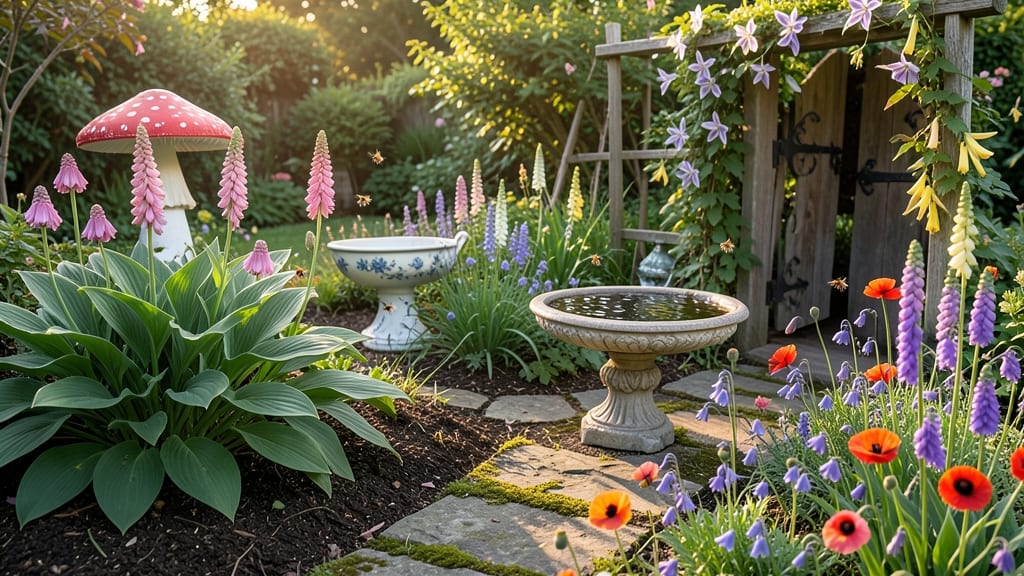
Alice in Wonderland botanical gardens transform classic literature into living art, using plants like blue roses to symbolize impossible dreams and giant mushrooms to represent disorientation. These immersive spaces merge 19th-century horticulture with Carroll’s psychedelic narrative for a visually stunning, thematic experience.
These gardens aren't just pretty—they're psychological landscapes where every plant tells part of Alice's story. 🌸 The blue roses, for example, challenge our perception of reality (just like Alice's "curiouser and curiouser" moments), while the poisonous mushrooms create a sense of danger and transformation.
Many of these gardens incorporate real botanical oddities, like the giant dahlias that mimic the oversized flowers Alice encounters, or toadstools that double as seating while symbolizing Wonderland's surreal scale. What's fascinating is how these living installations make Carroll's abstract themes tangible—you can literally walk through Alice's dream world.
Designing your own version? Start with easy-to-find stand-ins—like purple clematis for blue roses or red mushrooms for the Queen's garden. The key is layering plants to create depth, just as Carroll layered meaning.
For instance, planting white roses near the blue ones creates visual contrast that mirrors Alice's shifting perceptions. Seasonal planning matters too: many Wonderland plants bloom in late summer, so time your layout to match the story's pacing.
💡 In This Article
- How Plants in Alice’s Adventures Mirror Psychological Themes
- Designing Your Own Alice-Inspired Botanical Garden
How plants in Alice’s adventures mirror psychological themes
Lewis Carroll’s Alice’s Adventures in Wonderland isn’t just a children’s story—it’s a psychological mirror, and the plants Alice encounters act as visual metaphors for her journey. The blue roses, for instance, represent the impossible and the surreal, challenging Alice’s (and the reader’s) perception of reality.
In Victorian-era botany, roses symbolized love and purity, but their unnatural blue hue forces us to question what’s “real.”
This mirrors Alice’s confusion when she first enters Wonderland, where logic dissolves. 🌸 The flowers’ vibrant color also triggers a physiological response—studies show blue hues can evoke feelings of calmness, yet their artificiality creates cognitive dissonance, much like Alice’s disoriented state.
The poisonous mushrooms—particularly the red-and-white spotted toadstools—serve as literal and symbolic gateways. In the story, they alter Alice’s size, reflecting her psychological growth and the instability of her new world.
Biologically, some real mushrooms (like Amanita muscaria) contain psychoactive compounds that induce hallucinations, which Carroll likely knew about through Victorian-era mycology texts. The mushrooms’ dual role as both danger and transformation aligns with Wonderland’s themes of chaos and reinvention.
Their placement in gardens often includes interactive elements, like seating around them, inviting visitors to “shrink” or “grow” metaphorically as they explore.
Talking flowers, like the daisies and violets that address Alice, embody the story’s critique of societal norms. In Victorian gardens, flowers were often “trained” to grow in specific shapes (like espaliered trees), symbolizing control. Carroll subverts this by giving plants voices—challenging the idea that nature should be passive or decorative.
This rebellion mirrors Alice’s defiance of Wonderland’s rigid rules, like the Queen’s obsession with order. 🌿 The gardens recreate this tension by using climbing plants (like clematis) to “talk” through their vines, literally wrapping visitors in the story’s themes.
Even the giant flowers Alice enters (like the one leading to the White Rabbit’s house) reflect psychological mechanisms. In botany, flowers are often associated with growth and potential, but their exaggerated size in Wonderland creates a sense of claustrophobia—mirroring Alice’s anxiety about her changing world.
Garden designers achieve this effect using dahlias or sunflowers trained to grow 6+ feet tall, their petals arranged to form tunnels. The scent of these flowers (often sweet and heady) adds another layer, triggering memories of childhood wonder or nostalgia—exactly how Carroll wanted readers to feel.
Carroll’s genius lies in blending real botanical knowledge with his surreal narrative. For example, the white roses in the Queen’s garden symbolize purity but also decay, as they’re often depicted wilted or overgrown. This reflects Wonderland’s duality: beautiful yet unstable.
In a well-designed botanical garden, these roses might be planted near black roses (a rare variety) to create visual contrast, reinforcing the theme of light and dark.
The interplay of colors and textures—like the velvety petals of peonies (used for the giant flowers) or the rough bark of toadstools—makes the garden feel like a living storybook, where every plant has a role in Alice’s adventure.
What’s often overlooked is how these gardens use seasonal changes to mirror Alice’s journey. Spring blooms (like tulips for the White Rabbit’s garden) represent new beginnings, while autumn’s mushrooms symbolize transformation.
Some gardens even incorporate edible plants (like strawberries for the Queen’s garden) to add another sensory layer—sweetness contrasting with the story’s darker themes. This attention to detail ensures visitors don’t just see Wonderland but experience it, just as Alice does.