
Tools
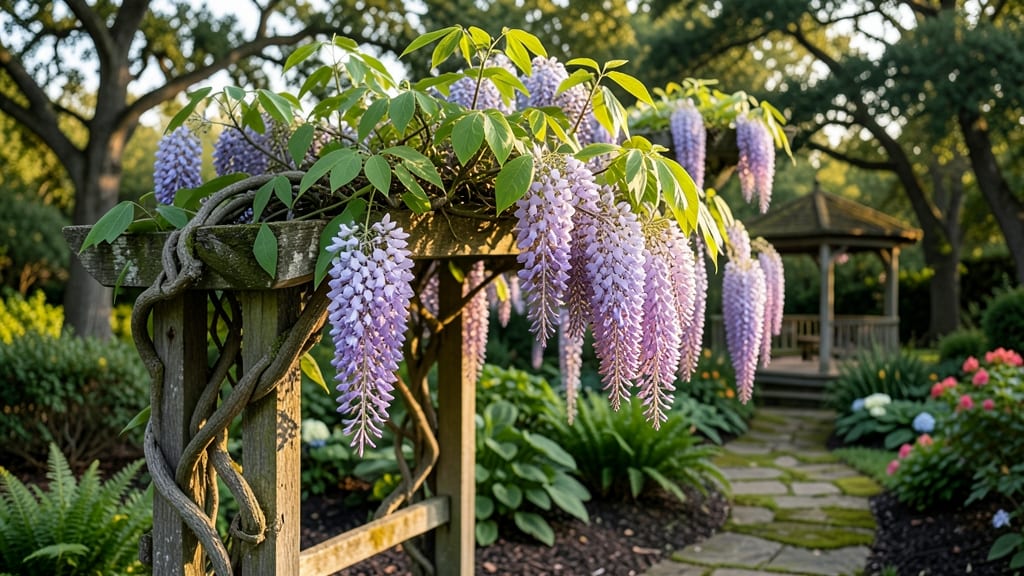
Wisteria in Japanese gardens symbolizes humility and resilience, often trained as arbors or ground covers along pathways. Its fragrant purple blooms enhance zen aesthetics, while pruning maintains shape and encourages vigorous growth. Varieties like Wisteria floribunda thrive in shaded, well-drained soil with seasonal trimming essential for health and display.
Japanese gardens use wisteria to create serene, nature-inspired spaces where its cascading purple flowers frame pathways like living art. 🌸 The plant's delicate blooms align perfectly with the wabi-sabi philosophy—embracing imperfection and seasonal change.
Beyond aesthetics, wisteria's training along wooden trellises reflects traditional Japanese craftsmanship, blending function with beauty. I've seen these vines transform ordinary garden spaces into tranquil retreats, especially when paired with moss and stone lanterns.
What makes wisteria particularly special in Japanese culture is its connection to spring festivals and tea ceremonies. The timing of its blooms coincides with cherry blossom season, reinforcing themes of renewal and fleeting beauty.
Pruning isn't just maintenance—it's an annual ritual that preserves the plant's natural elegance while preventing it from becoming unruly. For gardeners, understanding the balance between growth encouragement and shape control is key to maintaining that signature Japanese garden harmony.
💡 In This Article
- Symbolism and Cultural Significance of Wisteria in Japanese Gardens
- Step-by-Step Pruning Guide for Japanese Wisteria Varieties
Symbolism and cultural significance of wisteria in Japanese gardens
The wisteria's deep cultural roots in Japan trace back to Buddhist traditions where its climbing habit symbolizes perseverance and upward spiritual growth.
The plant's ability to cling to wooden supports mirrors the human journey toward enlightenment, a concept central to Zen gardens. 🌿 In these sacred spaces, wisteria's cascading blooms create natural curtains that frame pathways, guiding visitors through meditative walks while reinforcing the garden's connection to impermanence—a core wabi-sabi principle.
Seasonal timing plays a crucial role in its cultural significance. Wisteria typically blooms in late spring, aligning with Japan's Hana Matsuri (Flower Festival) celebrations. The 10-14 day bloom cycle mirrors the fleeting nature of life, a theme deeply embedded in Japanese aesthetics.
Varieties like Wisteria floribunda produce 6-12 inch flower clusters that release a sweet, intoxicating fragrance—often described as a mix of jasmine and honey—which enhances the sensory experience during tea ceremonies held beneath the vines.
Garden designers intentionally place wisteria near stone lanterns or water features to amplify its symbolic power. The contrast between the vines' vibrant purple and the muted tones of moss-covered rocks creates visual harmony that reflects the ichi-go ichi-e (one moment, one encounter) philosophy.
This placement isn't arbitrary—it's a deliberate arrangement to create moments of quiet reflection where visitors can contemplate nature's transient beauty while surrounded by the plant's delicate blooms.
The wisteria's growth patterns also carry meaning. Its aggressive climbing habit represents resilience, as the vines can grow 3-5 feet per year when properly trained. This rapid yet controlled growth mirrors the Japanese value of mushin (no-mind), where effort appears effortless.
The pruning process itself becomes a meditative practice, requiring patience and precision to maintain the vine's natural elegance while preventing it from overwhelming the garden's delicate balance.
Beyond physical gardens, wisteria appears in traditional Japanese art forms. Ukiyo-e prints from the Edo period often feature wisteria motifs in ukiyo-zōshi (picture books) and kabuki stage designs, where the vines symbolized both romantic love and the passage of time.
Modern interpretations continue this tradition, with wisteria-themed ikebana arrangements using 3-5 stems to represent the five elements (earth, water, fire, wind, void) in Japanese flower arranging philosophy.
What makes wisteria particularly special in Japanese culture is its dual role as both a living art form and a spiritual guide.
The plant's ability to transform ordinary garden spaces into meditative environments stems from its perfect alignment with Japanese values—where nature isn't just observed, but actively participated in through careful cultivation and mindful appreciation. 🌸