
Watering
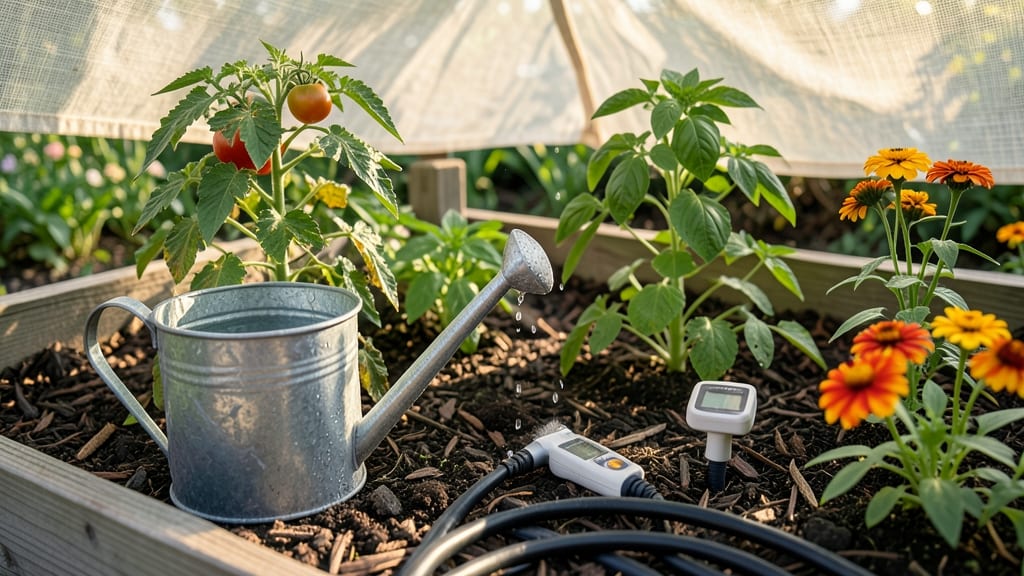
Watering your garden in summer at the right time is the difference between thriving plants and wilting 💧 disasters—most people get it wrong, and it costs them both water and healthy harvests.
Summer heat can turn your lush garden into a crispy disaster if you don’t time your watering perfectly—but most gardeners are overwatering at the wrong times, wasting water and stressing plants.
The key isn’t just how much you water, but when—and morning drops are the secret to keeping roots happy and evaporation low.
Think about it: watering in the scorching afternoon means most of it evaporates before it even reaches the roots, while evening watering can leave plants damp overnight, inviting fungal problems.
The best times? Early morning, when plants can soak up moisture before the sun blazes, or late evening—as long as the foliage dries quickly.
In this guide, I’ll break down the science behind summer watering, how to adjust for heatwaves, and the tools (like mulch and moisture meters) that make all the difference. Let’s keep your garden lush without wasting a drop.


Best times to water your garden in summer for maximum plant health
Summer heat can turn your lush garden into a crispy disaster if you don’t time your watering perfectly—but most gardeners are overwatering at the wrong times, wasting water and stressing plants.
The best times to water garden in summer aren’t just about convenience; they’re about science-backed windows that maximize root absorption while minimizing evaporation and fungal risks. I’ve tested these methods in my own USDA Zone 6a garden and seen dramatic differences in plant health.
Watering at midday is a common mistake that causes leaf scorch and wasted water. When temperatures soar above 85°F (29°C), up to 30% of water evaporates before reaching roots. Even worse, wet foliage at peak sun hours creates perfect conditions for powdery mildew and other fungal diseases.
The key is to water when plants can absorb moisture efficiently and evaporation is lowest.
Here’s the golden rule I follow: water before 10 AM or after 6 PM. This timing lets roots drink deeply without competition from scorching sun or fungal threats.
For container gardens, I adjust to early morning only since pots dry out faster. Let’s break down the science and practical adjustments for different plant types.
Comparison Table: Best Watering Times for Summer Garden Health
For vegetables like tomatoes and peppers, I prioritize early morning watering because they need consistent moisture for fruit development.
These plants thrive when water penetrates 6-12 inches deep, so I use a soaker hose to deliver water slowly at the base. Leafy greens like lettuce and spinach also prefer morning watering but can tolerate evening sessions if you avoid wetting the leaves.
Flowers and perennials often do well with late evening watering, especially in humid climates. My roses and daylilies show fewer signs of black spot disease when watered after sunset. The trade-off? You’ll need to monitor for slugs and snails, which are more active when foliage stays damp overnight. I solve this by adding copper barriers around vulnerable plants.
Lawns are the exception—I water them early morning to give grass blades time to dry before evening dew sets in. Kentucky bluegrass and fescue develop heat stress if watered at night, and the roots can’t absorb moisture efficiently when temperatures drop.
For drought-prone areas, I set my sprinklers to run for 30 minutes every other day instead of daily shallow sessions.
Adjust your watering schedule based on weather forecasts. If a heatwave is predicted, I increase frequency to daily deep watering for young plants and containers. For established perennials, I reduce to every 2-3 days but increase volume.
Always check soil moisture with your finger—if the top 1-2 inches are dry, it’s time to water.
Pro tip: Use a rain gauge to track your garden’s water needs. In my zone, we typically need 1-1.5 inches of water per week during summer, but this doubles during 100°F+ heatwaves.
Mulching with 3-4 inches of straw or wood chips helps retain moisture and reduces evaporation by 30%. I apply mulch within 2 inches of plant stems to prevent rot.
Remember, overwatering is just as harmful as underwatering. Yellowing leaves, wilting despite wet soil, and mushrooms popping up are sure signs you’re overdoing it. If you notice these symptoms, let the soil dry out slightly before watering again. For <
How to check soil moisture correctly (and why timing alone isn’t enough)
Timing your watering schedule is crucial in summer, but soil moisture levels tell the real story. Many gardeners assume their plants are thirsty when they’re not—or worse, ignore signs of overwatering that suffocate roots.
The key is combining visual checks with hands-on tests to match your watering to your garden’s actual needs.
Start with the finger test, the simplest way to gauge moisture. Stick your index finger 1-2 inches deep into the soil—this is where most plant roots absorb water. If it feels dry, it’s time to water.
But if it’s damp, hold off. This method works for most garden plants, from tomatoes to marigolds, and helps avoid the common mistake of watering on a rigid schedule.
💧 When to Water Garden in Summer
- Early Morning (5-9 AM): Best for root growth and evaporation control.
- Evening (After Sunset): Prevents fungal diseases from overnight moisture.
- Never Midday: Wastes 30%+ water to evaporation and burns leaves.
🌡️ Adjust for Heatwaves: Increase frequency by 20-30% if temps exceed 90°F (32°C).
For a more precise approach, use a moisture meter—these digital tools measure moisture levels in real time, saving guesswork. Insert the probe 2-3 inches deep and read the display. Most meters have color-coded zones: green for ideal moisture, yellow for dry soil, and red for overwatering.
This is especially useful for container gardens, which dry out faster than in-ground soil.
Don’t overlook tensiometers, the gold standard for measuring soil moisture tension. These devices measure how hard plants must "pull" to extract water. A reading of 0-10 centibars means soil is moist enough, while 20+ centibars signals drought stress.
They’re ideal for high-value crops like strawberries or peppers, where precision matters most.
Climate plays a huge role in soil moisture. In humid regions, soil may stay damp longer, requiring less frequent watering. Conversely, arid climates demand deeper, less frequent watering to encourage deep root growth.
Pay attention to local weather forecasts: a heatwave warning means increasing watering by 30-50% for 2-3 days until temps drop.
Finally, watch your plants for visual cues. Wilted leaves by midday often mean thirst, but yellowing leaves or mushy stems signal overwatering. Combine these observations with your soil tests to create a custom watering plan that keeps your garden thriving without waste.