
Tools
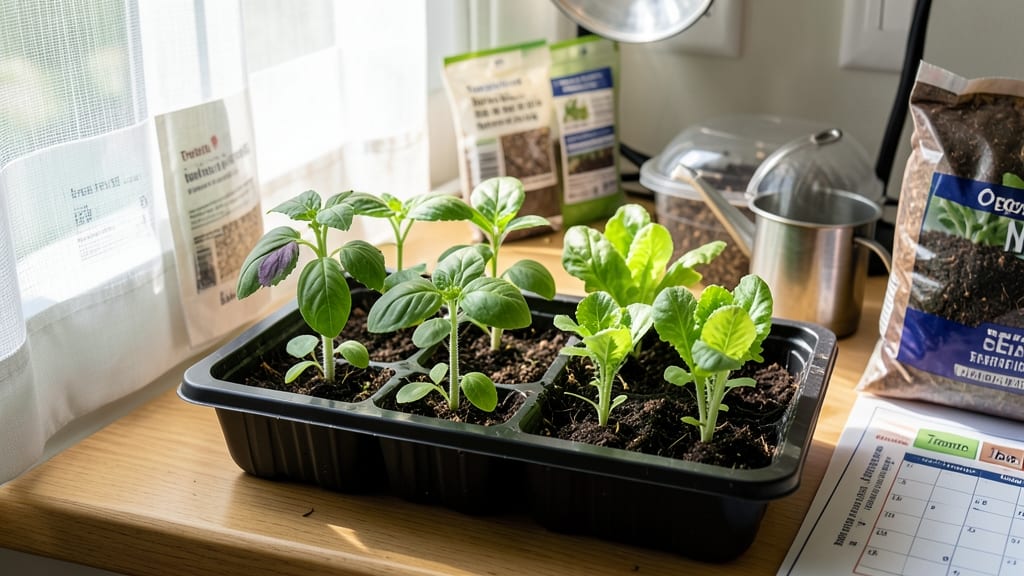
To start garden seeds indoors, calculate 6-8 weeks before your last frost date—this timing ensures sturdy seedlings ready for transplant, not leggy or overgrown plants.
Picture this: you’ve spent weeks nurturing tiny sprouts, only to rush them outside too soon and watch them wilt in the cold. Or worse, you start too early and end up with 6-foot-tall seedlings crammed into a tiny pot.
The difference between success and frustration often comes down to knowing your zone and adjusting for your local climate.
Most gardeners in Zone 6a (like my own backyard) kick off seed starting in early March for warm-season crops like tomatoes and peppers, while cool-season greens like lettuce can go in as early as February.
But timing shifts dramatically whether you’re in a short-season Zone 5 or a long, mild Zone 9—and those shifts make all the difference.
Below, I’ll break down exactly how to pinpoint your ideal start dates, avoid common mistakes, and tweak your schedule for early or late seasons—so you end up with healthy, thriving seedlings instead of a sad pile of sad sprouts.
How to calculate your indoor seed starting date by planting Zone
Timing is everything when starting garden seeds indoors—plant too early, and seedlings become leggy; too late, and your growing season shrinks. Mastering zone-specific schedules ensures strong, healthy transplants ready for outdoor success.
The key lies in understanding your USDA planting zone, last frost date, and each plant's specific needs.
Every seed packet includes a days-to-germination and days-to-transplant recommendation. For example, tomatoes typically need 6-8 weeks indoors before your last frost. But these numbers vary by zone—what works in Zone 5 may be too late for Zone 9.
Start by finding your zone using the USDA Plant Hardiness Zone Map.
Next, locate your average last frost date—this is the critical benchmark. For Zone 6a, this is usually mid-April, while Zone 8a might see it in late February. Subtract the plant's recommended indoor days from this date to calculate your start window.
For instance, if your last frost is April 15 and you're growing peppers (8 weeks indoors), count backward to February 15.
Adjust for seedling sensitivity. Some plants, like basil, dislike cold soil and should start closer to your last frost. Others, like broccoli, can handle cooler temps and may start earlier.
Always cross-reference seed packets with your zone's frost-free days—a 165-day growing season in Zone 6a means you can fit multiple crops.
Use this summary-table to visualize start times for common vegetables by zone. It includes cool-season crops (like lettuce) and warm-season crops (like tomatoes) to help you plan efficiently.
For Zone 5 gardeners, aim to start warm-season crops like tomatoes and peppers by mid-March. In Zone 9, where winters are mild, you can start cool-season crops like broccoli as early as November.
Always account for seedling growth rates—some plants, like eggplants, need up to 10 weeks indoors, while radishes can be direct-sown and don’t require indoor starting.
Pro tip: Use a seed-starting journal to track your progress. Note the date you sowed, when germination occurred, and how long it took to reach transplant size. This helps refine your schedule for next year.
For example, if your basil seedlings always take 21 days to reach transplant size in Zone 7, adjust your start date accordingly.
Best indoor seed starting times for popular vegetables by Zone
Your USDA zone dictates when to start seeds indoors—whether you’re in Zone 5 with a short growing season or Zone 9 where frost is rare. For example, in my Zone 6a garden, I start tomatoes in early March, but in Zone 9, gardeners can wait until February.
The key is counting back from your last frost date, adjusted for each plant’s maturity timeline.
Warm-season crops like peppers and eggplants need a long indoor head start, while cool-season lettuce or spinach can go in much earlier. Below, I’ve mapped out the ideal windows for 15+ popular vegetables across zones, including early, mid, and late-start options to avoid transplant shock.