
Picking
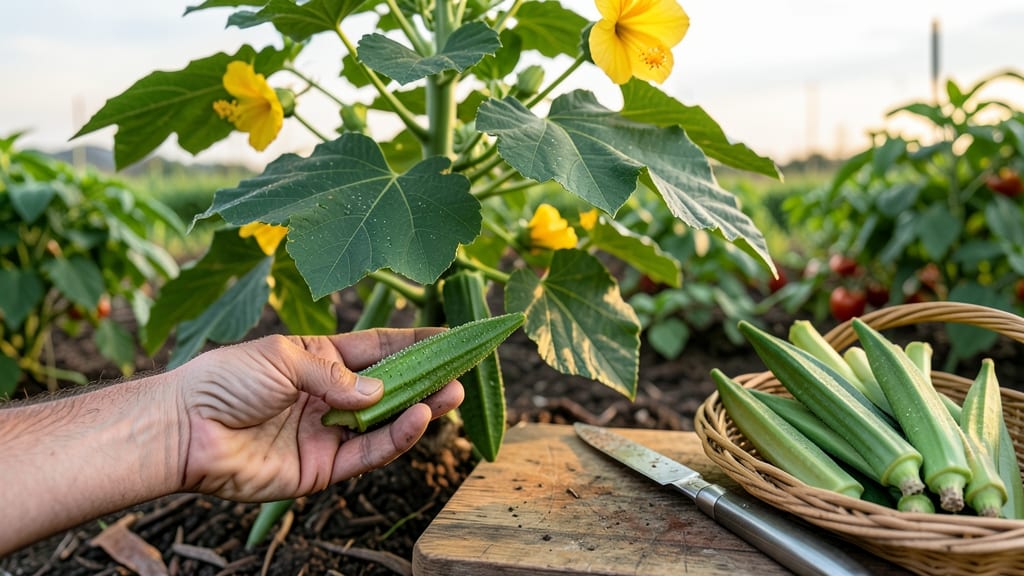
To pick okra from the garden at its peak flavor, aim for pods that are 2–3 inches long—the moment they match your first three fingers laid side by side 🌱.
Harvesting okra at the perfect moment transforms your garden bounty from tough and fibrous to tender and delicious—but timing is everything. One simple trick using your fingers can reveal the ideal window to pick okra for peak flavor and texture.
If you wait too long, the pods turn woody and bitter, while harvesting too early means missing out on the best flavor. The key is consistency: check your plants every 2–3 days during peak season (July–October in Zone 6a) to stay ahead of the growth curve.
In this guide, I’ll break down the exact finger-width rule, seasonal cues, and how climate affects your harvest schedule—so you never miss the sweet spot again.

The 3 finger-width rule: how to determine okra’s perfect picking size
Harvesting okra at the right size is the secret to enjoying its tender texture and mild flavor. The 3 finger-width rule is my go-to method for determining peak ripeness.
Simply wrap your thumb and index finger around the pod—when it fits snugly within three fingers, it’s time to harvest. This method ensures you avoid the woody pods that develop when left too long.
Why does this size matter? Okra pods grow rapidly, and their texture and taste change dramatically within days. At 2–3 inches long, they’re crisp, sweet, and packed with nutrients.
Waiting just a few more days can turn them into tough, stringy vegetables that even the most patient cook struggles to enjoy.
Visual cues are just as important as size. Look for deep green pods with a smooth, glossy surface. The skin should feel firm but yield slightly when pressed—like a ripe avocado. If the pod feels rubbery or the color fades to a dull green, it’s past its prime.
Here’s where many gardeners go wrong: they wait until pods reach 4–5 inches or more, assuming bigger means better. In reality, this leads to bitter, fibrous okra that’s nearly inedible.
The 3 finger-width rule keeps your harvest consistently delicious and your plants productive, as regular picking encourages more pod production.
| Pod Size | Finger-Width Rule | Texture | Flavor | Harvest Tip |
|---|---|---|---|---|
| 1–2 inches | 1 finger-width | Too soft | Mild but watery | Wait 2–3 days |
| 2–3 inches | 3 finger-widths | Tender & firm | Sweet & crisp | Perfect harvest! |
| 4+ inches | 4+ finger-widths | Tough & woody | Bitter & fibrous | Too late! |
If you’re growing heirloom varieties like Clemson Spineless or Emerald, stick to this rule religiously. These types are prized for their tenderness, and even a day’s delay can make a difference.
For longer-maturing varieties, like Perennial Okra, you might extend the window slightly to 3–4 finger-widths, but always prioritize texture over size.
Another pro tip: harvest in the morning when pods are cool and crisp. This is when their flavor is at its peak. If you’re picking later in the day, choose pods that are slightly smaller than your target size—they’ll firm up as the day progresses.
Avoid harvesting after rain, as excess moisture can dilute their flavor and make them mushy.
Regular harvesting also boosts your plant’s productivity. Okra plants can produce hundreds of pods in a season if you keep up with the harvest. When you skip picking, the plant diverts energy to seed production, leaving fewer pods for you to enjoy.
Think of it like pruning—removing spent pods encourages new growth and more abundant harvests.
For gardeners in hot climates, like the South or Southwest, okra grows even faster. Check pods every 2–3 days to stay ahead of rapid growth.
In cooler regions, like the Pacific Northwest, you might stretch the window to 4–5 days between harvests, but never let pods exceed 3 finger-widths.
One final warning: never harvest okra with damaged or discolored spots. These are signs of pests or disease, and bringing them indoors can spread problems to your kitchen or other plants.
Always inspect pods before adding them to your basket, and remove any that show signs of yellowing, wilting, or holes.
With the 3 finger-width rule in your gardening toolkit, you’ll never struggle with tough okra again. Your plants will thank you with bountiful harvests, and your taste buds will thank you with every crisp, sweet bite. Happy harvesting! 🌱
Okra harvesting schedule: daily, weekly, and seasonal timing for maximum yield
Timing your okra harvest correctly can double your yield and ensure tender, flavorful pods. Unlike many vegetables, okra rewards frequent harvesting—the more you pick, the more your plants produce.
But knowing when and how often to harvest is just as important as choosing the right size. Let’s break down the ideal schedule to keep your okra plants thriving all season.
Your harvesting frequency depends on two key factors: the pod maturity and the plant’s growth stage. Early in the season, when pods are small and sparse, you might harvest every 3-4 days.
As your plants mature and produce more pods, you’ll need to check them daily to avoid overgrowth. Skipping harvests can lead to bitter, fibrous pods and reduced future production.
🌱 When to Pick Okra: Your Seasonal Harvesting Guide
- Daily Harvesting: Check plants every 2-3 days once pods reach 2-3 inches.
- Morning Picks: Harvest before 10 AM for freshest, crispest pods and to avoid evening humidity.
- Seasonal Start: Begin harvesting 60-70 days after planting (typically July-August in most USDA zones).
- Peak Production: Harvest every 1-2 days during July-September when plants are at their most productive.
- Late Season: Reduce to every 4-5 days in October as growth slows before frost.
- Climate Zones: In hotter zones (8-10), harvest daily to prevent rapid overgrowth. In cooler zones (6-7), stretch to every 3 days.
Morning is the best time to harvest okra—the pods are cool, crisp, and at peak tenderness. Harvesting in the morning also allows you to avoid evening humidity, which can promote fungal diseases like powdery mildew.
If you must harvest in the evening, do so at least 4 hours before sunset to give the pods time to dry slightly and reduce moisture buildup.
In hot climates (zones 8-10), okra grows so quickly that you may need to harvest twice daily during peak season. If you’re away during the day, prioritize morning harvests and check again in the late afternoon to prevent pods from becoming oversized and woody.
In cooler zones (6-7), a single daily harvest is usually sufficient, but monitor plants closely as growth slows in late summer.
As the season progresses, pay attention to your plants’ growth patterns. Early in the season, you’ll see fewer pods, so harvesting every 3-4 days is fine.
But once your okra plants hit their peak production phase (usually mid-July to early September), switch to a daily or every-other-day schedule. This encourages the plant to produce more pods instead of letting them mature into tough, seed-filled giants.
By late September or early October, depending on your climate zone, your okra plants will start to slow down. This is your cue to reduce harvesting frequency to every 4-5 days.
Avoid harvesting at all if a frost is forecasted—okra is frost-sensitive, and even light frost will kill the plant. Instead, harvest any remaining pods before the first frost hits to enjoy the last of your homegrown okra.