
Picking
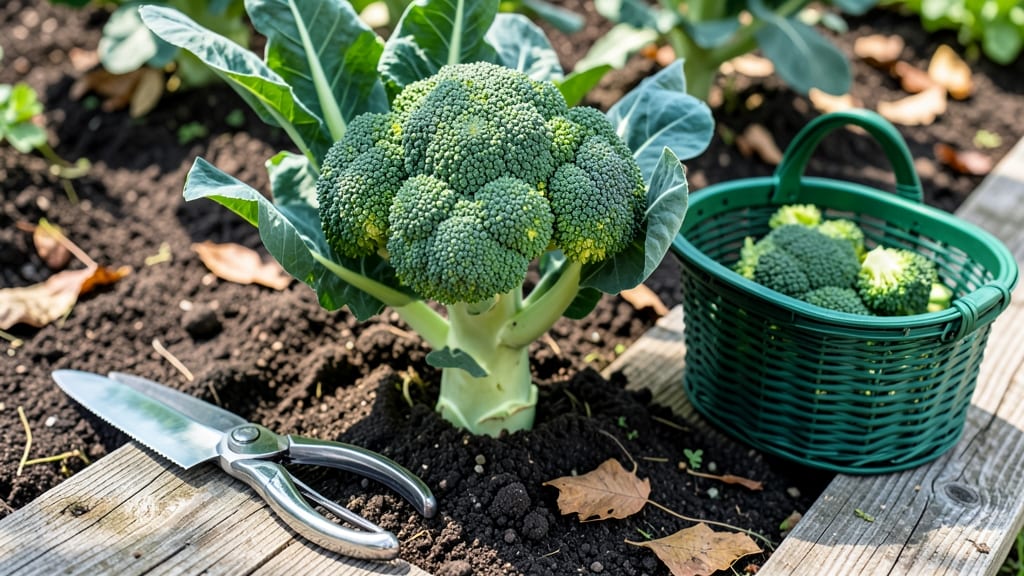
Picking broccoli from the garden at the right time turns your hard work into sweet, tender crowns 🥦 — and waiting too long means bitter, tough florets.
Harvesting broccoli at the perfect moment transforms your garden bounty from bitter to sweet—but timing is everything. One wrong move, and you’ll miss the window for that prized, tender crown.
Look for heads that are 4-8 inches wide, tightly packed, and a deep green color. The stem should feel firm, not hollow, and the buds should still be closed like little green fists.
In this guide, I’ll walk you through the 3 key signs your broccoli is ready, how to cut it without damaging future growth, and the common mistakes that ruin harvests.

3 Visual signs your broccoli crowns are ready to harvest
Knowing exactly when to pick broccoli from your garden ensures you get the sweetest, most tender heads possible. The difference between a perfect harvest and a bitter, overgrown mess often comes down to these three key visual cues.
I’ve learned the hard way—waiting just a few extra days can turn your prized crowns into tough, woody stalks that even the best recipes can’t save.
Broccoli doesn’t give you much time to hesitate. Once the main head starts opening, the flavor declines rapidly, and the texture becomes fibrous. But before you reach for those pruning shears, check these three unmistakable signs to confirm your broccoli is at its peak.
Trust me, your taste buds will thank you.
🌱 Numbered Highlights: When to Pick Broccoli
- 🟢 Head Size: 4–8 inches in diameter (about the size of a softball)
- 🔍 Bud Clusters: Tightly closed florets, dark green with no yellowing
- 🤲 Stem Firmness: Thick, sturdy stem that doesn’t wobble when gently squeezed
First, look at the size of the broccoli head. The ideal harvest window is when the crown reaches 4 to 8 inches in diameter. This is roughly the size of a softball or slightly larger. If it’s smaller, it may not have developed its full sweetness yet.
If it’s bigger, the florets are likely starting to open, which means the flavor will be bitter and the texture tough. I once waited too long on my Calabrese broccoli, and the heads were so large they barely fit in my pot!
Next, examine the color and texture of the florets. The buds should be a vibrant dark green, tightly packed together like a mini forest. If you see even a hint of yellowing or the florets starting to open, it’s past its prime.
Think of it like a ripe avocado—once it’s overripe, there’s no going back. The key is to harvest before the buds bloom into yellow flowers, which signals the end of the window for that main head.
Don’t forget to check the stem and leaves for hidden clues. A ready-to-harvest broccoli plant will have a thick, sturdy stem that feels solid when you gently squeeze it. If the stem feels soft or hollow, the head is overripe.
Also, the leaves should be healthy and vibrant, not wilted or discolored. I’ve found that plants with stressed leaves often produce smaller, less flavorful heads, so keep an eye on their overall health too.
Timing matters just as much as these visual cues. For spring broccoli, aim to harvest in late spring when temperatures are mild. For fall broccoli, harvest before the first frost hits. In my Zone 6a garden, that usually means late October.
If you’re unsure, err on the side of harvesting a little early—you can always let smaller heads grow a bit more, but you can’t reverse the clock on an overripe one.
Pro tip: Harvest in the morning when the heads are cool and crisp. This is when their flavor and texture are at their peak. I like to grab my pruners, give the stem a quick snip about 5–6 inches below the head, and head straight to the kitchen.
The sooner you use or store your broccoli after harvesting, the better it’ll taste. And if you’re lucky, you might even get a second harvest from the side shoots that emerge after you cut the main head!
One common mistake I see is assuming all broccoli varieties mature at the same rate. Dwarf varieties like ‘Little Sperling’ mature faster than larger types like ‘Waltham 29’. Always check the seed packet or plant tag for specific days to maturity.
For most varieties, it’s around 60–80 days from transplanting, but this can vary based on your climate and growing conditions.
Finally, remember that broccoli continues to grow even after the main head is harvested. If you cut it properly, you’ll often get 3–5 smaller side shoots over the next few weeks.
These “baby broccoli” heads are just as delicious and perfect for quick stir-fries or steamed sides. It’s like getting a bonus harvest for free!
Now that you know what to look for, grab your pruners and head to the garden. The next time you’re standing in front of a broccoli plant wondering if it’s ready, just check these three signs.
Your future meals—and your taste buds—will thank you for paying attention to the details. Happy harvesting! 🥦
How to harvest broccoli without damaging future growth
Harvesting your broccoli crowns correctly ensures you get the best flavor and encourage side shoots for a second harvest. The key lies in precise cutting techniques and timing—cut too early, and you waste potential; cut too late, and the crown turns bitter or woody.
I’ve learned that patience and sharp tools make all the difference in maximizing your garden’s yield.
Timing your harvest also depends on your climate zone. In USDA Zone 6a, for example, spring broccoli should be ready 60-80 days after planting, while fall crops may take slightly longer.
Always check for tight florets and dark green color—these are your best indicators that the crown is ready. Let’s break down the exact steps to harvest without harming your plant’s future growth.
Step-by-Step Harvesting Guide
- 🔍 Step 1: Choose the Right Tool
Use a sharp knife or pruning shears to make a clean cut. Dull tools crush stems, inviting disease. - 📏 Step 2: Measure the Crown
Harvest when the main head is 4-8 inches wide and florets are tightly packed. Larger heads often taste bitter. - ✂️ Step 3: Cut at the Right Angle
Slice the stem 2-3 inches below the crown. Avoid cutting too close—this prevents regrowth. - 🌱 Step 4: Leave the Stem Intact
Never pull or twist the head—this damages the plant’s base and stunts future growth. - 🌿 Step 5: Monitor Side Shoots
After harvesting, watch for small side shoots (usually within 2-3 weeks). These can be harvested separately for extra yield.
Once you’ve harvested the main crown, don’t toss the plant just yet! With proper care, your broccoli can produce 3-5 side shoots over the next few weeks. These smaller heads are just as delicious and often more tender.
To encourage regrowth, ensure your plant gets consistent water and full sun—this keeps it healthy and productive.
If your side shoots start to form but the main stem looks tired, consider fertilizing lightly with a balanced 10-10-10 mix. This gives your plant the nutrients it needs to bounce back.
Just avoid over-fertilizing, as this can lead to leafy growth instead of new crowns. I’ve found that a light feeding every 4-6 weeks during active growth keeps my plants thriving.
One common mistake I see is harvesting too aggressively—cutting all the side shoots at once. Instead, pick them gradually as they mature. This extends your harvest window and gives your plant time to recover.
For fall crops, you might even get a third harvest before the first frost hits! Just keep an eye on the weather and act fast when heads are ready.
Finally, store your freshly harvested broccoli properly to preserve its flavor. Place it in the fridge with a damp paper towel to keep it crisp for up to a week. And if you’re not ready to eat it all at once, try freezing the crowns for later use.
With these techniques, you’ll turn one harvest into a continuous bounty all season long. Happy harvesting!