Picking
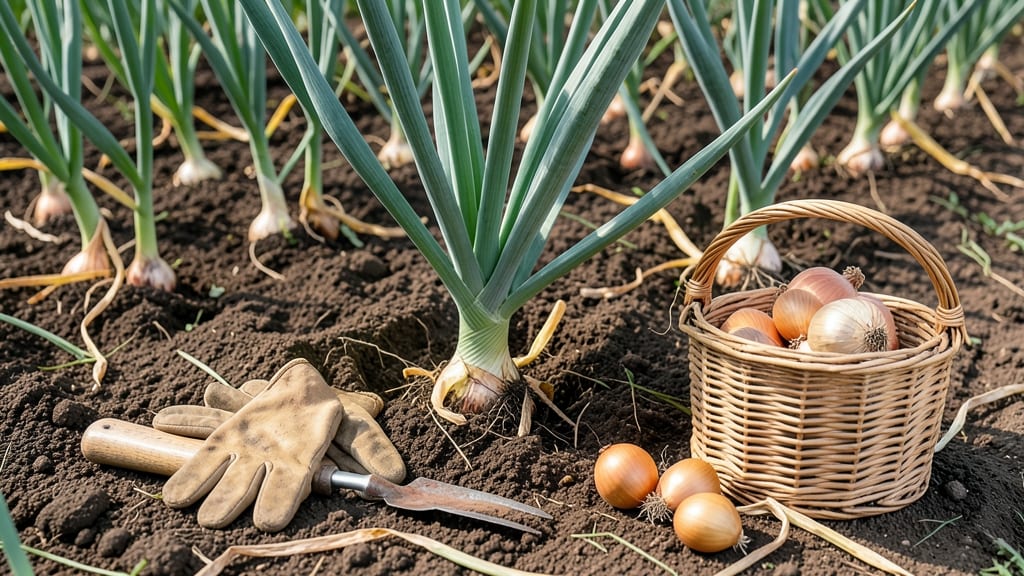
Harvesting onions from the garden at the right time ensures sweet, flavorful bulbs instead of tough, pungent ones you’ll regret.
Picture this: you’ve nurtured your 🧅 for months, only to pull them too early and end up with tiny, underdeveloped onions—or worse, leave them too long and watch them split or rot in the heat.
Timing matters, especially in Zone 6a, where late summer heat can turn a perfect harvest into a disaster if you miss the window. The secret? Watching for three key visual cues: when tops yellow, bulbs reach 1-2 inches in diameter, and the neck tightens like a drum.
Below, I’ll walk you through exactly what to look for, how to adjust for your climate, and the one mistake that ruins even the best-grown onions—so you can pull them at peak perfection every time.

3 Visual signs your onions are ready for harvesting
Harvesting onions at the perfect moment ensures sweet, flavorful bulbs that store well for months. But how do you know when they're ready? The key lies in three visual cues that signal peak harvest time.
Ignoring these signs can lead to bitter, pungent onions or bulbs that rot before storage. Let’s break down what to look for in your garden.
First, pay attention to the leaf color of your onion plants. Healthy green tops mean your onions still need time to mature. But when those tops start yellowing and flopping over, it’s a clear sign the bulb below is ready.
This change happens naturally as the plant redirects energy from leaf growth to bulb development—a process called maturity signaling.
Next, check the bulb size by gently digging around the base. Aim for bulbs that are 1-2 inches in diameter. Smaller bulbs (under 1 inch) are still growing, while larger ones may have overgrown necks that split during storage.
The ideal size balances flavor and storage potential, so don’t wait too long once you spot this cue.
Finally, examine the neck of the bulb. When it tightens and the skin becomes papery and dry, your onions are nearly ready. This is the plant’s way of preparing for dormancy, and it’s your green light to harvest.
If you ignore this sign, the neck may loosen and rot, ruining your crop.
-
1. Yellowing Tops
Leaves turn golden-yellow and flop over when bulbs are mature. -
2. Bulb Size
Bulbs reach 1-2 inches in diameter—dig gently to check. -
3. Papery Skin
Neck tightens and skin becomes dry and papery.
Timing your harvest based on these visual cues ensures you get the best flavor and storage life. For example, if your onions are in USDA Zone 6a, aim to harvest between late August and early September when days grow shorter.
This aligns with the plant’s natural cycle of redirecting energy to bulb development.
Regional differences matter too. In warmer climates, onions may mature earlier (as early as July), while cooler zones might need an extra week or two. Always monitor your plants closely, as weather fluctuations can speed up or slow down maturity.
If a frost warning appears, harvest immediately—even if the bulbs aren’t fully mature—to avoid damage.
One common mistake is waiting until the tops are completely brown and crispy. While this might seem like a sign of readiness, it often means the bulbs are overmature and may split or rot during storage.
The goal is to harvest when the tops are yellow but still slightly green at the base, not fully dried out.
To test readiness, gently pull up one onion and examine the bulb. If it’s firm, dry, and the skin peels back easily, it’s ready. If the bulb feels soft or the skin is still thin, give it another week.
This simple test saves you from harvesting too early or too late—both of which can ruin your crop.
Once you’ve confirmed all three signs, it’s time to harvest. Use a sharp knife or garden fork to lift the bulbs carefully, leaving the roots intact.
After harvesting, let them cure in the sun for 1-2 hours to toughen the skin, then store them in a dry, well-ventilated area for optimal longevity. Proper curing extends storage life to 6-8 months or longer.
Mastering these visual cues transforms your onion harvest from guesswork to precision. Next time you’re in the garden, keep an eye out for yellowing tops, bulb size, and that telltale papery skin. Your taste buds—and your pantry—will thank you! 🧅
Harvesting onions at the right stage: green vs. brown vs. storage onions
Not all onions are created equal—whether you're growing green onions, brown storage onions, or mild fresh onions, the harvest timing varies dramatically. Understanding these differences ensures you get the best flavor and storage potential from your crop.
For example, green onions (also called scallions) are ready in just 60-70 days, while storage onions need 100-120 days to mature fully.
Climate plays a huge role too. In hot, dry climates, onions may mature faster and need harvesting earlier to prevent bolting. Meanwhile, cooler regions like Zone 5 can stretch the harvest window into early fall.
Varieties like Yellow Granex (great for storage) or Red Baron (ideal for fresh use) each have their own perfect harvest moment—missing it can turn sweet bulbs bitter.
🌱 Key Takeaway: Harvesting at the right stage means the difference between a mild, sweet onion and one that’s tough and pungent.
For green onions, you can harvest them multiple times by cutting just above the soil line. They’ll regrow, giving you a continuous supply. But if you’re growing them for storage onions, wait until the neck tightens and the tops start yellowing—this is your cue to pull them.
In hot climates, this might happen as early as July, while cooler zones could extend it to September.
If you’re unsure, dig up one onion to check the bulb size and skin thickness. A papery skin and firm bulb mean it’s ready. Thin-skinned onions won’t store well, so harvest them earlier for fresh use.
Pro tip: Avoid harvesting in wet weather—this can lead to rot during storage.
Once harvested, cure storage onions for 2-3 weeks in a dry, shaded area before storing. This step is critical for preventing mold and extending shelf life. For green onions, store them in the fridge with the roots submerged in water to keep them fresh for weeks.
🌿 Final Tip: Keep a harvest journal to track when your onions mature each year—this helps adjust future planting times for your specific climate.