
Diseases
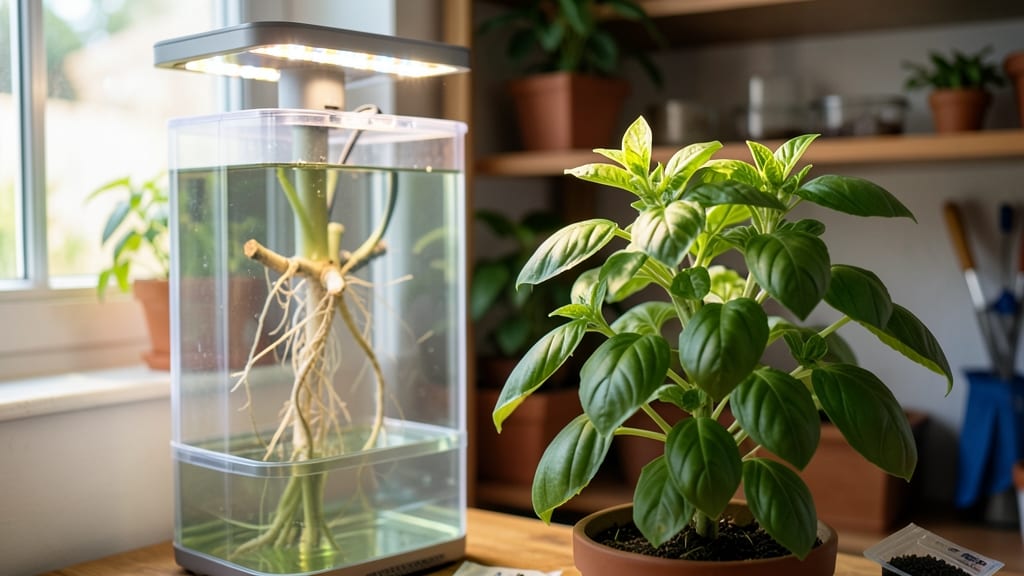
An AeroGarden is a hydroponic indoor gardening system that uses LED grow lights, water, and nutrients to cultivate fresh herbs, vegetables, and flowers without soil. Its compact design and automated features make it ideal for urban spaces and beginners.
An AeroGarden transforms your kitchen or windowsill into a thriving garden by eliminating soil entirely. 🌱 Instead, it uses a closed-loop hydroponic system where roots grow in nutrient-rich water while specialized LED lights mimic sunlight.
The automated watering and nutrient delivery mean you don't need a green thumb—just consistent light and occasional maintenance. What sets it apart is how it replicates outdoor growing conditions indoors, perfect for city dwellers or anyone short on outdoor space.
This system works particularly well for fast-growing plants like basil, mint, and leafy greens, which thrive in the controlled environment. The LED lights are designed to provide the full spectrum needed for photosynthesis, while the water-based nutrient solution delivers everything plants need without the hassle of soil-borne diseases or pests.
For those who love fresh herbs but hate dealing with outdoor weather or soil mess, an AeroGarden offers a clean, efficient alternative that delivers restaurant-quality flavors year-round.
💡 In This Article
- How AeroGarden Hydroponics Works for Indoor Plant Growth
- Top AeroGarden Plants for Beginners and Advanced Growers
How AeroGarden hydroponics works for indoor plant growth
The core innovation of AeroGarden lies in its hydroponic system, which replaces soil with a nutrient-rich water solution. Unlike traditional gardening where roots search for nutrients in soil, AeroGarden delivers precisely balanced minerals directly to the roots through a recirculating water reservoir.
This closed-loop system ensures plants receive consistent hydration and nutrition without the risk of overwatering or nutrient depletion found in soil-based methods. The roots grow in a dense foam or clay pebble medium that provides structural support while allowing optimal oxygen exchange—critical for healthy root development.
Specialized LED grow lights are the heart of this system, emitting a full-spectrum light (typically 2,700-6,600K) that mimics sunlight's blue and red wavelengths, which plants absorb most efficiently for photosynthesis.
These lights run on timers (usually 14-16 hours daily) to replicate natural daylight cycles, eliminating the guesswork of seasonal light variations. The water circulation pump gently moves the nutrient solution every few minutes, ensuring even distribution while preventing stagnation that could lead to root rot.
What's remarkable is how this system replicates outdoor growing conditions with 95% less space and 90% less water than traditional gardening.
One common misconception is that hydroponics produces less flavorful plants. In reality, AeroGarden's controlled environment often yields more concentrated flavors because plants focus all their energy on leaf and stem production rather than defending against pests or competing for nutrients in soil.
For example, basil grown in an AeroGarden typically develops 2-3 times more essential oils (the compounds responsible for flavor) compared to soil-grown basil. The system also eliminates soil-borne diseases and pests, reducing the need for chemical interventions that can alter taste profiles. 🌱
Advanced models incorporate features like Wi-Fi connectivity and smartphone apps that monitor pH levels (ideal range: 5.5-6.5), nutrient concentrations, and even send alerts when maintenance is needed. The pH balance is particularly critical—too acidic or alkaline, and the plant can't absorb nutrients properly.
For instance, if the pH drifts to 7.0, calcium and magnesium become unavailable to the plant, leading to stunted growth despite adequate nutrient levels. This level of control is impossible with traditional gardening, where soil pH fluctuates with weather and organic matter decomposition.
Consider how this compares to traditional soil gardening: in soil, plants must expend energy extending roots to find nutrients and water, which can take up to 30% of their metabolic resources. In AeroGarden, those resources go directly toward leaf and stem production, resulting in faster growth cycles.
For example, basil seeds typically sprout in 7-10 days in soil but emerge in just 3-5 days in an AeroGarden's optimized environment. This accelerated growth makes it possible to harvest fresh herbs continuously, even in winter when outdoor gardens are dormant.
The system's compact design also addresses another limitation of traditional gardening—the space required for full-sized plants. In an AeroGarden, plants grow vertically and densely packed, using up to 90% less floor space than equivalent outdoor garden beds.
This vertical integration is particularly valuable for urban dwellers with limited balconies or windowsills, allowing them to grow a small herb garden that would otherwise require a full backyard. The automated nature means no more struggling with uneven watering or dealing with soil compaction—just consistent, reliable growth with minimal effort.